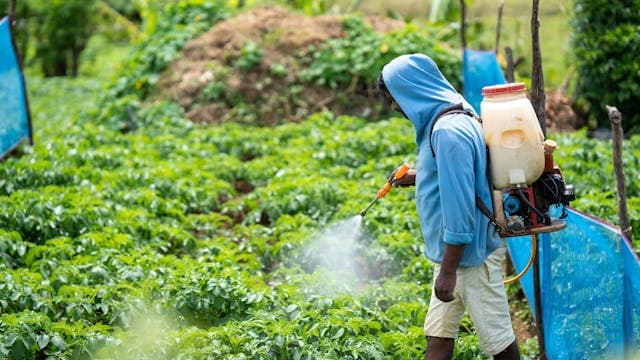
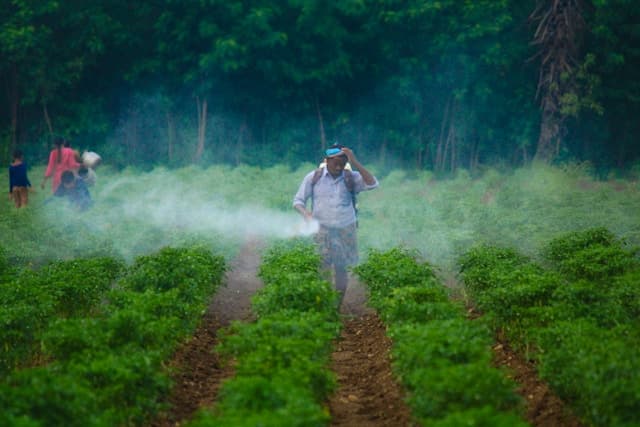
Modern gardening has gradually lost touch with the lessons nature has been teaching for millennia. Bright fertilizer bags and shiny labels lure us with quick results, and chemical sprays boast flawless foliage — but this convenience carries a hidden toll. Over time, these artificial boosts strip the earth of its strength, disrupt the delicate web of life beneath our feet, contaminate waterways, and leave plants fragile instead of resilient.
Yet, if we pause and observe the world around us, nature already holds the answers. Deep forests flourish with no urea. Meadows explode with color without a single pesticide. Untouched soils teem with life and quietly fuel vibrant plant growth — showing us that chemicals are a crutch, not a necessity.
In this piece, we’ll dive into the art of gardening that works with nature, not against it. You’ll learn how healthy soil, vibrant microbial communities, and simple organic practices can replace synthetic inputs. Along the way, we’ll draw inspiration from remarkable real-world successes — like India’s inspiring transformation to organic agriculture in Sikkim — to see what’s possible when we let the wisdom of the earth take the lead.
🌱 Understanding the Core Principle: Feed the Soil, Not the Plant
Chemical fertilizers work like energy drinks for plants — fast, intense, and short-lived. They bypass the soil and push plants to grow quickly, often faster than their natural strength can support. The result may look impressive at first, but beneath the surface, the system weakens.
Organic gardening follows a quieter, wiser rule: nourish the soil, and the soil will take care of the plant.
Living soil is not just dirt. It is a breathing community made up of:
- Beneficial bacteria and fungi that unlock nutrients
- Earthworms that aerate and enrich the ground
- Micro-organisms that convert organic matter into plant food
- Natural minerals slowly released in balanced doses
When soil is alive, plants don’t need to be force-fed. They draw nutrition when required, grow at a natural pace, and develop deeper roots, thicker cell walls, and stronger immunity. Growth may be slower — but it is stable, lasting, and resilient.
Pests are rarely the real problem. They are symptoms.
Weak, over-stimulated plants send distress signals that attract insects. Healthy soil, on the other hand, produces plants strong enough to defend themselves naturally.
In gardening, strength doesn’t come from speed.
It comes from balance — and balance begins underground.
Weak plants invite pests. Strong soil builds strong plants.
🌍 A Living Example: How Sikkim Chose Soil Over Shortcuts
High in the Himalayas, Sikkim made a decision most regions only talk about. Instead of slowly reducing chemical inputs, it removed them entirely — no synthetic fertilizers, no chemical pesticides, no half-measures. In doing so, it became the world’s first state to commit fully to organic agriculture.
This wasn’t an overnight miracle. It was a patient, policy-backed return to ecological sense.
What Sikkim Did Differently
Rather than replacing chemicals with expensive alternatives, Sikkim rebuilt agriculture from the ground up:
- Chemical fertilizers and pesticides were completely banned
- Composting, green manure, and traditional cow-based inputs were revived
- Farmers were trained to read soil health, not just crop output
- Biological pest control replaced chemical sprays
- Crop diversity was encouraged, breaking the cycle of monoculture dependency
Instead of fighting nature, farming began cooperating with it.
What Changed on the Ground
The results didn’t scream overnight profits — they whispered long-term stability:
- Soil regained structure, life, and moisture-holding capacity
- Pest outbreaks reduced naturally as ecosystems rebalanced
- Rivers and groundwater grew cleaner
- Food became safer for both farmers and consumers
- Yields stabilized over time, without the boom-and-crash cycle of chemicals
Perhaps the most important change wasn’t visible in the fields — it was in mindset. Farmers stopped asking “What should I add?” and started asking “What does my soil need?”
Sikkim stands as quiet proof of a powerful truth:
When soil is treated as living capital instead of dead ground, productivity follows — not immediately, but sustainably.
🍂 How to Grow a Garden Without Chemical Fertilizers
Organic gardening isn’t about removing fertilizers — it’s about changing where fertility comes from. Instead of buying nutrients in packets, you build a system where soil creates its own nourishment, season after season.
1️⃣ Build Living Soil Instead of Buying Fertilizer
Chemical gardening brings food from outside. Organic gardening creates food inside the soil itself.
Living soil works like a slow kitchen — it cooks nutrients gently, releasing them only when plants are ready. To start this process, focus on materials that rot slowly and feed life underground:
- Kitchen compost made from daily waste
- Leaf compost collected after seasonal shedding
- Well-rotted cow dung compost (never fresh)
- Vermicompost rich in enzymes and microbes
- Green manure crops like sunhemp, cowpea, or dhaincha grown and turned into soil
These aren’t just “inputs.” They change the soil permanently by:
- Loosening compacted earth
- Improving moisture-holding capacity
- Feeding bacteria and fungi that unlock minerals naturally
Once soil starts producing nutrients on its own, dependency on fertilizers disappears — quietly and permanently.
2️⃣ Mulching: Nature’s Free Fertilizer System
If compost feeds soil from within, mulch protects it from above.
In nature, soil is never bare. Fallen leaves, twigs, and plant remains form a protective blanket — and your garden needs the same cover.
Mulch helps by:
- Reducing evaporation during heat
- Blocking weed seeds from germinating
- Preventing soil from hardening or cracking
- Feeding soil continuously as it decomposes
India-friendly mulches that actually work:
- Dry fallen leaves
- Straw or hay
- Coconut husk or coir
- Sugarcane trash
- Fully dried grass clippings
With consistent mulching, many gardeners notice something surprising:
plants grow better with less watering and almost no fertilizer.
In fact, mulching alone can cut fertilizer dependence by up to 70–80% over time — because soil finally gets the protection it needs to function.
3️⃣ Crop Diversity & Companion Planting: Confuse Pests, Strengthen Soil
Pests love predictability. Long rows of the same plant are like open invitations. Diversity breaks that pattern.
When different plants grow together, insects struggle to locate their target, while beneficial organisms thrive.
Proven combinations that work naturally:
- Tomato + basil + marigold
- Cabbage + dill + coriander
- Brinjal with neem leaf mulch around the base
- Fruit trees with legumes grown underneath
Companion plants quietly do what chemicals try to force:
- Repel harmful insects
- Improve nitrogen availability in soil
- Attract pollinators and predator insects
- Reduce disease spread
A diverse garden doesn’t look “neat” — but it stays healthier, calmer, and more balanced.
🌿 Natural Pest-Repellent Plants: Nature’s Living Shield for the Garden
Pests don’t always need to be fought. Very often, they just need to be discouraged.
Instead of reaching for sprays and powders, nature offers a gentler solution — certain plants naturally protect their neighbors simply by existing. Through their scent, oils, and biochemical signals, these plants make the garden uncomfortable for harmful insects while quietly welcoming the helpful ones.
What makes these plants powerful is how effortless they are. They don’t kill. They don’t poison the soil. They reshape the environment.
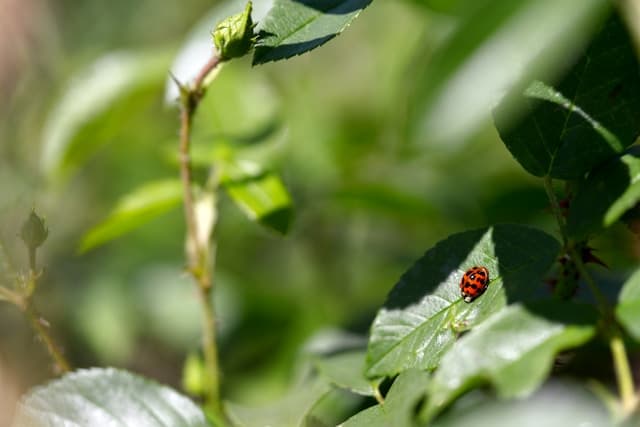
Grown alongside vegetables, fruit plants, or ornamentals, pest-repellent plants work like a living boundary. Harmful insects get confused or repelled, while beneficial allies — ladybugs, lacewings, spiders, native bees — move in and restore balance. The garden becomes less of a battlefield and more of a self-regulating ecosystem.
This approach isn’t new. Long before chemical pesticides existed, traditional farmers relied on plant partnerships to protect crops. They understood something modern gardening often forgets:
eradication creates resistance, but balance creates stability.
In organic gardens especially, pest-repellent plants play a quiet but critical role. They protect crops without disrupting soil life, contaminating food, or breaking the invisible relationships underground. Over time, infestations don’t vanish completely — they simply stop becoming a problem.
The goal isn’t a pest-free garden.
It’s a garden that knows how to defend itself.
🪴 Natural Pest-Repellent Plants Chart (Organic & Chemical-Free)
| Repellent Plant | Repels Which Pests | How to Use in Garden | Best Placement |
|---|---|---|---|
| Neem (Azadirachta indica) | Aphids, caterpillars, beetles | Leaves, mulch, or spray | Garden border, near vegetables |
| Marigold (Genda) | Nematodes, aphids, whiteflies | Companion planting | Near tomatoes, brinjal |
| Tulsi (Holy Basil) | Mosquitoes, flies, aphids | Live plant aroma | Pots, entrances, veggie beds |
| Mint (Pudina) | Ants, aphids, cabbage moth | Ground cover or pots | Near leafy greens |
| Lemongrass | Mosquitoes, flies | Strong citrus aroma | Border or containers |
| Garlic (Lehsun) | Sucking insects, mites | Interplant or spray | Among vegetables |
| Onion (Pyaaz) | Aphids, borers | Companion planting | Root crops, greens |
| Chrysanthemum | Ants, roaches, beetles | Flower oils | Ornamental beds |
| Lavender | Moths, fleas, flies | Fragrance-based repellent | Pots, flower beds |
| Rosemary | Cabbage moth, beetles | Aromatic foliage | Near brassicas |
| Basil (Sweet Basil) | Whiteflies, mosquitoes | Companion plant | Tomatoes, peppers |
| Coriander (Dhaniya) | Aphids, spider mites | Flowering attracts predators | Vegetable beds |
| Dill | Aphids, thrips | Umbel flowers | Near cabbage family |
| Fennel (Saunf) | Harmful insects (indirect) | Attracts beneficial insects | Separate corner (not close to all plants) |
| Citronella plant | Mosquitoes | Leaf fragrance | Balcony, outdoor seating |
🌱 Why Pest-Repellent Plants Work Better Than Sprays
Chemical sprays act like emergency reactions — they arrive suddenly, disappear quickly, and often leave behind unintended damage. Pest-repellent plants, on the other hand, work quietly and continuously, shaping the garden environment every single day.
Their strength lies in consistency, not force.
Unlike sprays that need repeated application, these plants protect simply by growing. Their natural aromas, oils, and compounds create a landscape where pests struggle to settle, feed, or multiply — without harming what the garden depends on.
They succeed because they:
- Work round the clock, not just after spraying
- Leave soil microbes and earth life untouched
- Do not kill pollinators or beneficial insects
- Never trigger pest resistance cycles
- Increase biodiversity instead of reducing it
- Remain safe for children, pets, and edible crops
Over time, something important shifts. The garden stops reacting to pests and starts preventing imbalance.
In organic gardening, pest-repellent plants are not just protectors — they are partners. As seasons pass, their presence trains the ecosystem to stay alert, diverse, and resilient. Pest pressure doesn’t disappear overnight, but it weakens, stabilizes, and eventually stops dominating the gardener’s attention.
Sprays try to control nature.
Plants teach the garden how to defend itself.
🐝 How Pesticides Harm Pollinators — and Why This Damage Is So Hard to Reverse
Pesticides don’t choose sides. They are blind to intention.
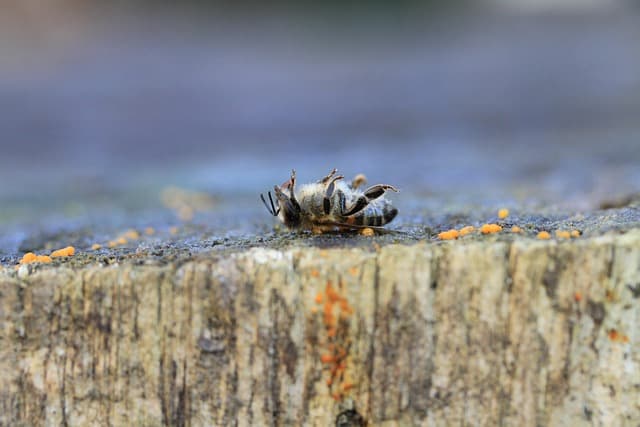
When sprayed in gardens or fields, these chemicals settle everywhere — on leaves, petals, pollen, and nectar. The same flowers meant to nourish life quietly become carriers of poison. Pollinators arrive doing what they’ve always done, unaware that their food has turned hostile.
Bees, butterflies, hoverflies, moths — they don’t just touch these chemicals. They ingest them. Absorb them. Carry them back to their nests.
The damage isn’t always dramatic or immediate. Often, it’s subtle and slow:
- Bees lose their sense of direction and fail to return home
- Immune systems weaken, making insects vulnerable to disease
- Reproduction drops, silently shrinking populations
- Colonies collapse without obvious cause
Even doses labeled “safe” or “recommended” can interfere with a pollinator’s ability to navigate, communicate, and survive. The garden may look protected — but something essential has gone missing.
As pollinators decline, the effects ripple outward. Plants struggle to set fruit. Harvests become unreliable. Wild species disappear quietly. Biodiversity thins. Entire food chains begin to wobble.
Ironically, in trying to protect plants with chemicals, we remove the very partners that keep them productive.
Pollinators don’t just help gardens grow — they hold ecosystems together.
When they vanish, nature doesn’t collapse loudly.
It fades.
And the loss is almost always noticed too late.
🐛 If No Chemicals, Then How Do You Control Pests?
Organic gardening doesn’t promise a perfect garden.
It promises a balanced one.
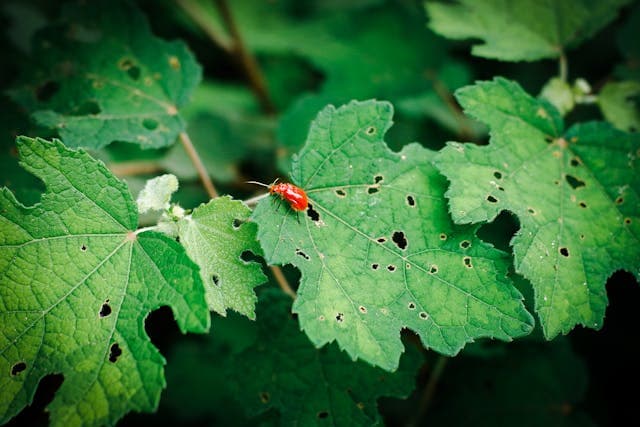
Pests are not a failure — outbreaks are. A few holes in leaves, a chewed edge here and there, are signs of a living system at work. The goal is not to eliminate insects, but to prevent them from taking over.
This shift in thinking is where organic pest control begins.
🌿 The Natural Pest Control Philosophy
Accept minor damage
A completely untouched plant often signals chemical interference. In healthy organic gardens, small imperfections are normal — and harmless. Plants can outgrow minor damage far more easily than they can recover from toxic stress.
Invite nature’s enforcers
Birds, ladybugs, spiders, praying mantis — these are not visitors, they are workers. Provide them shelter with shrubs, water bowls, and diversity, and they will regulate pest numbers far better than sprays ever could.
Strengthen the plant, not the poison
Weak plants attract pests. Healthy soil, proper spacing, sunlight, and slow nutrition build thicker cell walls and natural defenses. Strong plants send fewer distress signals — and pests move on.
Use organic sprays only as a last tool
Neem oil, soap sprays, fermented plant extracts — these can help during sudden imbalances, but they should support the system, not replace it. Overuse, even of organic sprays, can disrupt beneficial insects.
Organic pest control isn’t about fighting harder.
It’s about letting the ecosystem do most of the work.
When balance returns, pests don’t disappear —
they simply stop being a problem.
🌿 Best Organic Pesticide Substitutes (Chemical-Free)
| Organic Substitute | Controls | Safe For |
|---|---|---|
| Neem oil | Aphids, whiteflies, mites | All vegetables |
| Neem leaf extract | Caterpillars, beetles | Leafy greens |
| Garlic-chili spray | Sucking pests | Fruit plants |
| Buttermilk spray | Fungal diseases | Cucurbits |
| Cow urine (diluted) | Insects + growth | All plants |
| Wood ash | Slugs, ants | Soil surface |
🧪 How to Make Organic Pesticides at Home (Step by Step, Without Overdoing It)
Organic sprays are not replacements for soil health — they are temporary helpers. Used gently and only when needed, they restore balance without harming the life your garden depends on.
Think of them as first aid, not daily medicine.
🟢 1. Neem Leaf Spray — The Strongest Natural Defender
Neem doesn’t kill indiscriminately. It disrupts feeding and breeding cycles, making pests lose interest over time.
You’ll need:
- About 500 g fresh neem leaves
- 5 litres clean water
How to prepare:
- Crush or roughly chop the neem leaves
- Soak them in water overnight
- Grind the soaked leaves and strain the liquid
- Use immediately — neem works best when fresh
How to use:
Spray early morning or after sunset to protect beneficial insects.
Effective against:
Aphids, caterpillars, beetles, leaf-eating insects
Tip: Neem is powerful — spraying more often doesn’t mean better results. Once every 7–10 days is usually enough.
🔴 2. Garlic–Chili Spray — For Sudden Pest Surges
This spray works through smell and irritation. It doesn’t linger but gives fast relief when insects multiply quickly.
You’ll need:
- 10 garlic cloves
- 5 dry red chilies
- 1 litre water
How to prepare:
- Blend garlic and chilies with water
- Let the mixture sit for 10–12 hours
- Strain and dilute one part spray with five parts water
How to use:
Spray lightly on affected areas, avoiding flowers.
Effective against:
Sucking insects, ants, small soft-bodied pests
Tip: Test on one leaf first — strong sprays can irritate tender plants.
🟡 3. Buttermilk Spray — Gentle Control for Fungal Problems
Fungal diseases thrive in humidity. Buttermilk changes the leaf surface environment, making it unfriendly for fungus.
You’ll need:
- 1 cup sour buttermilk
- 10 cups water
How to use:
Mix well and spray directly on affected leaves once a week.
Effective against:
Powdery mildew, early fungal infections
Tip: This works best as an early intervention, not after severe infection.
🟤 4. Cow Urine Spray — Traditional, Simple, and Effective
Used for generations in Indian farming, this spray works both as a mild pest deterrent and a plant-strengthening tonic.
You’ll need:
- 1 litre fresh cow urine
- 10 litres water
How to use:
Spray lightly on leaves or apply to soil.
Benefits:
- Repels insects
- Boosts plant immunity
- Supports microbial activity
Tip: Apply in the evening and never on very young seedlings.
🌿 A Gentle Reminder About Organic Sprays
If sprays become frequent, something deeper is off — usually soil health, spacing, or stress. Organic gardening works best when sprays are rare, soil is alive, and plants are strong.
Healthy gardens don’t rely on control.
They rely on balance.
🪴 Pest & Disease Problem–Solution Chart (Organic Only)
| Problem | Symptoms | Organic Solution |
|---|---|---|
| Aphids | Sticky leaves, curled tips | Neem oil spray |
| Whiteflies | Flying insects under leaves | Garlic-chili spray |
| Caterpillars | Chewed leaves | Hand removal + neem |
| Powdery mildew | White powder | Buttermilk spray |
| Leaf spots | Brown/yellow patches | Neem extract |
| Ants | Soil tunnels | Wood ash barrier |
| Root rot | Wilting plants | Improve drainage + compost |
🌾🌾 Why Fertilizer-Free Gardens Stay Healthier in the Long Run
Chemical fertilizers often look effective because they act fast. But speed is not the same as health. Over time, soil begins to depend on repeated inputs, losing its ability to nourish plants on its own. What looks like progress slowly becomes dependency.
Fertilizer-free gardens grow differently — and that difference compounds with time.
The soil stays alive, not addicted
Living soil continues to improve each season. Microbes multiply, earthworms return, and nutrients cycle naturally instead of being washed away.
Plants grow slower, but stronger
Without forced growth, plants develop deeper roots, thicker tissues, and better resistance to heat, drought, and pests.
Food tastes better — and often smells richer
Gardeners notice it first: tomatoes with depth, greens with bite, fruits that carry real aroma. Balanced nutrition produces balanced flavor.
No chemical residue on what you eat
Food remains what it should be — nourishment, not a calculated risk. Washing becomes enough again.
Safe spaces for children, pets, and pollinators
The garden returns to being a place of play, curiosity, and life — not caution labels and restricted access.
Lower cost over time
Compost replaces packets. Mulch replaces bottles. The garden starts feeding itself, and expenses quietly fall.
Chemical gardening treats symptoms — yellow leaves, slow growth, pests.
Organic gardening fixes the root cause.
And once the roots are healthy,
everything above the soil begins to heal on its own.

🌱 Transitioning from Chemical to Organic — Patience Is Part of the Process
If your soil has relied on chemical fertilizers or pesticides in the past, it won’t transform overnight. And that’s not a setback — it’s a sign that healing has begun.
In the first year, you may notice slower growth. Leaves may look less dramatic. Plants might not rush the way they used to. This pause is natural. The soil is waking up, rebuilding microbial life that was once suppressed or destroyed.
Healthy soil needs time to remember how to function on its own.
As seasons pass, something quiet but powerful happens. Microbes return. Earthworms reappear. Nutrients start cycling naturally. With each growing cycle, results improve — not because you’re adding more, but because the soil is learning to give again.
Think of this phase not as poor performance, but as recovery.
Gardens don’t fail when chemicals stop.
They recover.
And once the soil is healed, growth becomes steady, resilient, and self-sustaining — season after season.
🌼 A Message Written in Soil
“When we stop forcing the earth and start listening to it,
the soil gives back more than we ever asked.” 🌾
Gardening without fertilizers or poisons is not a step backward.
It is a return — to patience, to trust, to partnership.
The soil already understands balance.
It knows how to feed, protect, and renew life.
Our role is not to control it,
but to step aside…
and let it work..

