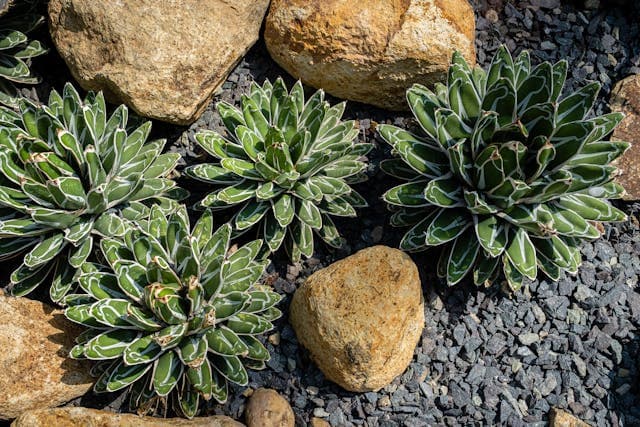
In the world of ornamental succulents, very few plants earn admiration without demanding attention—and Queen Victoria Agave (Agave victoriae-reginae) is one of them. While many plants rely on rapid growth or dramatic flowers to stand out, this agave builds its presence slowly, through balance, structure, and quiet confidence. It doesn’t try to impress at first glance. Instead, it rewards patience, becoming more striking and refined with every passing year.
Its compact rosette, deep green leaves, and crisp white markings feel almost intentional, as if shaped by design rather than nature. There is a sense of order in the way each leaf fits perfectly into the next. Because of this, Queen Victoria Agave blends effortlessly into modern gardens, minimalist balconies, stone planters, and carefully curated plant collections. It especially appeals to gardeners who value form, restraint, and long-term beauty over fast results.
This article takes a closer look at what makes this agave so special—from its natural origins and slow growth habit to practical care in the Indian climate. You’ll also learn about propagation, safety considerations, common problems, and why Queen Victoria Agave has quietly become a favourite among modern gardeners who believe that true beauty takes time.
🌵 What Makes Queen Victoria Agave So Special?
Queen Victoria Agave is not admired for its size or speed—it is admired for its precision. Every part of this plant feels deliberate, as though it has been shaped slowly and carefully rather than grown in a hurry.
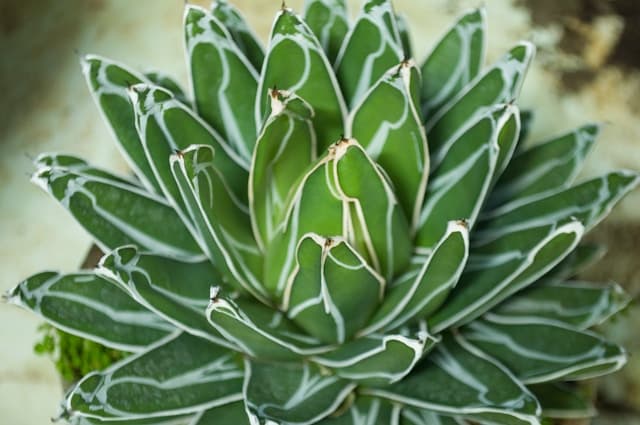
Each leaf emerges thick, firm, and tightly packed, forming a compact rosette that often looks hand-carved rather than naturally grown. The striking white lines along the leaf margins and surfaces are not decorative accidents; they are natural imprints created as neighboring leaves press against one another during growth. Over the years, these markings become sharper and more pronounced, giving the plant its unmistakable geometric character and almost architectural appearance.
Key Visual Traits That Define Its Beauty
- A compact, near-spherical rosette
- Deep green to dark olive leaves with a matte finish
- Bold white, chalk-like markings and margins
- A sharp but relatively small terminal spine at each leaf tip
- Exceptionally slow, controlled, and disciplined growth
Even at full maturity, Queen Victoria Agave remains modest in size, rarely exceeding 30–45 cm in diameter. This restrained scale makes it ideal for pots, balconies, rock gardens, and modern landscapes where structure and proportion matter more than sheer volume.
🌱 Origin & Natural Habitat
Queen Victoria Agave comes from the rugged landscapes of northeastern Mexico, where survival depends on restraint rather than abundance. In its native habitat, the plant grows among rocky, limestone-rich terrain where rainfall is limited, nutrients are scarce, and temperatures swing between extremes. These are not gentle conditions—and that is precisely what shaped the agave’s character.
Because of this environment, the plant evolved to store water efficiently, grow at a measured pace, and thrive in soils that drain quickly rather than hold moisture. It does not waste energy on rapid expansion or unnecessary growth. Instead, it focuses on durability and balance, traits that remain clearly visible even when grown in pots or gardens far from its native land.
What Its Origins Teach Us
- Exceptional tolerance to drought and dry air
- Naturally slow, deliberate growth habit
- Strong preference for gritty, well-drained soil
- Remarkable ability to survive with minimal care
In the wild, Queen Victoria Agave survives by conserving energy and using only what it needs. That same survival strategy carries effortlessly into cultivated gardens, making it a plant that rewards patience while asking for very little in return.
🐢 Growth Habit: Why Slow Is Its Superpower
Many gardeners feel concerned when Queen Victoria Agave shows little or no visible growth, especially during the first few months or even years. In reality, this slow pace is not a sign of poor health—it is one of the plant’s greatest strengths.
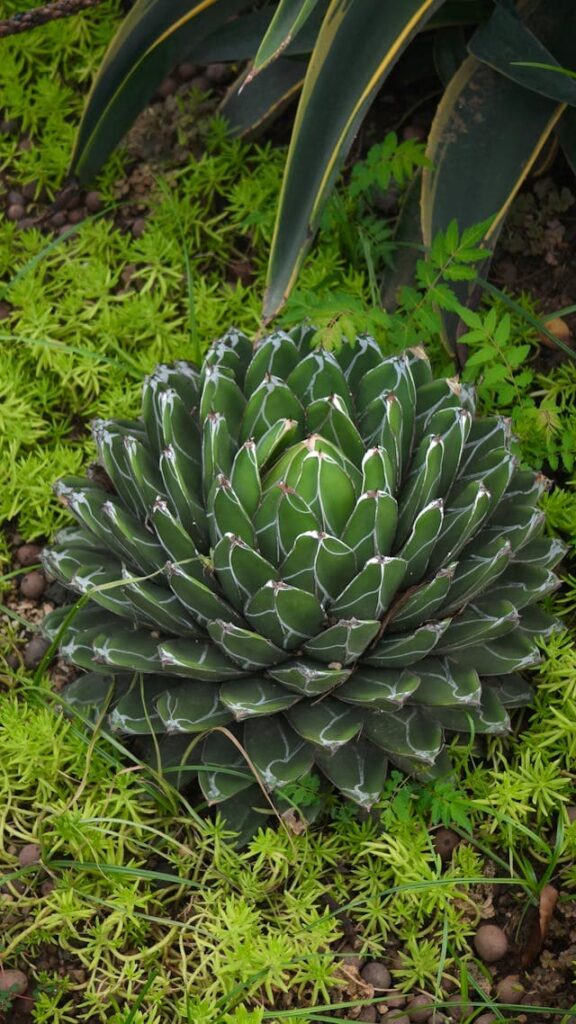
Instead of pushing out new leaves quickly, this agave directs its energy inward. It focuses on thickening existing leaves, strengthening its internal structure, and maintaining perfect symmetry. Each leaf is given time to mature fully before the next one appears. As a result, growth may seem almost invisible, but what’s happening beneath the surface is refinement rather than expansion.
Over time—often across several years—the rosette becomes tighter, heavier, and more sculptural. The plant doesn’t change dramatically from season to season, but it slowly develops a sense of weight, balance, and permanence that fast-growing plants simply cannot achieve.
What to Expect from Its Growth
- Extremely slow growth, especially when grown in pots
- Several years needed to reach full, mature form
- Rare production of offsets compared to many other agaves
- Flowers only once in its lifetime, after many years of maturity
When flowering finally occurs, the plant sends up a tall flower spike from the center of the rosette. This marks the final stage of its life cycle, after which the main plant gradually declines. However, in home gardens and containers, flowering is rare, allowing Queen Victoria Agave to remain a long-term, living sculpture for decades.
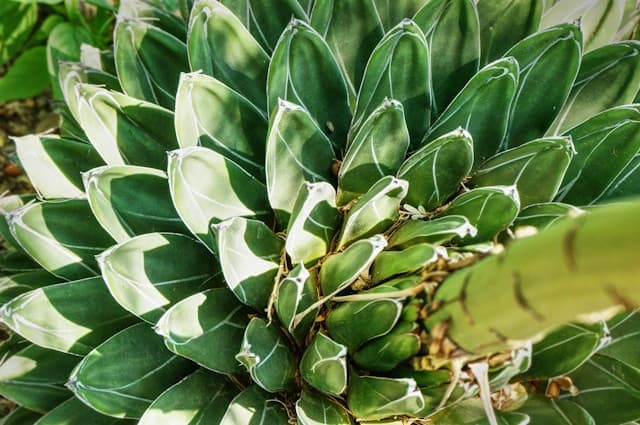
🌼 Flowering Habit of Queen Victoria Agave
Queen Victoria Agave follows a monocarpic life cycle, meaning it flowers only once in its lifetime. This moment comes after many years of slow, steady growth—often 15 to 30 years or even longer—when the plant has fully matured and stored enough energy for this final act. For most of its life, the agave remains focused on maintaining its compact form rather than preparing to bloom.
When flowering finally begins, a tall, upright stalk rises from the center of the rosette, reaching several times the height of the plant itself. Along this stalk, clusters of pale yellow to cream-colored flowers appear, drawing pollinators and marking the completion of the agave’s natural cycle. After seed formation, the main rosette slowly declines and eventually dies, which is a natural and expected process—not a sign of failure or poor care.
In home gardens and container-grown plants, flowering is rare, especially in controlled conditions. This rarity allows gardeners to enjoy the Queen Victoria Agave as a long-lasting, sculptural presence for decades, without sudden changes or loss of form.
☀️ Best Time & Conditions to Grow (Indian Climate)
Queen Victoria Agave adapts well to Indian growing conditions when two things are handled correctly: drainage and restraint. This plant is far more forgiving of heat and dryness than excess moisture or poor airflow. Once those basics are respected, it performs reliably across many regions of India.
🌞 Ideal Growing Conditions at a Glance
| Factor | Requirement |
|---|---|
| Temperature | 18°C – 35°C (tolerates higher with care) |
| Sunlight | Bright light to full sun (4–6 hours) |
| Soil | Sandy, gritty, fast-draining |
| Water | Low; only after soil dries completely |
| Humidity | Low to moderate |
| Space | Pots or open ground with excellent drainage |
🌍 Regional Suitability Across India
- North India: Performs very well on sunny terraces and balconies; winter frost protection is essential
- Central India: Thrives in heat but needs rain protection during monsoon months
- South India: Best grown in airy, bright locations with strict control over watering
- Coastal regions: Can grow successfully if kept under cover to avoid excess humidity and rain exposure
🌡️ Can Queen Victoria Agave Withstand Extreme Indian Weather?
🔥 Extreme Summer Heat (Up to 47°C)
Queen Victoria Agave can tolerate extreme summer temperatures, even 45–47°C, which are common in parts of North and Central India—when managed correctly. Thanks to its thick, water-storing leaves and desert origins, the plant handles dry heat remarkably well. However, prolonged exposure to harsh afternoon sun during heatwaves can stress the plant, causing leaf scorching or growth slowdown. During peak summer, placing the plant in bright light with partial afternoon shade, maintaining excellent drainage, and reducing watering frequency allows it to endure intense heat safely.
❄️ Cold & Frost Conditions
Queen Victoria Agave is not frost-hardy. While it can tolerate cool temperatures down to around 5°C, exposure to frost or near-freezing conditions may damage the leaves and the central growing point. In North Indian winters, especially in frost-prone regions, potted plants should be moved to a protected, dry location such as a covered balcony or veranda. Plants grown in open ground benefit from light protection using dry mulch or breathable covers to prevent cold injury.
🌿 Climate Reality Check
This agave fails far more often due to overwatering and cold stress than heat. When dryness, airflow, and seasonal protection are respected, Queen Victoria Agave proves itself to be one of the most climate-resilient succulents for Indian gardens.ers, especially in regions that experience frost, potted plants should be moved to a protected, dry area, such as a covered balcony or greenhouse-like space. Plants grown in open ground need frost protection using dry mulch or breathable covers.
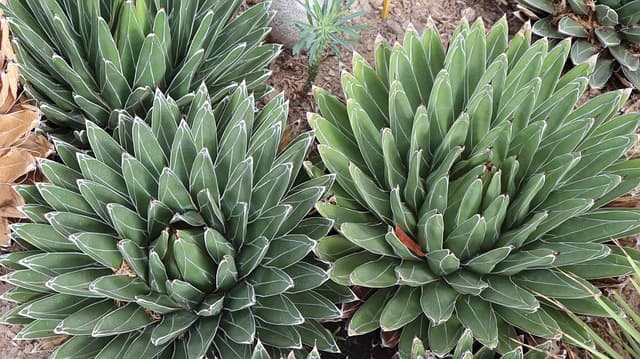
🪴 Potting & Soil Mix (Very Important)
TQueen Victoria Agave has one clear dislike—sitting in wet soil. More plants are lost to poor drainage than to neglect, making soil choice the single most important factor in keeping this agave healthy. If the roots remain wet for too long, rot sets in quickly and is often irreversible.
The goal is not rich soil, but fast-draining, breathable soil that dries out completely between waterings. A loose, gritty mix closely mimics the rocky conditions of its natural habitat.
Recommended Soil Mix
- 40% coarse sand or river sand
- 30% garden soil
- 20% perlite or pumice
- 10% compost (optional and minimal)
This mix provides enough support for the roots while allowing excess water to escape quickly.
Pot Selection Matters
- Always choose pots with proper drainage holes
- Clay or terracotta pots are preferred, as they allow moisture to evaporate and improve airflow
- Plastic pots should be used only when drainage is excellent and watering is strictly controlled
A well-chosen pot and soil mix may not be visible above the surface, but it quietly determines whether Queen Victoria Agave struggles—or thrives for decades.
💧 Watering: Less Is Always More
Queen Victoria Agave is designed to survive dry periods. Its thick, fleshy leaves store enough moisture to sustain the plant for long stretches, which is why overwatering is far more harmful than occasional dryness. When in doubt, it is always safer to wait a little longer before watering.
Instead of following a fixed schedule, watering should be guided by the soil. The plant prefers a clear cycle of soaking and complete drying, without constant moisture around the roots.
Simple Watering Guidelines
- Water only when the soil is completely dry from top to bottom
- In summer, watering once every 10–15 days is usually sufficient
- In winter, reduce watering to once every 25–30 days
- During the monsoon, water only if rain does not reach the pot and the soil is fully dry
Avoid pouring water directly into the center of the rosette. Trapped moisture between the leaves can lead to rot, especially in humid or cooler conditions.
A slightly thirsty Queen Victoria Agave recovers easily. One that stays wet for too long often does not.
🌿 Fertilization Needs
Queen Victoria Agave does not ask for frequent feeding, and in fact, too much fertilizer often does more harm than good. In Indian gardening practice, nutrients are usually given during spring (February–March) and autumn (September–October)—and these seasons also suit this agave best. During these months, the plant is gently active without being stressed by extreme heat or cold.
Rather than using strong chemical fertilizers, mild natural inputs such as vermicompost, well-rotted cow dung compost, or diluted compost tea are more than sufficient when used sparingly. A thin top dressing once in spring and once in autumn provides all the nourishment this slow grower needs. Overfeeding should be avoided, as excess nutrients—especially nitrogen—can soften the leaves, blur the white markings, and disturb the plant’s naturally compact and symmetrical form.
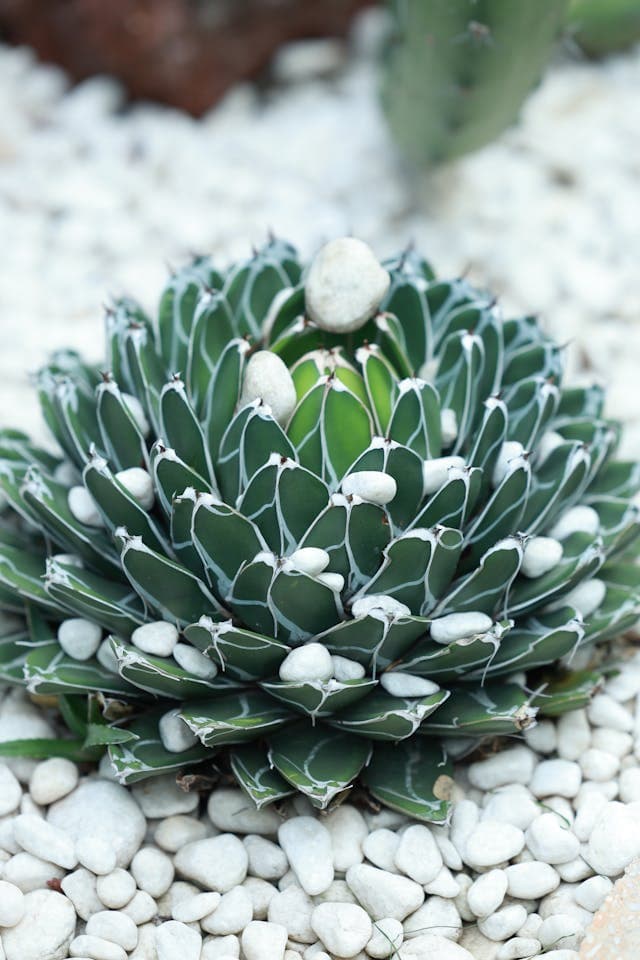
🔁 Propagation: How Queen Victoria Agave Is Multiplied
Propagation of Queen Victoria Agave is slow and limited, much like the plant itself. This is not an agave that multiplies quickly or freely, and that rarity is part of its value. While propagation is possible, it requires patience and the right timing.
1️⃣ Offsets (Pups) – The Practical Method
Queen Victoria Agave rarely produces offsets, but when it does, they appear slowly at the base of the plant. These pups should never be rushed. Wait until the offset has developed its own small root system before separating it from the parent. Separation is best done during warm months, when the plant can heal quickly. After cutting, allow the pup to dry for 2–3 days before planting it in a dry, well-draining soil mix. This resting period helps prevent rot and improves survival.
2️⃣ Seeds – Slow and for Experienced Growers
Seed propagation is possible only after the plant flowers, which may take decades. Even after germination, seedlings grow extremely slowly and may take many years to develop the compact form and markings of the parent plant. This method is best suited for collectors or experienced growers with long-term patience.
For most home gardeners, offset propagation—when available—is the safest and most practical way to multiply Queen Victoria Agave. It may be slow, but it preserves the character and form that make this plant so special.
⚠️ Toxicity & Safety
Queen Victoria Agave is not edible and should never be consumed by humans or animals. Like many agaves, it contains sap that can cause skin irritation or itching, especially in people with sensitive skin. While the plant is not highly poisonous, accidental ingestion may lead to mild stomach discomfort in pets or children.
Beyond chemical irritation, physical injury is a more common concern. Each leaf ends in a sharp terminal spine (needle-like thorn) that can easily pierce skin if the plant is handled carelessly or placed in high-traffic areas. These sharp tips can cause cuts or puncture wounds, particularly for children and curious pets.
Basic Safety Guidelines
- Wear gloves while handling or repotting the plant
- Keep it out of reach of children and pets
- Avoid placing it near walkways or seating areas
With simple precautions, Queen Victoria Agave remains a safe and rewarding plant to grow—its beauty comes with structure, not danger.
🛠️ Common Problems & Practical Solutions
🧩 Problem–Solution Care Chart
| Problem | Likely Cause | Solution |
|---|---|---|
| Yellowing leaves | Overwatering | Reduce watering, improve drainage |
| Soft base | Root rot | Repot immediately in dry soil |
| Fading white lines | Low light | Move to brighter location |
| Leaf shriveling | Extreme dryness | Light watering after soil dries |
| Fungus spots | Humidity & wet leaves | Improve airflow, avoid overhead watering |
🌵 Why It’s Perfect for Modern Gardens
Queen Victoria Agave feels made for modern spaces because it brings structure without clutter. Its clean lines, controlled growth, and sculptural form allow it to stand out without overwhelming its surroundings. Rather than filling space, it anchors it—quietly and confidently.
This agave fits effortlessly into:
- Minimalist landscapes where form matters more than abundance
- Zen-style gardens that value balance and restraint
- Rock gardens and dry landscapes with sharp visual contrast
- Balcony containers where space is limited but design is intentional
- Architectural plant displays that highlight symmetry and texture
It pairs especially well with hard, neutral elements such as stone planters, concrete décor, gravel beds, and muted-toned pots, all of which enhance its geometric beauty rather than compete with it.
Unlike fast-growing or spreading plants, Queen Victoria Agave does not demand constant pruning, reshaping, or attention. Once placed correctly, it holds its form for years—making it an ideal choice for busy plant lovers who want lasting beauty without ongoing maintenance.
🌸 A Message Written in Patience
Queen Victoria Agave teaches a quiet lesson—not everything beautiful needs to grow fast.
In a world that celebrates speed, instant results, and constant change, this agave chooses stillness. It grows slowly, with intention, shaping itself leaf by leaf, year after year. Nothing about it is rushed, yet nothing feels unfinished. Over time, it becomes a living sculpture—formed not by urgency, but by patience.
True beauty isn’t measured by how quickly it grows, but by how well it holds its form.

