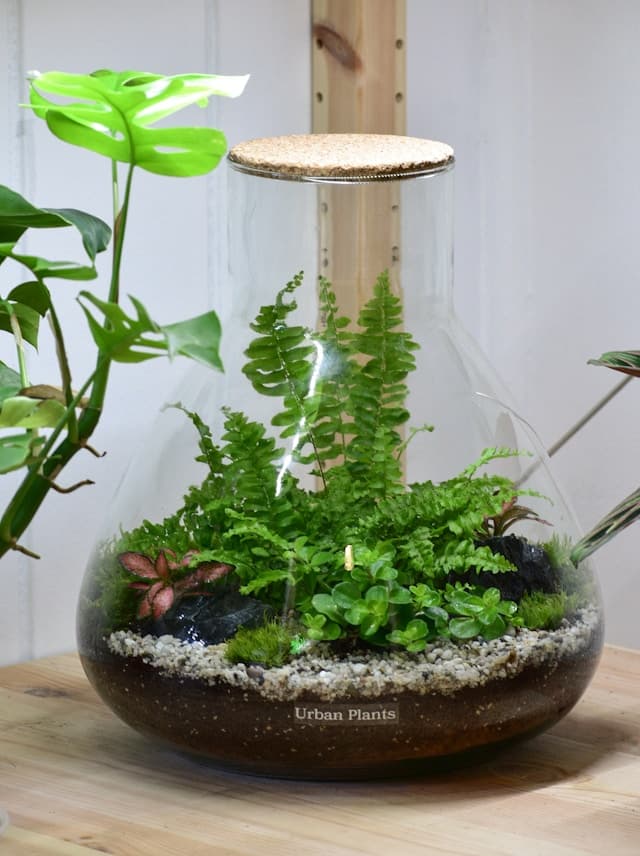
There’s a kind of quiet magic in watching a tiny forest grow inside a glass jar—so slow that you almost forget it’s alive, yet steady enough to teach you patience, balance, and stillness. Unlike potted plants begging for daily attention, terrariums invite you to observe rather than manage every moment.
In this article, we aren’t just explaining what a terrarium is—we’ll uncover how it behaves, what most people overlook, and how you can create one that truly thrives instead of ending up wilted or moldy. This is about crafting a living “mini-ecosystem” with care, insight, and a bit of real-world experience.
🧠 My First Terrarium & What It Taught Me
When I built my first terrarium, I assumed it would be decorative—but it quickly became a personal lesson in understanding nature’s rhythms. I watched condensation form, soil change, plants lean for light, and realized that these tiny ecosystems have their own language. That experience reshaped how I approach every other plant on my windowsill.
Water is not everything.
Very often, less water is better. Too much meant mold; too little meant dull, lifeless soil.
Humidity is the secret.
Closed terrariums create their own humid microclimate — ideal for small ferns, moss, and moisture-loving plants.
Light matters more than we think.
Too much direct sun cooked the plants; indirect, bright light helped them thrive.
These insights shaped how I now choose plants and build terrariums — especially in the Indian climate with hot summers and monsoons.
🌱 What Is a Terrarium?
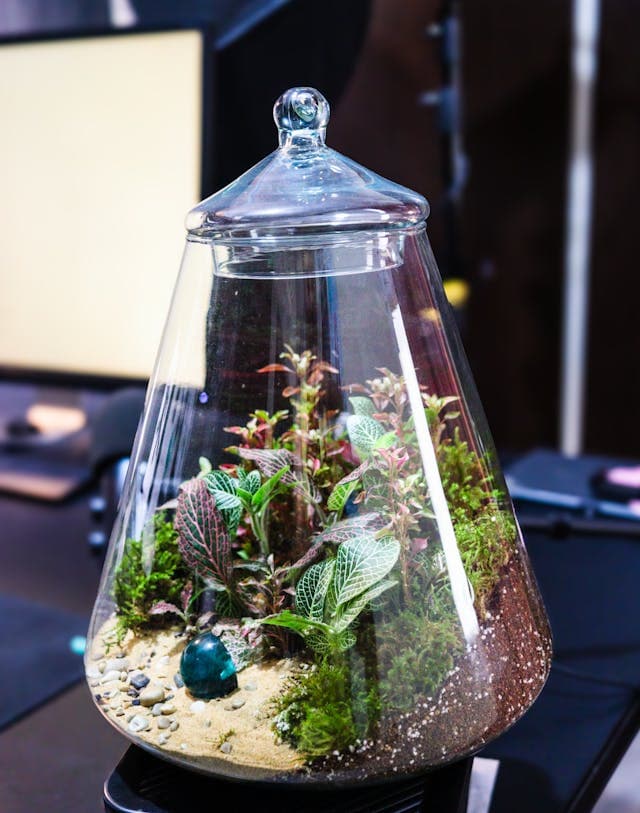
A terrarium is a miniature ecosystem enclosed in glass. It’s not simply soil and plants placed inside a container—it’s a controlled environment where moisture, light, and air continuously interact. Once this balance is established, the system begins to support itself with minimal outside input.
Unlike regular potted plants, terrariums rely on:
- Natural water cycles
- Humidity balance
- Light filtration
- Minimal interference
Once established, many terrariums can survive for months—or even years—with little care.
🌍 Why Is It Called “A Forest in a Jar”?
The phrase is not just poetic—it is scientifically accurate.
Inside a closed terrarium:
- Plants release moisture through transpiration
- Water condenses on glass walls
- Condensed droplets fall back into the soil
- Dead leaves decompose and nourish roots
This cycle closely mirrors how a real forest ecosystem works.
A terrarium teaches us one powerful lesson:
Nature doesn’t need control—it needs balance.
🏺 Origin & History of Terrariums
Terrariums were accidentally discovered in the 1800s by Nathaniel Bagshaw Ward, a British botanist. He noticed that plants survived unusually well inside sealed glass containers.
This led to the invention of the Wardian Case, which:
- Allowed plants to be transported across oceans
- Revolutionized botany and plant conservation
- Laid the foundation for modern terrariums
Today, terrariums are both scientific models and artistic expressions.
🧪 Types of Terrariums
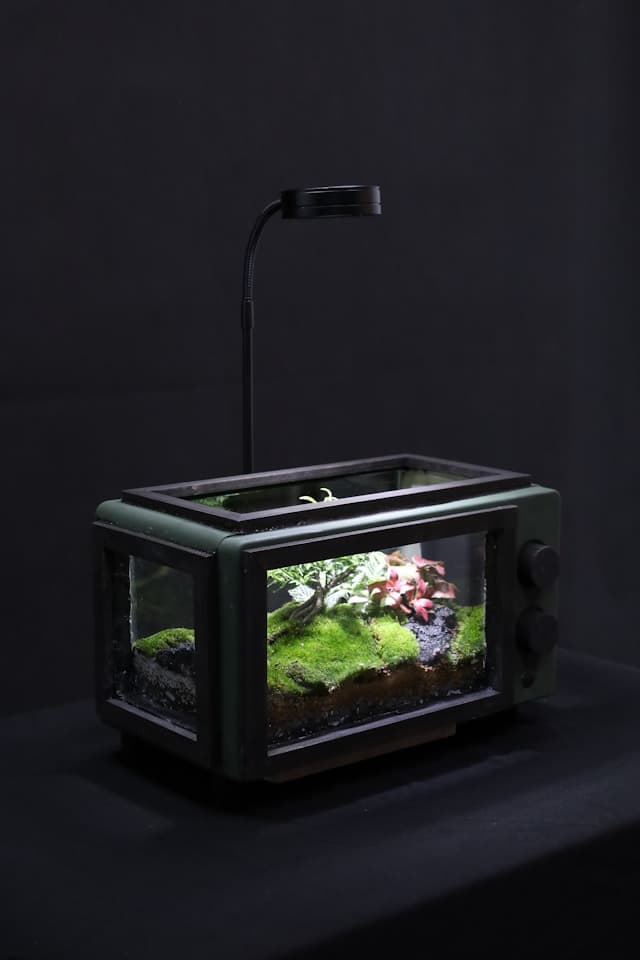
Terrariums fall broadly into two categories:
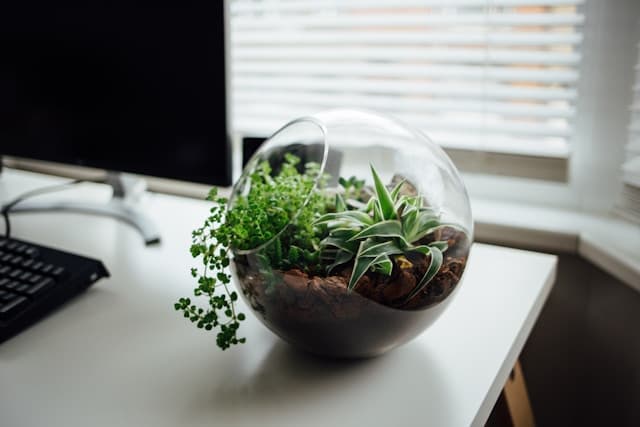
Open terrariums allow airflow and are better for succulents or air plants that dislike constant high humidity. The container design matters just as much as the plant choice.
Closed terrariums create a moist, self-sustaining environment where water evaporates and condenses back into the soil. These are ideal for moisture-loving ferns, mosses, and small tropical plants.
🌿 Best Plants for Terrariums
Not all plants enjoy life under glass. The key is slow growth + small leaves.
🌿 Plants for Closed Terrariums
(High humidity • low airflow • indirect light)
Closed terrariums mimic a tropical forest floor, so plants must love moisture and stable conditions.
🌱 Foliage Plants (Most Reliable)
- Fittonia (Nerve Plant) – Colorful veins, slow growth, terrarium classic
- Peperomia obtusifolia (Baby Rubber Plant – mini) – Thick leaves, humidity tolerant
- Peperomia caperata – Wrinkled leaves, compact size
- Pilea glauca – Tiny silver leaves, soft spreading habit
- Pilea depressa – Excellent ground cover
- Syngonium (dwarf varieties) – Needs pruning but adapts well
- Hypoestes (Polka Dot Plant) – Adds color, prefers humidity
- Mini Dieffenbachia – Only dwarf forms, use cautiously
- Aluminum Plant (Pilea cadierei – small) – Metallic leaf shine
- Mini Philodendron (slow-growing types) – Lush look, tropical feel
🌿 Ferns (Perfect for “Forest” Look)
- Button Fern (Pellaea) – Compact and neat
- Lemon Button Fern – Light citrus scent, loves humidity
- Mini Maidenhair Fern – Very delicate, high humidity only
- Rabbit’s Foot Fern (young plants) – Rhizomes add texture
- Asparagus Fern (fine-leaf varieties) – Soft, airy appearance
🌱 Moss & Ground Covers (Essential for Closed Terrariums)
- Sheet Moss – Carpet-like forest floor
- Cushion Moss – Dome-shaped, decorative
- Haircap Moss – Vertical texture
- Java Moss – Adapts easily, stays green
- Selaginella (Club Moss) – Fern-like look, loves moisture
🌸 Accent / Miniature Plants
- Baby Tears (Soleirolia) – Tiny leaves, fast spread
- Mini Begonia (rex-type cuttings) – Colorful but needs airflow checks
- Cryptanthus (Earth Star – small) – Rosette shape, tropical vibe
⚠️ Note:
Most closed-terrarium plants are ornamental and not edible. Some may be mildly toxic, so keep away from pets and children.
🌵 Plants for Open Terrariums
(Low humidity • airflow • bright indirect light)
Open terrariums behave more like dry landscapes or deserts.
🌵 Succulents (Top Choice)
- Haworthia – Best terrarium succulent, slow growth
- Gasteria – Thick leaves, tolerates indoor light
- Mini Aloe varieties – Use only dwarf types
- Echeveria (compact forms) – Rosette beauty, needs light
- Crassula ovata (Dwarf Jade) – Easy and hardy
- Crassula perforata – Stacked leaves, architectural look
- Sedum morganianum (young cuttings) – Trailing style
- Sedum rubrotinctum – Jelly-bean leaves
- Adromischus – Thick, spotted leaves, very slow growing
🌵 Cacti (Only Small & Slow Types)
- Mammillaria (mini species) – Round, compact
- Rebutia – Small globular cactus
- Gymnocalycium (moon cactus without graft)
- Astrophytum (young plants) – Star-shaped beauty
⚠️ Avoid fast-growing columnar cacti.
🌱 Semi-Succulent & Dry-Loving Plants
- Portulacaria afra (Dwarf Elephant Bush)
- Sansevieria (very small varieties)
- Peperomia graveolens – Succulent-like, unique shape
- Peperomia ferreyrae (Happy Bean)
🌾 Decorative Non-Living Additions (Highly Recommended)
- Colored sand layers
- Gravel & river stones
- Driftwood or bark
- Miniature figurines
These enhance appearance without affecting humidity.
❌ Plants to AVOID in Any Terrarium
- Money plant (too fast-growing)
- Spider plant (outgrows container)
- Herbs (need airflow & nutrients)
- Flowering plants (short-lived indoors)
- Woody plants or shrubs
🧠 Quick Choosing Guide
| If you want… | Choose |
|---|---|
| Self-sustaining system | Closed terrarium |
| Desert or minimal look | Open terrarium |
| Very low watering | Closed |
| Succulents & cacti | Open |
| Mossy forest feel | Closed |
⚠️ Avoid fast-growing or woody plants—they outgrow the container quickly.
📊 Best Time & Conditions to Build a Terrarium (India)
| Factor | Ideal Requirement |
|---|---|
| Climate | Mild to warm (20–30°C) |
| Best Season | October to February |
| Light | Bright, indirect sunlight |
| Humidity | Medium to high (for closed terrariums) |
| Soil | Well-draining, sterile mix |
| Container | Clear glass, wide mouth |
🧱 How to Build a Terrarium (Layer by Layer)
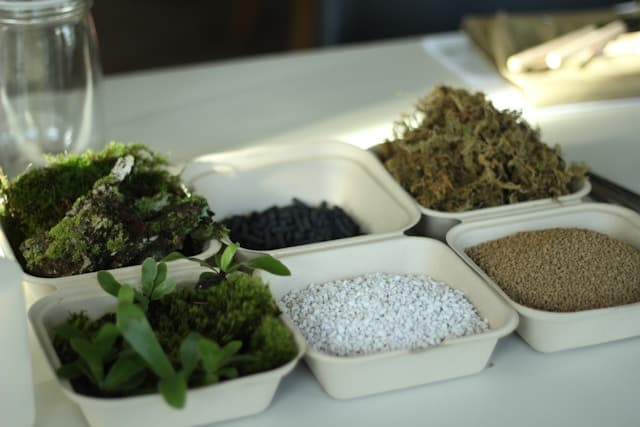
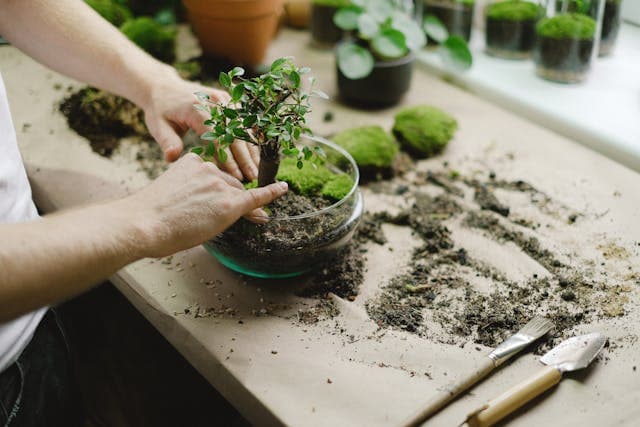
- Drainage Layer – Pebbles or gravel
- Charcoal Layer – Prevents odor & fungus
- Soil Layer – Light, airy, moisture-retentive
- Planting Layer – Arrange thoughtfully
- Decor Layer – Stones, bark, figurines (optional)
Water lightly. Overwatering is the most common mistake.
☀️Light Requirements
Terrariums thrive in bright indirect light. Direct, harsh sunshine can heat up the glass like an oven—especially in Indian summer afternoons—cooking delicate leaves and disrupting the moisture cycle. I learned this when my first terrarium near a south-facing window baked overnight.
💧Watering
In closed terrariums, water recycles itself through evaporation and condensation. You don’t water like a regular plant. Overwatering is one of the biggest mistakes—excess moisture breeds mold and root rot, not healthy leaves.
In one of my early terrariums, I added water just because the soil looked “dry on top.” Within days, the glass fogged constantly and a fuzzy gray mold emerged. Opening the lid, reducing water, and increasing brief ventilation corrected it. That taught me to observe moisture rather than follow a schedule.
🧬 Propagation in Terrariums
Terrariums naturally support propagation due to humidity.
Easy Propagation Methods:
- Stem cuttings (Fittonia, Peperomia)
- Division (Ferns)
- Moss spreading through fragments
Propagation inside terrariums is slow—but extremely stable.
⚠️ Are Terrarium Plants Toxic or Edible?
- Most terrarium plants are ornamental
- Not edible
- Some (like Fittonia, Ferns) are mildly toxic if ingested
- Keep terrariums away from pets and children
Terrariums are for observation, not consumption.
🧩 Terrarium-Specific Problems & Solutions
| Problem | Likely Cause | Simple Solution |
|---|---|---|
| Constant foggy glass | Excess moisture | Open lid for a few hours |
| Mold on soil | Poor airflow | Remove mold + add charcoal |
| Yellow leaves | Overwatering | Reduce water, increase light |
| Plant rotting | No drainage | Replace soil & replant |
| Stunted growth | Low light | Move near bright window |
🧘 Why Terrariums Feel So Calming
Terrariums activate the same mental responses as:
- Forest walks
- Rain sounds
- Natural patterns
Psychologically, they:
- Reduce anxiety
- Improve focus
- Encourage mindfulness
Watching a terrarium is like watching time slow down.
🏡 Terrariums as Living Home Décor
Unlike artificial décor:
- They grow
- They change
- They respond to care
A terrarium becomes a relationship, not an object.
Placed on study tables, office desks, meditation corners, or bedrooms (indirect light only), they quietly remind us to breathe.
🌿 The Science Behind a Terrarium’s Self-Sustaining Life
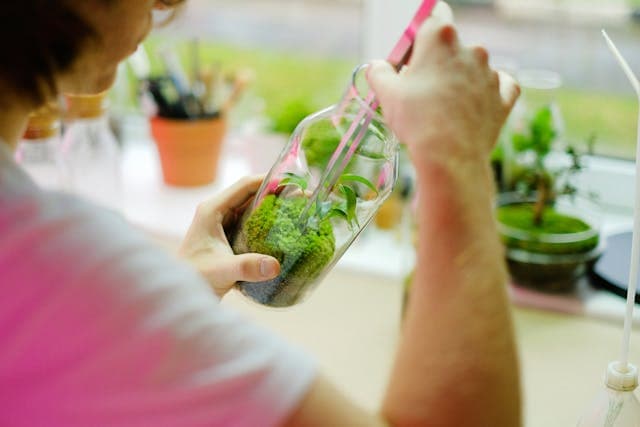
A terrarium may look like a decorative glass jar, but inside it operates on real ecological principles. What makes terrariums fascinating is their ability to recycle resources continuously, just like nature does on a large scale.
🌧️ The Mini Water Cycle
- Plants release water vapor through transpiration
- Moisture condenses on the glass surface
- Droplets fall back into the soil
- Roots absorb the water again
This closed-loop system explains why terrariums need very little watering.
🍂 Nutrient Recycling
- Dead leaves break down naturally
- Microorganisms convert organic matter into nutrients
- Roots reuse those nutrients
In a healthy terrarium, decay is not a problem—it is essential.
🌡️ Understanding Temperature & Microclimate (Especially in India)
Summer (March–June)
- Avoid windows with direct afternoon sunlight
- Heat can cook plants inside glass
- Vent closed terrariums occasionally
Monsoon (July–September)
- Natural humidity is high
- Watering should be reduced drastically
- Watch for fungal growth
Winter (October–February)
- Best season for terrarium setup
- Stable temperature and light
- Ideal for propagation and planting
Terrariums thrive when indoor temperatures stay between 18–30°C.
🪴 Choosing the Right Container: More Important Than You Think
Ideal Containers:
- Clear glass bowls
- Fish tanks
- Cylindrical jars
- Apothecary jars
Avoid:
- Colored glass
- Narrow-neck bottles (for beginners)
- Plastic containers (trap heat)
A wide opening makes maintenance easier and reduces mistakes.
🌱 Soil Matters: Not All Soil Is Terrarium-Friendly
Regular garden soil is too heavy and retains excess moisture.
Best Terrarium Soil Mix:
- 40% cocopeat
- 30% garden soil (sterilized)
- 20% sand or perlite
- 10% compost or leaf mold
This mix allows oxygen flow, controlled moisture, and healthy root development.
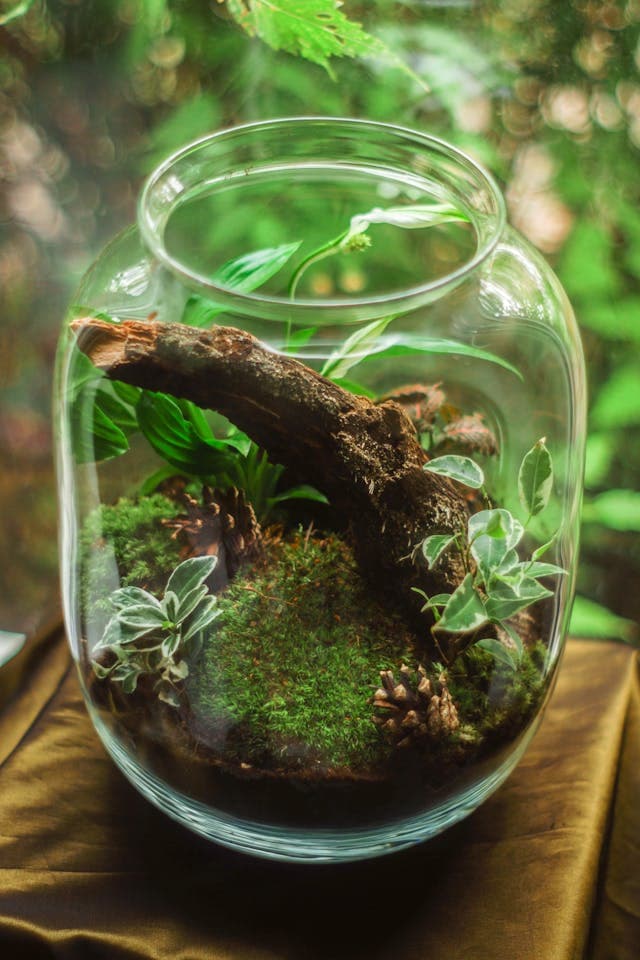
🌿 Moss: The Soul of a Forest in a Jar
Moss is what truly transforms a terrarium into a forest floor.
Why Moss Is Important:
- Maintains humidity
- Prevents soil erosion
- Enhances natural appearance
Moss grows slowly, but once settled, it stabilizes the entire ecosystem.
✂️ Pruning & Long-Term Maintenance
Terrariums don’t grow fast—but they do grow.
Prune when:
- Leaves touch glass continuously
- Plants overcrowd
- Yellowing appears
Remove dead matter immediately to maintain balance.
🧪 Common Myths About Terrariums (Debunked)
- Terrariums never need care ❌
- Any plant can live inside ❌
- Foggy glass always means healthy ❌
Understanding prevents failure.
🧠 Educational Value of Terrariums
Terrariums teach:
- Ecosystem balance
- Cause-and-effect relationships
- Patience and sustainability
That’s why they are used in schools and biology labs.
🏡 Terrariums vs Potted Plants
| Feature | Terrarium | Potted Plant |
|---|---|---|
| Watering | Rare | Frequent |
| Space | Minimal | More |
| Ecosystem | Self-contained | Open |
| Maintenance | Low | Medium |
| Learning value | High | Moderate |
🪷 Emotional Connection: Why People Fall in Love with Terrariums
Terrariums grow slowly, quietly, and meaningfully.
They create a bond through observation, not effort.
Growth doesn’t have to be loud to be real.
⚠️ When a Terrarium Fails (And Why That’s Okay)
Failure teaches balance.
Even forests collapse—and return stronger.
🌿 Terrariums as Sustainable Living Symbols
Terrariums feel like a quiet lesson in how life can thrive with less. Inside a simple glass jar, nothing is wasted—water returns to the soil, growth slows naturally, and balance replaces excess. You don’t need constant inputs, chemicals, or daily intervention; you just need to understand when to step back. Watching a terrarium over time makes you realize that sustainability isn’t a big lifestyle change—it’s a mindset. It’s about respecting natural limits, avoiding unnecessary interference, and trusting that when systems are allowed to balance themselves, they often flourish on their own.
🆕 Mistakes Most Beginners Don’t Notice
🧠 Mistake #1 — Too Much Water
Water doesn’t disappear in a closed terrarium; it circulates. Adding more “just in case” often ruins the balance.
☀ Mistake #2 — Too Much Sunlight
Glass amplifies light and heat. Morning sun is kind; afternoon sun is harsh.
🌧 Mistake #3 — Ignoring Seasonal Shifts
Indian monsoon months raise humidity naturally. Keep lids off for short periods to prevent rot.
🌙 A Message Written in Glass
Terrariums are not chores; they are companions. Once you learn to read the subtleties—where they flourish, where they struggle—they become more than décor: they become teachers of patience and balance. A forest in a jar grows quietly, but it speaks loudly to those who care to watch.
“When care is gentle and balance is respected, even the smallest world can sustain itself.”

