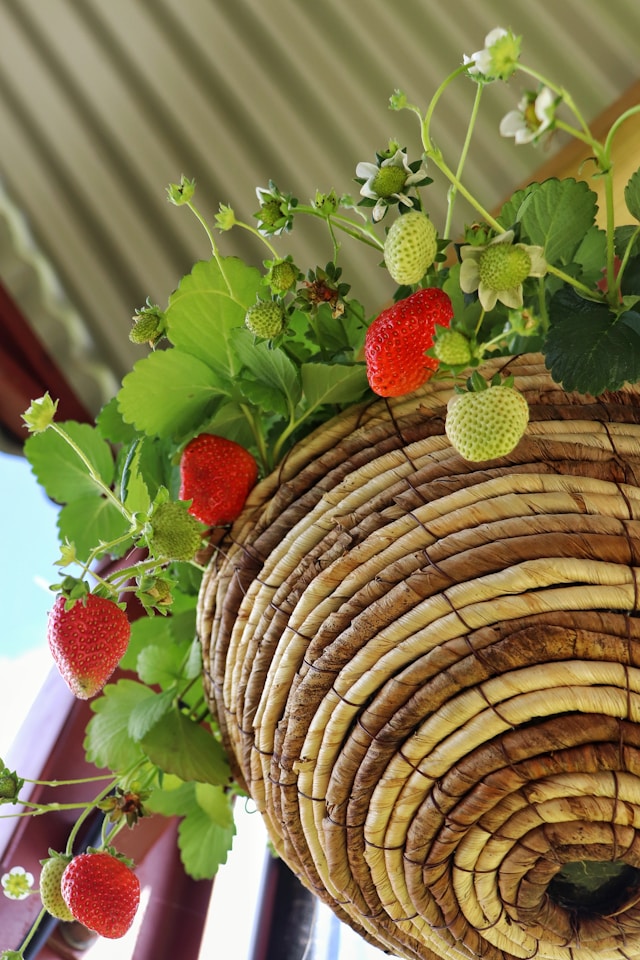
Modern living spaces are getting cosier, yet the craving for fresh, home-grown food keeps getting bigger 🌿. If you’ve ever felt that gardening is a “luxury for those with yards,” hanging baskets are here to shatter that myth. These simple, space-saving containers prove that you don’t need acres of soil to grow your own fruits and veggies — just a bit of sunlight, regular care, and a love for nurturing life.
Imagine vibrant greens spilling over from your balcony, juicy cherry tomatoes dangling at eye level by your window, or fragrant herbs greeting you on your veranda. In warm and varied climates like ours, hanging baskets are more than pretty accents; they’re productive powerhouses that make every inch count.
This guide isn’t just about what looks good — it’s about what grows well. You’ll learn what to plant, how to care for it, and how to turn vertical spaces into thriving miniature gardens that feed both your body and your soul 🌞🍅.
🌿 Why Hanging Baskets Make So Much Sense for Growing Food
Hanging baskets quietly solve many problems that frustrate urban gardeners. When ground space is limited and every corner matters, growing food vertically isn’t just smart—it’s freeing. These suspended gardens turn limitations into opportunities, especially for flats, rented homes, and compact terraces.
🌱 Space Is No Longer a Barrier
Hanging baskets use air instead of land. Balconies, railings, hooks, pergolas, and even sunny windows become growing zones, allowing you to produce food without sacrificing walking or sitting space.
🍓 Cleaner, Healthier Harvests
Since fruits and vegetables never touch the ground, they stay cleaner and fresher. There’s no soil splash during watering or rain, which means less washing and a lower risk of rot or contamination.
🐛 Fewer Pest Problems
Many common garden pests travel through soil. By lifting plants off the ground, hanging baskets naturally reduce exposure to crawling insects and soil-borne damage, cutting down the need for chemical sprays.
🌿 Comfortable, Stress-Free Harvesting
No bending, kneeling, or sore backs. Hanging baskets keep your harvest at eye or hand level, making daily care and picking effortless—even for elderly gardeners or those with mobility issues.
🌬️ Better Airflow, Stronger Plants
Suspended plants enjoy better air circulation from all sides. This reduces fungal issues, keeps foliage dry, and helps plants grow sturdier stems and healthier leaves.
🌸 Beauty That Also Feeds You
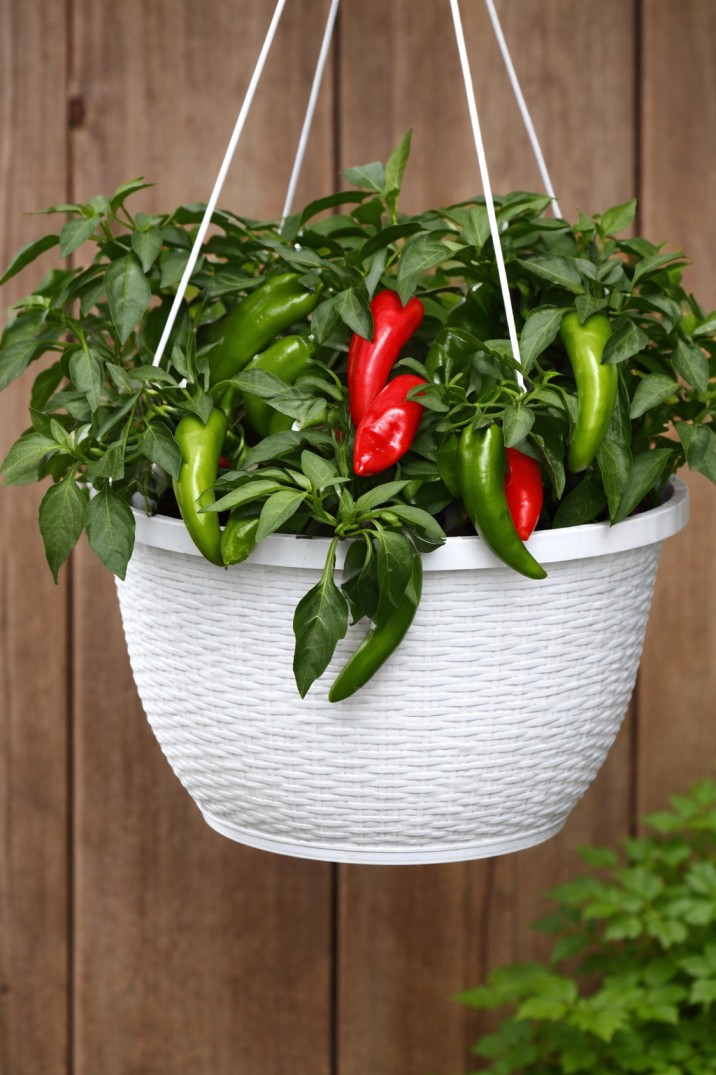
Hanging baskets blur the line between decoration and food production. Trailing tomatoes, strawberries, chillies, and herbs add colour and life while quietly producing fresh ingredients.
Hanging baskets also invite experimentation. You can try new plants, rearrange layouts, or change crops with the seasons—without disturbing existing garden beds or permanent setups. In small homes, that flexibility is priceless.
🧺 Choosing the Right Hanging Basket — The Quiet Foundation of Success
In hanging basket gardening, plants don’t fail suddenly—they fail slowly, often because the basket itself wasn’t right. Before seeds, soil, or sunshine, the container decides how roots breathe, how water behaves, and how forgiving the system will be on hot or windy days.
Think of the basket as the home your plant lives in. A good home forgives mistakes. A poor one punishes them.
🌾 Coco-Lined Wire Baskets
These are a favourite for a reason. The natural coconut fibre allows excess water to drain freely while still holding enough moisture for roots to stay comfortable. They also keep roots cooler and look beautifully organic on balconies and verandas.
Best for: Leafy greens, strawberries, herbs, and moderate climates.
🪴 Plastic Hanging Pots with Drainage Holes
Lightweight and easy to manage, plastic baskets hold moisture longer—an advantage for busy gardeners or windy balconies where baskets dry quickly. The key is proper drainage holes; without them, roots can suffocate.
Best for: Tomatoes, chillies, trailing vegetables, and beginners.
🔥 Fabric or Grow-Bag Baskets
A hidden gem for hot regions. Fabric baskets breathe from all sides, preventing root overheating and reducing waterlogging. They dry faster, but that trade-off often means healthier roots in extreme summers.
Best for: Indian summers, sun-facing balconies, and heat-sensitive plants.
⚖️ A Small but Critical Tip
Always match the basket size to the crop. Undersized baskets dry too fast and restrict roots, while oversized ones become heavy and difficult to manage once watered. Balance matters more than appearance.
When the basket is right, plants grow with confidence. When it’s wrong, no amount of fertiliser can fully fix it.
📏 Ideal Hanging Basket Size Guide (Roots Decide Yield)
When growing food in the air, the basket replaces the ground—so size becomes your soil depth, nutrient reserve, and water buffer all in one. A well-sized basket allows roots to breathe, anchor, and feed properly. A cramped one quietly limits growth long before you notice symptoms.
🧺 Recommended Basket Sizes by Crop Type
| Crop Type | Ideal Basket Size |
|---|---|
| Leafy greens (spinach, lettuce, fenugreek) | 8–10 inches |
| Herbs (coriander, mint, basil) | 8–10 inches |
| Strawberries | 10–12 inches |
| Bush beans | 10–12 inches |
| Cherry tomatoes | 12–14 inches |
| Chillies / Capsicum | 12–14 inches |
| Peas (dwarf varieties) | 12 inches deep |
| Brinjal (eggplant) | 14 inches deep |
| Dwarf cucumber | 14 inches wide & deep |
| Trailing pumpkin / bottle gourd (young stage) | 14–16 inches (with support) |
🌱 How to Read This Chart Correctly
- Depth matters more than width for fruiting plants.
- Leafy crops forgive smaller baskets, but fruiting crops do not.
- Bigger baskets hold moisture longer, reducing heat stress in summers.
🔩 Support Is Not Optional
As plants mature, baskets gain surprising weight—from wet soil, thick foliage, and developing fruits. Always use metal hooks, wall brackets, or reinforced ceiling anchors. Plastic hooks may look fine initially but often fail mid-season.
A secure basket protects not just your plants, but your confidence as a grower.
When roots feel unrestricted and support feels solid, plants grow without hesitation—and that’s when hanging gardens truly start feeding you back 🌿
🌞 Best Time & Conditions to Grow in Hanging Baskets (Quick Reference)
Hanging baskets respond faster than ground gardens—to heat, wind, dryness, and care mistakes. That’s why understanding conditions matters even more than choosing plants. When these basics are right, baskets reward you quickly and generously.
🌿 Ideal Growing Conditions at a Glance
| Growing Factor | Ideal Condition |
|---|---|
| Temperature | 18–32°C |
| Sunlight | 5–7 hours daily |
| Soil | Light, fertile, well-draining |
| Water | Frequent, never waterlogged |
| Space | Vertical / hanging |
| Climate | Tropical & subtropical |
🌡️ Temperature: Warmth, Not Extremes
Most fruits and vegetables in hanging baskets thrive in mild to warm temperatures. Growth slows below 18°C and stress appears above 35°C. During peak summer, afternoon shade becomes more important than extra sun.
☀️ Sunlight: Bright but Balanced
Five to seven hours of direct sunlight is ideal. Morning sun is gentler and preferred. In harsh summer regions, baskets exposed to full afternoon sun may need repositioning or temporary shade nets.
🌱 Soil: Lightness Is Survival
Heavy garden soil suffocates roots in baskets. Always use a light, airy mix that drains quickly but retains enough moisture. Compost improves nutrition, while cocopeat or perlite improves airflow.
💧 Water: Little and Often
Hanging baskets dry faster than pots on the ground. Watering should be frequent but controlled—enough to moisten the entire root zone without letting water sit at the bottom. Consistency matters more than quantity.
🌬️ Space & Air Movement
Vertical placement allows better airflow, which keeps leaves dry and disease pressure low. Avoid clustering baskets too tightly—plants need breathing room just like roots need soil space.
🌴 Climate Advantage
Tropical and subtropical regions are naturally suited for hanging basket food gardening. With proper timing and shade management, crops can be grown almost year-round.
When temperature, light, and moisture fall into rhythm, hanging baskets stop feeling delicate—and start behaving like dependable food producers 🌿
🍓 Fruits That Thrive in Hanging Baskets
🍓 1. Strawberries — The Natural Show-Stealers
If one fruit seems designed for hanging baskets, it’s the strawberry. Their soft trailing growth allows fruits to dangle freely, staying clean, bright, and perfectly shaped—no mud, no rot, no hidden pests. A basket of strawberries doesn’t just feed you; it decorates your space.
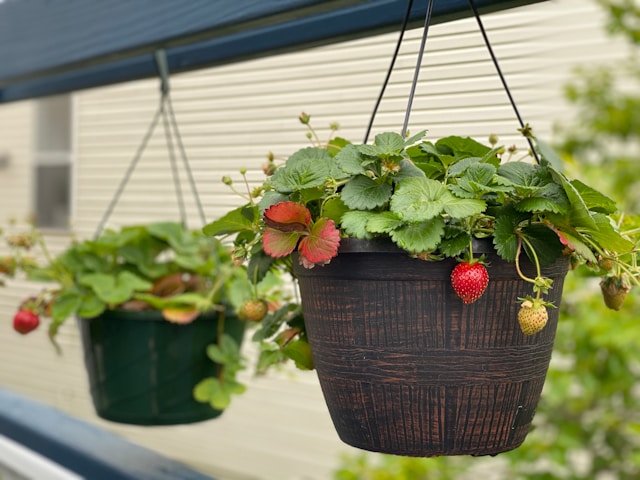
Strawberries perform so well in baskets because their root system stays shallow, meaning they don’t demand deep soil. They also grow compactly, so there’s no need for heavy staking or constant pruning. As flowers turn into fruit, gravity does the work—keeping berries suspended and well-ventilated.
🌱 Why Strawberries Excel in Hanging Baskets
- Shallow roots that adapt easily to limited soil depth
- Naturally trailing habit keeps fruits off wet soil
- Good airflow reduces fungal rot and blemishes
🌿 Care Tips for Sweeter, Healthier Berries
- Plant healthy runners or crowns, not seeds, for faster results
- Keep soil evenly moist during flowering—dry stress reduces sweetness
- Harvest early in the morning when berries are cool and full of flavour
With regular watering and a bit of sunlight, strawberries reward you generously—often producing for weeks from a single well-managed basket. Few crops offer this much joy from such a small space 🍓
🍅 2. Cherry Tomatoes — Small Plants, Big Rewards
Cherry tomatoes may look delicate, but in hanging baskets they behave like determined overachievers. Compact and trailing varieties adapt beautifully to life off the ground, producing clusters of glossy fruits that ripen evenly in sunlight.
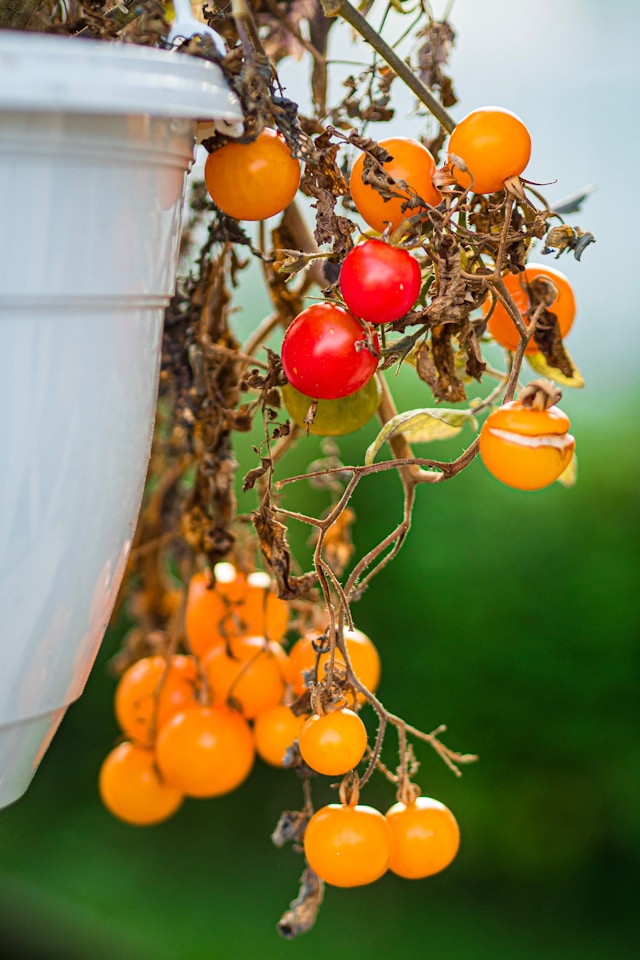
Unlike large indeterminate tomatoes that demand space and constant pruning, dwarf and determinate cherry tomatoes stay manageable. Their controlled growth keeps baskets balanced while still delivering generous harvests.
🌱 Best Tomato Types for Hanging Baskets
- Dwarf cherry tomato varieties with compact growth
- Determinate types that stop growing after fruit set, reducing maintenance
🌿 Care Tips for Healthy, Heavy Fruiting
- Ensure 6–7 hours of direct sunlight for proper flowering and colour development
- Feed regularly with a potassium-rich fertiliser once flowering begins to boost fruit size and sweetness
- Offer light, gentle support if vines start trailing aggressively—soft ties work better than rigid stakes
Cherry tomatoes in baskets ripen cleanly, avoid soil-borne diseases, and turn harvesting into a joy rather than a chore. When grown well, they prove that productivity doesn’t depend on ground space—only smart placement and steady care 🍅
🌶️ 3. Chillies & Mini Capsicum — Compact Plants with a Long Memory
Chillies and mini capsicum might look modest in size, but they carry an impressive work ethic—especially in hanging baskets. Their tidy growth habit and steady fruiting make them ideal for gardeners who want continuous harvests without constant fuss.
These plants adapt beautifully to life above ground because their root systems stay compact, yet efficient. Instead of spreading endlessly, they focus energy upward—producing flower after flower, and fruit after fruit, for months when cared for consistently.
🌱 Why Chillies & Mini Capsicum Thrive in Hanging Baskets
- Compact roots that stay comfortable in limited soil
- Upright growth keeps plants balanced and stable
- Long fruiting season with regular picking
🌿 Care Tips for Better Yield and Heat
- Give them full sunlight—this directly influences flavour, heat, and colour
- Feed regularly during flowering and fruiting; consistent nutrition improves fruit set and prevents drop
When grown in hanging baskets, chillies and capsicum stay cleaner, suffer fewer pest attacks, and reward you with dependable harvests—one fruit at a time, week after week 🌶️
🍆 4. Dwarf Brinjal (Eggplant) — Bold Harvests from a Compact Plant
Brinjal may not be the first crop people imagine for hanging baskets, but bush-type and dwarf varieties prove that it’s entirely possible—and surprisingly rewarding. When given enough depth and stability, these compact plants grow confidently and fruit well above ground.
Unlike sprawling field varieties, dwarf brinjals focus energy on strong central stems and controlled fruiting, making them suitable for deeper hanging baskets that can support both roots and weight.
🌱 Why Dwarf Brinjal Works in Hanging Baskets
- Bushy growth that stays compact rather than spreading
- Deep but contained root system suited to large baskets
- Cleaner fruits with reduced soil contact
🌿 Care Tips for Strong Plants and Better Fruits
- Choose lightweight, small-fruited varieties to avoid stress on stems and hooks
- Keep soil consistently moist, especially during flowering and fruit formation
- Protect baskets from strong winds, which can snap stems or tilt heavy fruits
With the right support and care, dwarf brinjal in hanging baskets becomes a statement crop—proof that even traditionally ground-grown vegetables can adapt beautifully when space is used wisely 🍆
🥬 Vegetables That Love Hanging Baskets
🥬 5. Leafy Greens — Fast, Forgiving, and Always Productive
Leafy greens are often the first success story in hanging basket gardening. They grow fast, stay shallow-rooted, and adapt easily to limited soil—making them perfectly suited for suspended containers.
Because these vegetables focus on leaf production rather than deep root systems, they perform well even in smaller baskets. This makes them ideal for balconies, windows, and areas where watering and monitoring are done daily.
🌱 Best Leafy Greens for Hanging Baskets
- Spinach – Soft leaves, quick growth, and repeated harvests
- Lettuce – Loose-leaf and cut-and-come-again types work best
- Fenugreek (Methi) – Aromatic, fast-growing, and highly rewarding
- Mustard greens – Bold flavour with good heat tolerance
✂️ Harvest Smart for Longer Yields
Instead of uprooting plants, harvest outer leaves regularly and allow the centre to continue growing. This simple habit extends production and keeps plants healthy for weeks.
Leafy greens grown in hanging baskets stay cleaner, suffer fewer pest problems, and offer the joy of fresh harvests just steps away from your kitchen.st multiple times by cutting outer leaves.
🧅 6. Spring Onions (Scallions) — The Effortless Grower
Spring onions are among the most forgiving vegetables you can grow in hanging baskets. They ask for very little, adapt quickly, and reward you with steady harvests—making them ideal for both beginners and busy gardeners.
Their slim, upright growth means they don’t compete for space, allowing multiple plants to thrive together in a single basket. Whether started from seeds or bulbs, they settle in fast and keep producing as long as you keep harvesting.
🌱 Why Spring Onions Are Perfect for Hanging Baskets
- Require very little soil depth, freeing up space for dense planting
- Offer continuous harvests without needing replanting
- Grow equally well from seeds, bulbs, or kitchen leftovers
🌿 Simple Care Tips for Ongoing Harvest
- Keep soil lightly moist—never soggy
- Harvest outer greens regularly to encourage fresh regrowth
Spring onions in hanging baskets stay clean, grow straight, and remain within easy reach—proof that sometimes the simplest crops bring the most satisfaction 🧅
🌿 7. Garlic Greens — Fast Flavor from Minimal Space
If growing full garlic bulbs feels unnecessary, garlic greens are a smarter, faster alternative—especially for hanging baskets. They deliver fresh garlic flavour without demanding deep soil or long growing periods.
Garlic greens grow upright and stay compact, making them easy to fit into small or shared baskets. Within just a few weeks, you’ll have tender green shoots ready for harvesting.
🌱 Why Garlic Greens Work So Well in Hanging Baskets
- Ready to harvest in 25–30 days, making them one of the fastest crops
- Offer a mild, fresh garlic flavour without overpowering dishes
- Act as an excellent companion plant, helping deter pests naturally
🌿 Simple Growing Tip
Plant cloves close together and harvest by trimming the greens rather than pulling out the bulb, This allows repeated cutting and extended use.
🌱 8. Creeping Herbs (Vegetable Companions)
Creeping herbs quietly do two jobs at once in hanging baskets—they fill empty space and support nearby vegetables. Their trailing or spreading habit softens basket edges while protecting soil from drying too quickly.
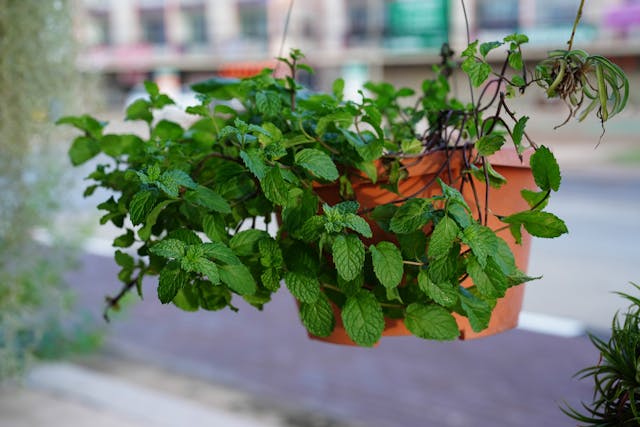
These herbs don’t compete aggressively for nutrients. Instead, they act as living mulch, shading the soil surface and improving overall basket health.
🌿 Why Creeping Herbs Work So Well in Hanging Baskets
- Spread gently without crowding main crops
- Help retain moisture by covering exposed soil
- Improve air circulation around vegetables
- Some naturally discourage pests
🌱 Best Creeping Herbs to Try
- Mint (best grown alone or with strong growers)
- Thyme – low-growing and drought-tolerant
- Oregano – trailing habit with culinary value
- Ajwain (Carom) – aromatic and hardy
🌿 Smart Placement Tip
Plant creeping herbs along the edges of the basket, allowing vegetables to grow upright in the centre. This balance keeps growth organised and prevents overcrowding.
Used wisely, creeping herbs turn hanging baskets into mini ecosystems, where every plant supports the other—without extra effort.
🌾 Ideal Soil Mix for Hanging Baskets
In hanging basket gardening, soil is both food and foundation. It must stay light enough to protect hooks and roots, yet rich enough to support continuous growth. Heavy soil strains supports, suffocates roots, and drains poorly—often causing failure even when everything else is right.
🪴 A Balanced DIY Potting Mix That Works
A good hanging basket mix should hold moisture without becoming soggy and allow roots to breathe even in heat.
Recommended mix:
- 40% cocopeat – keeps the mix light and moisture-retentive
- 30% garden soil or mature compost – provides structure and microbes
- 20% vermicompost – steady nutrition for leafy growth and fruiting
- 10% sand or perlite – improves drainage and prevents compaction
This combination creates a soil that stays airy, drains well, and feeds plants slowly—ideal for baskets that dry faster than ground beds.
🪱 Natural Add-ons for Healthier Plants
Add a small amount of neem cake or mustard cake powder to the mix before planting. These act as mild organic fertilisers and help reduce soil pests without harming beneficial microbes.
🌿 Mixing Tip That Makes a Difference
Always mix soil dry first, then moisten lightly before filling baskets. This ensures even distribution of nutrients and prevents heavy, uneven pockets that strain roots.
When the soil is right, watering becomes easier, roots grow confidently, and plants respond faster—making hanging baskets far more forgiving and productive.
💧 Watering & Feeding — The Golden Rule for Hanging Baskets
Hanging baskets live in open air, which means they lose moisture faster than ground beds or floor pots. Miss a watering, and plants show stress quickly. Get the rhythm right, and baskets reward you with steady growth and reliable harvests.
🚿 Watering Tips That Actually Work
- Water daily during summer, especially for sun-facing baskets
- Morning watering is ideal; it allows plants to hydrate before heat builds up
- Always check that drainage holes remain open to prevent root suffocation
Instead of surface sprinkling, water slowly until moisture reaches the bottom of the basket. Consistent depth watering keeps roots evenly hydrated.
🌿 Feeding Schedule for Healthy Growth
Hanging baskets have limited soil, so nutrients get used up faster. Light but regular feeding keeps plants productive without overwhelming roots.
Every 10–15 days, rotate one of the following:
- Compost tea for gentle, balanced nutrition
- Seaweed extract to boost root strength and stress resistance
- Banana peel water for fruiting plants to support flowering and fruit development 🍌
🌱 Simple Balance Tip
Overfeeding is as harmful as underfeeding. If leaves look lush but flowers drop, reduce feeding strength and increase spacing between feeds.
With steady watering and mindful feeding, hanging baskets stop feeling fragile and start behaving like dependable food producers 🌿
🚫 Hanging Basket Problems & Easy Solutions
Hanging baskets react quickly to stress. Because soil volume is limited and exposure is high, even small mistakes show up fast. The good news? Most issues are easy to fix once you know what the plant is trying to tell you.
🛠️ Common Problems and Practical Fixes
| Problem | Likely Cause | Simple Solution |
|---|---|---|
| Wilting plants | Soil drying too fast | Mulch the surface and water consistently |
| Yellow leaves | Nutrient deficiency | Apply liquid compost or compost tea |
| Flower drop | Heat stress | Shift baskets to afternoon shade |
| Weak, slow growth | Basket too small | Upgrade to a larger or deeper pot |
| Pest attack | Dry, stressed plants | Neem oil spray in the evening |
🌿 How to Prevent Repeat Issues
- Observe plants daily—early signs are easier to correct
- Mulching with dry leaves or coco chips reduces water loss
- Avoid overcrowding; stressed plants invite pests
Most hanging basket problems aren’t failures—they’re signals. Once you respond correctly, plants usually bounce back faster than ground-grown crops.
🌼 Styling & Placement Ideas That Actually Work
Hanging baskets don’t just grow food—they shape how your space feels. With a little thought, they can turn ordinary corners into lively, productive zones.
🌿 Simple Placement Tips
- Hang baskets at different heights to create depth and avoid shading each other
- Place them near railings, windows, or pergolas where light is reliable
- Rotate baskets weekly so all sides receive even sunlight
- Mix flowers with vegetables to balance beauty and productivity
Good placement improves airflow, light exposure, and access—making daily care easier and plants healthier.
Hanging basket gardening quietly teaches a powerful lesson: food production isn’t limited by land size, but by how creatively space is used 🌱. A small balcony, a bright window, or a calm terrace corner can become a living pantry when plants are allowed to grow upward instead of spreading outward.
For many home gardeners—especially beginners—hanging baskets feel less intimidating than traditional ground beds. They’re easier to manage, quicker to adjust, and far more forgiving of small mistakes. If something doesn’t work, you move it. If a plant struggles, you replace it. That flexibility builds confidence, and confidence keeps people gardening.
With time, those simple baskets stop feeling like an experiment—and start feeling like a habit worth keeping.
🌍 Sustainability Benefits of Hanging Basket Gardening
Growing fruits and vegetables in hanging baskets isn’t just a space-saving choice—it’s a quietly responsible one. These small systems encourage mindful use of resources while bringing food production closer to everyday life.
🌎 How Hanging Baskets Support Sustainable Living
- ♻️ Encourage reuse of containers
Old buckets, tins, bottles, and baskets can be repurposed instead of discarded, giving materials a second life. - 💧 Reduce water wastage
Targeted watering means less runoff and evaporation compared to open ground, especially when mulch is used. - 🚫 Minimize chemical use
With fewer soil-borne pests and better visibility, plants often need little to no chemical intervention. - 🌱 Promote organic, home-grown habits
Small-scale growing naturally leads gardeners toward composting, natural feeds, and chemical-free practices. - 🌿 Lower your carbon footprint
Every chilli, tomato, or leafy harvest grown at home reduces dependence on transport, packaging, and cold storage.
When you grow even a small portion of your food at home, the impact quietly multiplies. Fewer purchases, less waste, and a stronger connection to what you eat—all from baskets hanging in plain sight.
Hanging basket gardening proves that sustainability doesn’t always require big land or big systems. Sometimes, it starts with a hook, a basket, and a little intention. 🌱
🧠 Smart Plant Pairing for Better Growth
Growing more than one plant in a hanging basket can work beautifully—but only when the pairing makes sense. Compatible plants support each other, while poor combinations compete silently for water, nutrients, and space.
🌼 Companion Combinations That Work Well
- Strawberry + Mint
Mint helps retain moisture and can discourage certain pests, while strawberries benefit from cleaner, shaded soil. (Use mint lightly—it grows fast.) - Lettuce + Spring Onions
This pairing uses space efficiently. Lettuce spreads outward, while spring onions grow upright without crowding. - Spinach + Garlic Greens
Garlic greens act as a natural pest deterrent, helping protect tender spinach leaves. - Cherry Tomato + Basil
A classic combination. Basil supports healthy growth and may improve flavour while staying compact under tomato vines.
⚠️ A Simple Rule to Remember
Avoid pairing two heavy feeders in a small basket. Large fruiting plants need more nutrients and root space than leafy crops. When crowded, both plants suffer—even if watering and feeding are regular.
Smart pairing turns one basket into a small, cooperative system—healthier plants, better yields, and fewer problems to fix later.
🌤️ Seasonal Adjustments for Hanging Baskets
Hanging baskets react faster to seasonal changes than ground gardens. Their limited soil volume and full exposure mean small weather shifts can quickly affect plant health. Adjusting care with the season keeps plants stable and productive year-round.
🌞 Summer Care
Extreme heat dries baskets rapidly and stresses roots.
- Water twice daily during peak heat waves
- Provide afternoon shade to prevent leaf burn and flower drop
- Use light-coloured pots to reduce heat absorption
🌧️ Monsoon Care
Excess moisture becomes the main risk.
- Ensure excellent drainage to avoid waterlogging
- Shield baskets from continuous heavy rain where possible
- Reduce watering frequency and water only when the topsoil dries
❄️ Mild Winter Care
Growth slows, but plants still need attention.
- Move baskets to brighter, sunnier spots
- Reduce feeding, as plants use nutrients more slowly
- Protect from cold winds, especially at night
Seasonal care doesn’t require major changes—just small adjustments made at the right time. When baskets are managed with the weather in mind, plants stay healthier and recover faster from stress.
🧺 Weekly Maintenance Checklist for Hanging Baskets
Hanging baskets stay healthy not because of daily effort, but because of small, consistent checks. A few minutes each week can prevent most problems before they begin.
✔️ What to Check Every Week
- Check soil moisture and adjust watering if baskets feel too light
- Rotate baskets to ensure even sunlight on all sides
- Remove dry or damaged leaves to improve airflow
- Feed plants every 10–15 days using light organic nutrients
- Inspect for pests on leaf undersides and new growth
- Tighten hooks and chains to prevent accidents as baskets gain weight
🌱 Why This Matters
Most hanging basket failures don’t happen suddenly—they build up quietly. Weekly attention keeps plants balanced, productive, and stress-free.
Small care habits done regularly save time, plants, and effort later.
🌼 A Garden That Hangs, Feeds & Heals
There’s a quiet joy in watching vegetables sway gently in the air—catching sunlight, responding to care, and offering fresh harvests just outside your window 🧺🌿. Hanging baskets do more than grow food. They soften hard spaces, bring life to concrete corners, and remind us that nature doesn’t need permission to exist—it only needs a chance.
In a world where space feels limited and days feel rushed, these small hanging gardens slow us down. They invite patience. They reward consistency. And they prove that nurturing something living, even in the smallest way, can be deeply grounding.
You don’t need a backyard to call yourself a gardener.
You only need a basket, a seed, and the willingness to care.
“When soil is scarce, intention becomes the garden—and even the air can grow food.” 🌿

