

Ferns are the silent elders of the plant kingdom—plants that learned patience long before humans learned agriculture. With their soft, feathered fronds and steady presence, they don’t compete for attention through flowers or fruit. Instead, they work quietly in the background, shaping forests, cooling landscapes, and stabilizing life wherever moisture lingers. Their importance reaches far beyond beauty. From ancient ecosystems to modern homes, ferns play roles that are often overlooked yet deeply essential. This article gently unfolds their story—where they grow naturally, how they survived millions of years of planetary change, the science behind their structure, the surprising diversity within the fern family, and the unique way they reproduce without seeds. It also brings their wisdom into today’s world, offering clear guidance on growing ferns successfully in Indian conditions, along with practical charts that simplify ideal care requirements and common problems—so these quiet green guardians can thrive beside us, just as they always have.
🌱 What Are Ferns, Really?
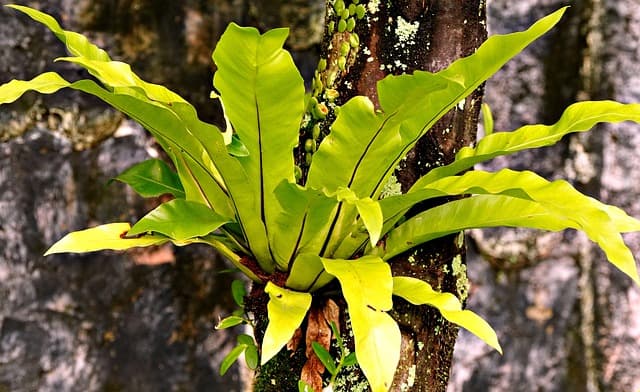
Ferns belong to an older chapter of plant life—one written long before flowers learned how to bloom. They are vascular but seedless plants, meaning they have an internal plumbing system for water and nutrients, yet they don’t rely on seeds or flowers to reproduce. Instead, they spread through spores, a quieter and far more ancient method of survival.
What we casually call “leaves” are actually fronds—elegant, often feather-like structures that begin life tightly curled. These baby fronds slowly uncurl as they grow, a process that feels almost ceremonial and is commonly described as a fiddlehead unfurling. It’s one of the most visible reminders of how deliberate fern growth really is.
Ferns are far more diverse than most people realize. Some cling to rocks in shaded crevices, no taller than your palm, while others rise into the canopy as tree ferns, reaching several metres in height and resembling living columns from a prehistoric forest. Flip a mature frond over, and you’ll often see tiny patterned dots or lines—these are sori, clusters that house sporangia where spores are formed and released into the air.
From a scientific perspective, ferns sit within the plant kingdom as true vascular plants. Their classification has shifted slightly over time as botanical understanding evolved, but they are most commonly grouped under:
- Kingdom: Plantae
- Division: Pteridophyta (sometimes treated within Monilophyta)
- Commonly referenced class: Polypodiopsida
What sets ferns apart from simpler plants like mosses is their ability to move water efficiently through xylem and phloem. This internal transport system allows them to grow taller, spread wider, and occupy ecological niches that non-vascular plants simply can’t manage. It’s a quiet strength—one that has kept ferns thriving for hundreds of millions of years.
🕰️ Fern History & Origin
Long before flowering plants reshaped the planet—and long before humans learned to name trees—ferns were already at home on Earth. They belong to one of the oldest surviving plant lineages, with roots that stretch back more than 360 million years. Fossil records trace their early ancestors to the Devonian and Carboniferous periods, a time when life was still experimenting with form, height, and complexity.
During the Carboniferous era, ferns and fern-like plants didn’t just exist—they dominated. Vast, humid forests of towering green life covered much of the planet, locking away carbon and slowly shaping what would eventually become today’s coal deposits. In a very real sense, modern civilization still runs on the compressed remains of those ancient fern-filled worlds.
What makes ferns remarkable isn’t just their age, but their endurance. They survived mass extinctions, shifting continents, ice ages, and dramatic changes in climate. Instead of disappearing, they adapted—refining their structures, diversifying their forms, and learning how to thrive in shade, moisture, rock crevices, forest floors, and even tree canopies.
The ferns we grow today—whether in gardens, homes, or wild forests—are not relics frozen in time. They are the living descendants of prehistoric survivors, shaped by millions of years of quiet evolution. Every frond carries that history, unfolding not in a rush, but with the same patience that has kept ferns alive since before the age of dinosaurs.
🌍 Where Ferns Grow (Location & Habitat)
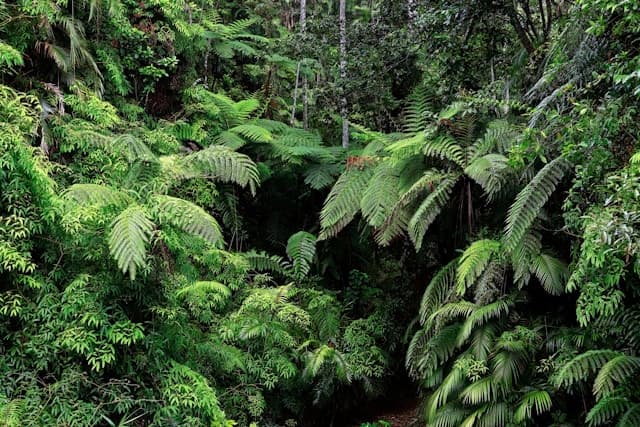
Ferns are masters of quiet adaptation. Instead of claiming open, sun-drenched ground, they settle into places where moisture lingers and time moves a little slower. Across the world, they occupy habitats that reward patience rather than speed.
In tropical rainforests, ferns reach their greatest diversity. Warm temperatures, constant humidity, and filtered light create ideal conditions for everything from delicate ground ferns to epiphytic species that cling to tree trunks like green lace. These forests are living libraries of fern evolution.
In temperate forests, ferns form the soft green layer beneath trees. Here, they thrive in shade, enjoying steady moisture and protection from harsh sunlight. Their presence stabilizes soil, retains humidity, and creates microclimates that support insects, fungi, and forest regeneration.
Some of the most resilient ferns grow where soil is scarce—or absent altogether. Rock crevices, cliff faces, and epiphytic niches host compact species adapted to thin substrates, mist, and nutrient scarcity. These ferns rely on rain, dew, and air-borne organic matter, proving that soil depth is not always a limitation.
A few tougher species venture into grasslands and disturbed landscapes, colonizing road edges, old walls, and abandoned land. While less common, these pioneers help restore balance by preventing erosion and preparing the ground for other plants to return.
In India, ferns find exceptional refuge thanks to the country’s varied climate and topography. They are especially abundant in the Western Ghats, the humid forests of the northeastern states such as Arunachal Pradesh, Assam, and Meghalaya, and the Himalayan foothills. Large populations also flourish in moist deciduous and evergreen forests, where monsoon rains and shaded understories recreate the ancient conditions ferns have favored for millions of years.
Wherever moisture meets shelter, ferns quietly arrive—softening landscapes, stitching ecosystems together, and reminding us that not all strength needs sunlight to prove itself.
🔢 How Many Fern Species Exist?
Ferns may feel familiar, even ordinary, but their diversity tells a very different story. Botanists estimate that there are roughly 10,000 to 12,000 known fern species worldwide, and that number continues to shift as taxonomy evolves and new species are described. Compared to flowering plants, this may seem modest—but within the fern world, it represents an extraordinary range of forms, habitats, and survival strategies.
This diversity shows up in how ferns choose to live. Some are ground-dwelling, spreading gently across forest floors where soil stays cool and moist. Others are epiphytic, spending their entire lives perched on tree trunks and branches, absorbing water from rain, fog, and humid air rather than from the ground. Lithophytic ferns carve out a living on rocks and cliffs, surviving with minimal nutrients, while tree ferns grow tall and trunked, creating their own shaded ecosystems beneath their fronds.
Each of these growth types reflects careful adaptation to a specific microclimate—light levels, moisture availability, airflow, and temperature stability. Together, they reveal why ferns have persisted for so long: instead of specializing narrowly, they learned how to fit quietly into almost every shaded, moisture-friendly corner of the planet.
🔬 Key Botanical Features (Understanding How Ferns Work)
At first glance, a fern may look like a simple green plant, but its structure reveals a finely tuned system shaped by millions of years of evolution. Every visible part plays a specific role in survival, growth, and reproduction.
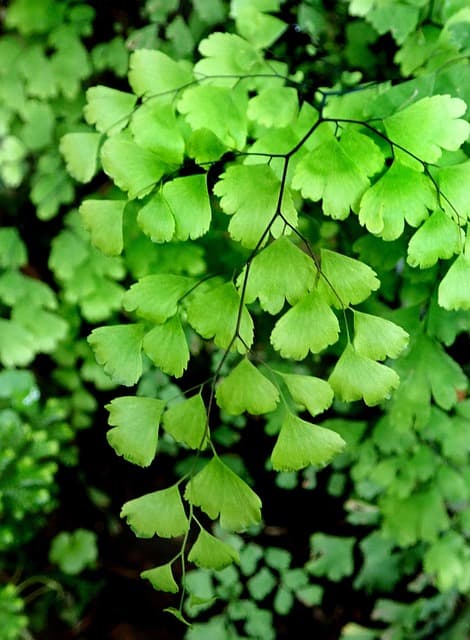
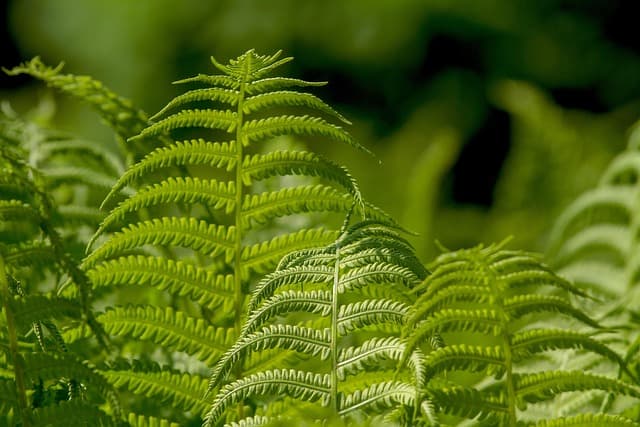
The most recognizable feature is the frond—what many people casually call a leaf. Fronds can be simple and strap-like or intricately divided into delicate segments, sometimes branching again and again. This divided structure increases surface area, allowing ferns to capture light efficiently in shaded environments while also shedding excess water during heavy rains.
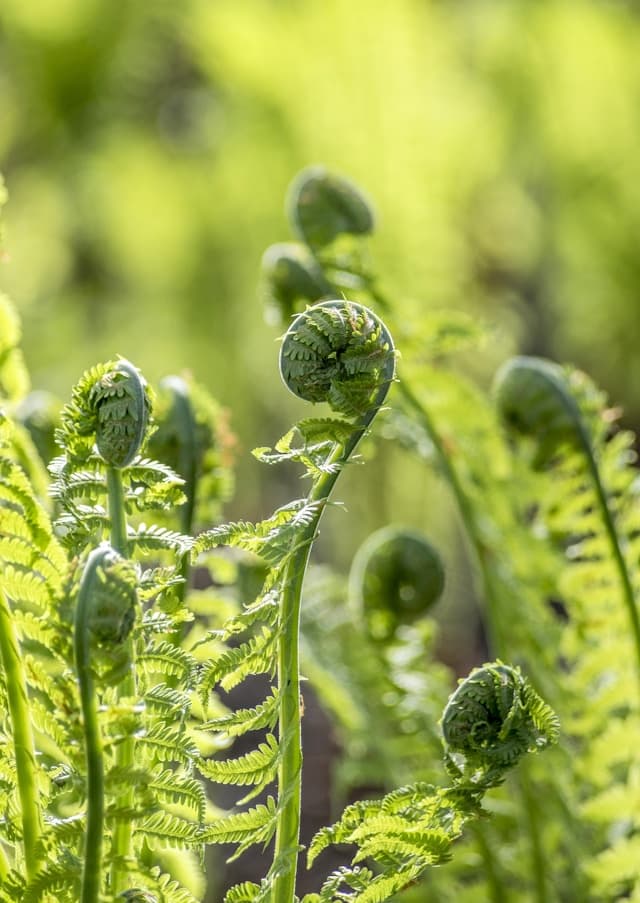
New fronds emerge as tightly coiled fiddleheads, also known as croziers. This curled form protects the growing tip as it pushes upward, shielding tender tissue from physical damage, dehydration, and pests. As conditions stabilize, the coil slowly unfurls, revealing the mature frond beneath.
Turn a fertile frond over and you’ll often notice tiny dots, lines, or patches—these are sori. Each sorus is a cluster of sporangia, the microscopic structures responsible for producing and releasing spores. Instead of relying on flowers or seeds, ferns disperse themselves quietly through air and water, trusting chance and moisture to carry their next generation.
Once a spore lands in a suitable environment, it doesn’t immediately grow into a fern. Instead, it develops into a tiny, usually heart-shaped structure called the gametophyte or prothallus. This stage bears the sex organs and is where fertilisation occurs. Only after this hidden process does the familiar fern plant—the sporophyte—begin to grow.
Supporting all of this is the fern’s vascular system. With functional xylem and phloem, ferns can transport water, minerals, and sugars efficiently throughout their bodies. This internal network allows them to grow taller, spread wider, and survive in habitats that non-vascular plants like mosses cannot.
Together, these features explain why ferns have endured for so long. Their design is not flashy—but it is precise, resilient, and quietly effective.
♻️ Life Cycle & Reproduction (How Ferns Renew Themselves)
Ferns follow a life cycle that feels almost poetic in its balance—one generation giving way to another, each playing a distinct role. This process is known as alternation of generations, where two independent stages exist side by side rather than one replacing the other entirely.
The stage we usually recognize is the sporophyte. This is the full-sized fern—the one growing in forests, gardens, or pots. On the undersides of its mature fronds, it produces spores, neatly packed inside sporangia and grouped into sori. When conditions are right, these spores are released and carried away by air or water.
Once a spore lands in a damp, shaded place, something unexpected happens. Instead of growing directly into a fern, it develops into a tiny, delicate form called the gametophyte or prothallus. Often no larger than a fingernail and easily overlooked, this stage lives close to the surface of the soil and depends entirely on moisture to survive.
The gametophyte carries both male (antheridia) and female (archegonia) reproductive organs. Fertilization can only occur when water is present—rain, mist, or even morning dew allows sperm to swim from the male structures to the egg. Without this thin film of water, the cycle simply pauses.
Once fertilization occurs, a new sporophyte begins to grow directly from the gametophyte. Over time, it develops roots, fronds, and vascular tissue, eventually becoming the familiar fern plant, while the gametophyte quietly fades away.
This dependence on moisture is the reason ferns are so closely tied to humid environments. Their reproduction isn’t rushed or aggressive—it waits patiently for the right conditions, repeating a cycle that has sustained ferns for hundreds of millions of years.
🌿 How Long Do Ferns Live?
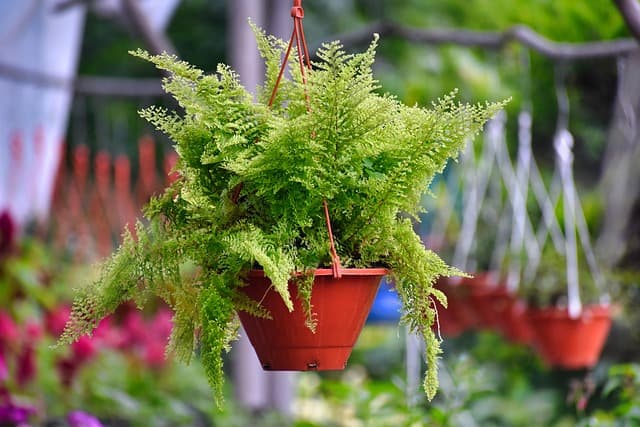
Ferns are not short-term plants. They are slow, persistent survivors, built to last not through a single stem or trunk, but through steady renewal. Most fern species are perennial, meaning the plant itself can live for decades when conditions remain supportive—even though its visible fronds come and go.
In natural forests, many ferns quietly persist for 50 to 100 years or more. They do this not by holding onto old growth, but by continuously renewing themselves through underground rhizomes. As older fronds die back, new ones emerge, allowing the plant to survive changing seasons, storms, and even partial damage without losing its identity.
In home gardens, a well-established fern commonly lives 10 to 30 years, especially when planted in shaded soil with reliable moisture. Indoor and potted ferns tend to have shorter lifespans—often 5 to 15 years—not because they are weak, but because indoor conditions rarely match the stable humidity and airflow they prefer. With consistent watering, proper drainage, adequate humidity, and timely repotting, many house ferns exceed this range.
It’s important to remember that individual fronds are temporary. They may last only a few months before yellowing or drying, but the plant itself continues regenerating below the surface. This constant cycle of renewal is what makes ferns some of the most enduring plants on Earth. They don’t rely on permanence—they rely on continuity.
Ferns teach a quiet lesson in longevity: survival isn’t about holding on forever, but about knowing how to begin again, season after season.
🌿 Importance of Ferns (Ecological & Human Connections)
Ferns rarely dominate a landscape, yet their influence runs quietly beneath the surface. Their value isn’t measured in harvests or blooms, but in the way they hold ecosystems together and soften the spaces humans live in.
Their Role in Nature
In forests and wild landscapes, ferns act as natural stabilizers. Their dense networks of roots and rhizomes bind soil tightly, reducing erosion on slopes, streambanks, and forest floors where heavy rain might otherwise wash the land away. This makes them especially important in regions with monsoon climates or frequent rainfall.
By forming a living layer beneath trees, ferns create microhabitats that shelter insects, amphibians, fungi, and countless soil organisms. These shaded, humid pockets support biodiversity that would struggle to survive in exposed conditions.
Ferns also play a role in nutrient cycling. As their fronds age and fall, they contribute organic matter to the soil, helping break down leaf litter and slowly release nutrients back into the ecosystem. This process supports healthier forest soils over time.
Perhaps most quietly, ferns help regulate water balance. Thick fern cover slows evaporation, retains moisture near the ground, and moderates temperature fluctuations—creating stable microclimates that benefit surrounding plants and wildlife alike.
Their Value to People
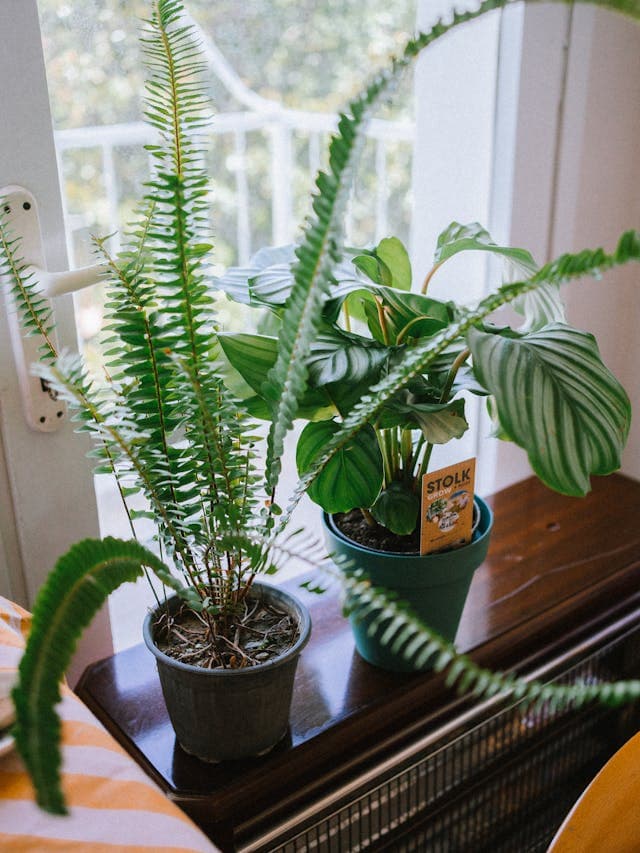
For humans, ferns have long been companions rather than commodities. They are widely grown as ornamental plants, valued for their calming greenery in shaded gardens, balconies, patios, and indoor spaces where flowering plants often struggle.
Across different cultures, certain fern species have been used for traditional practices, including medicinal applications, food preparation, or craft materials. These uses vary greatly by species and region, and they reflect a long history of observation and respect rather than widespread exploitation.
As houseplants, ferns offer more than visual appeal. Their presence adds softness and humidity to indoor environments, making spaces feel cooler, calmer, and more alive. While they may not be miracle air purifiers, they contribute to a healthier indoor atmosphere by increasing moisture and reducing visual stress.
In both forests and homes, ferns serve the same purpose: they quietly support life, asking for little attention while giving far more than they appear to.
🌞 Quality, Potting & Care in the Indian Climate (A Practical Approach)
Growing ferns in India isn’t difficult—but it does require awareness. Our climate shifts sharply between regions and seasons, and ferns respond quickly to excess heat, dryness, or poor drainage. When cared for thoughtfully, they adapt beautifully.
Potting Mix & Containers
Ferns thrive in soil that feels alive, airy, and moisture-holding without being soggy. A reliable mix for Indian conditions includes equal parts cocopeat or leaf compost, coarse sand, and perlite or brick grit. This balance keeps roots cool while preventing water stagnation during heavy monsoon watering.
For epiphytic ferns, adding orchid bark or charcoal chunks improves airflow and mimics their natural growing conditions.
Always choose pots with proper drainage. Fern roots spread horizontally rather than deeply, so wide, shallow containers work better than tall ones. In humid regions, terracotta pots help wick away excess moisture; in dry areas, plastic or glazed pots reduce water loss.
Light & Placement
Most ferns prefer bright, filtered light, similar to what they receive under tree canopies. Direct afternoon sun—especially in central and western India—can scorch fronds within days. East-facing balconies, shaded verandas, or rooms with sheer curtains are ideal.
During northern Indian winters, ferns appreciate brighter placements, as sunlight is gentler and days are shorter. Avoid dark corners, which weaken growth over time.
Water & Humidity
Ferns like consistent moisture, not extremes. The soil should feel lightly damp, never bone-dry and never waterlogged. In peak summer months, watering frequency naturally increases—sometimes daily for outdoor pots.
Humidity is equally important. In dry regions or air-conditioned homes, misting helps, but long-term solutions work better. Pebble trays, grouping plants together, or placing ferns near kitchens or bathrooms can significantly improve humidity. This is especially helpful during dry winter spells, such as those in north India.
Temperature Tolerance
Most commonly grown ferns are comfortable between 15–30°C, which aligns well with Indian conditions for much of the year. Tropical ferns struggle with frost and sudden cold drafts, while temperate varieties can handle cooler winters but dislike prolonged cold or freezing soil.
Protect outdoor ferns during extreme heatwaves and unexpected winter chills by shifting pots or providing temporary cover.
Feeding & Nutrition
Ferns are light feeders. During active growth—typically spring and monsoon—a diluted, balanced liquid fertilizer once a month is more than enough. Overfeeding leads to weak, leggy growth and salt buildup in the soil.
During peak summer stress or winter slowdown, it’s best to pause fertilization altogether and let the plant rest.
Repotting & Renewal
Most ferns benefit from repotting every one to two years, especially if roots start circling the pot or water drains too quickly. Repotting refreshes the soil and encourages new frond growth.
This is also the best time to divide mature clumps, making fern propagation surprisingly easy. Healthy divisions establish quickly when kept shaded and evenly moist.
When grown with seasonal awareness rather than rigid rules, ferns respond generously. They don’t demand perfection—only balance, patience, and respect for their rhythm.
🌿 Propagation (How Ferns Multiply)
Ferns don’t rush reproduction. Whether divided by hand or grown from spores, propagation reflects their slow, deliberate nature. Both methods work—but they suit very different levels of patience.
Division — the Easiest and Most Reliable Method
Division is the quickest way to create new fern plants and is best done when the plant is actively growing, usually during spring or the monsoon season. Gently lift the fern from its pot or soil and you’ll notice that it isn’t a single solid plant, but a cluster of crowns connected by rhizomes.
Using your hands—or a clean, sharp tool if needed—separate the root ball into sections, making sure each division has healthy roots and at least one growing crown. Replant immediately in fresh, well-draining mix, water lightly, and keep the new plants shaded and evenly moist.
For the first few weeks, avoid direct sun and heavy feeding. Once established, divided ferns settle quickly and behave just like mature plants, making this method ideal for home gardens and balconies.
Spore Propagation — Slow, Subtle, and Deeply Rewarding
Growing ferns from spores is a completely different experience—less about speed and more about observation. When the sori on the underside of mature fronds turn brown, the spores are ready. Placing the frond on clean paper allows the fine dust-like spores to fall naturally.
These spores are sown on sterilised, moist peat or sphagnum moss in a shallow container. The tray is then covered to maintain high humidity and placed in warm, bright but indirect light. Patience is essential here—nothing visible may happen for weeks.
Eventually, tiny green gametophytes appear, looking nothing like a fern. Only later, under consistently moist conditions, do the first true fern plants—the sporophytes—begin to emerge. From spore to mature fern, the process can take months, sometimes longer.
This method isn’t practical for quick results, but it offers something rare: the chance to witness the full fern life cycle unfold, just as it has for millions of years.
🌦️ Best Time & Conditions to Grow Ferns (At a Glance)
Ferns thrive when their surroundings feel stable, shaded, and gently moist—much like the forest floors they evolved on. The chart below simplifies their core needs so you can adjust care without second-guessing.
| Factor | Ideal Range & Practical Notes |
|---|---|
| Temperature | 15–30°C is ideal for most species. Tropical ferns need protection from frost and cold night drafts, especially in north India. |
| Light | Bright, indirect light works best. Soft morning sun is fine, but harsh afternoon sun can scorch fronds quickly. |
| Soil | A humus-rich, well-draining mix works best (cocopeat or peat + compost + perlite/brick grit). Soil should stay airy, not compacted. |
| Water | Keep soil evenly moist. Avoid letting it dry out completely, but never allow water to sit stagnant around roots. |
| Humidity | 60% or higher is ideal. Indoors, pebble trays, grouping plants, or light misting help maintain comfort. |
| Pot Size | Choose a pot slightly wider than the root ball. Shallow, wide containers suit most ferns better than deep ones. |
| Fertiliser | Use a diluted liquid fertiliser once a month during active growth (spring–monsoon). Skip feeding during stress periods. |
This chart isn’t meant to be followed rigidly. Ferns respond more to balance than precision—small seasonal adjustments matter more than perfect numbers.
⚠️ Common Problems & Caring Chart
| Problem | Symptoms | Likely Cause | Practical Solution |
|---|---|---|---|
| Brown crispy frond edges | Dry, curled tips | Low humidity / underwatering / direct sun | Increase humidity, water more often, move to shade |
| Yellowing fronds | Even yellowing, weak growth | Overwatering or nutrient deficiency | Check drainage, cut back water, repot if rootbound, feed lightly |
| Black soggy base | Soft, black crown or rhizome | Root rot from waterlogging | Remove rotten parts, repot in fresh mix, improve drainage |
| Pests: scale, mealybug | Sticky residue, white cottony spots | Indoor dry stress, poor airflow | Manually remove, use neem oil or insecticidal soap, isolate plant |
| Sparse new fronds | Lack of light or nutrients | Low light or poor soil | Improve light quality (bright indirect), feed in growing season |
| Failure to thrive in summer | Wilting in heat | High temp + low humidity | Move to cooler, shaded spot; increase misting/humidity |

🌿 Final Care Tips for Indian Gardeners
Ferns respond best when you work with the seasons instead of fighting them. In India, small adjustments at the right time make a bigger difference than constant tinkering.
The monsoon is your greatest ally. Most ferns enter their strongest growth phase during these months, pushing out fresh fronds with surprising speed. Watering often needs to be reduced, not increased—but drainage becomes critical. If water lingers in the pot or soil, roots suffer quickly despite the abundance of rain.
As seasons shift, so should placement. During hot, dry summers, potted ferns appreciate being moved to shaded verandas, under trees, or into bright indoor spaces away from direct sun. In cooler winters, especially in northern regions, tropical ferns need protection from cold drafts, sudden temperature drops, and exposure to chilly night air.
Creating a supportive microclimate goes a long way. Grouping plants together naturally raises humidity and reduces moisture loss from fronds. Even a small cluster on a balcony or windowsill can make ferns noticeably happier than when they stand alone.
Above all, learn to observe rather than overcorrect. Ferns communicate quietly but clearly. Crispy or browning edges often signal dry air or insufficient humidity. Yellowing fronds may point to overwatering, poor drainage, or tired soil. Respond gently, make one adjustment at a time, and allow the plant to recover at its own pace.
Caring for ferns is less about control and more about attention. When you notice their rhythms, they reward you with steady, graceful growth that feels almost timeless.
💬 A Message Written on Leaves
“Give a fern a place to rest and the time to grow in its own rhythm.
It will repay you not with flowers or fruit,
but by cooling the ground beneath it, holding the soil together,
and reminding you that quiet care is often the strongest kind.” 🌿

