
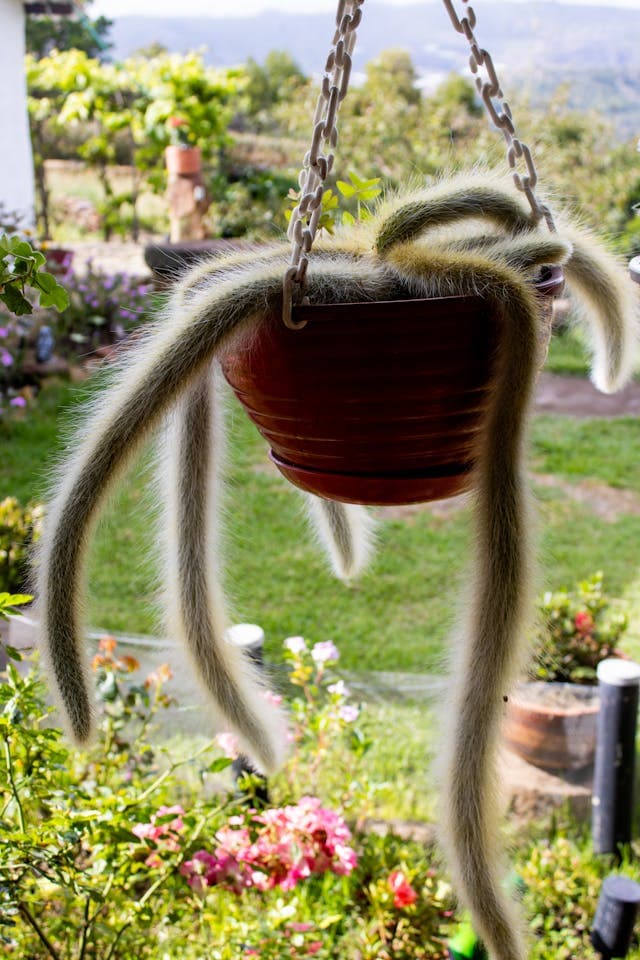
The Monkey Tail Cactus is one of those plants that doesn’t behave like a plant at all—it feels alive. Its long, silvery, fur-covered stems spill gently over pots and baskets, moving slightly with air and light, almost like a resting animal rather than a spiky cactus. This unusual softness is exactly why even people who usually say “I don’t like cacti” stop and stare when they see it.
Botanically known as Cleistocactus colademononis, this rare trailing cactus often creates confusion among Indian plant lovers. Its appearance suggests toughness, but its behavior tells a very different story. Which leads to a common and honest question:
Can Monkey Tail Cactus really survive India’s scorching summers, heavy monsoon humidity, and uneven winters?
The answer is yes—but not by accident.
This cactus is not built for harsh neglect or blazing sun the way typical desert cacti are. In fact, treating it like a “set-and-forget” plant is the fastest way to lose it. Its needs are shaped by cool mountain air, filtered sunlight, and excellent drainage—conditions that don’t naturally exist in most Indian homes unless we create them consciously.
Once you understand why it behaves the way it does—and stop forcing desert rules on a mountain cactus—the Monkey Tail becomes far more forgiving than its reputation suggests. With the right placement, watering rhythm, and seasonal awareness, it can thrive beautifully in Indian climates, even in apartments and balconies.
This article focuses on what actually works in real Indian conditions—not textbook advice. It clears common myths, explains the plant’s true nature, and helps you grow Monkey Tail Cactus as a living companion, not a struggling decoration.
🌍 Where Monkey Tail Cactus Comes From (And Why This Changes Everything)
Monkey Tail Cactus originates from the high-altitude mountain regions of Bolivia, where survival depends less on heat tolerance and more on balance. In the wild, this cactus clings to rocky cliffs and steep slopes—places where water never lingers and air is always moving.
Its natural environment looks nothing like a desert plain. Instead, it grows where:
- Sunlight is bright but softened by clouds and mountain angles
- Days may be warm, but nights turn cool, even in summer
- Rain arrives suddenly—but drains away just as fast
- Wind and airflow are constant, preventing trapped moisture
These conditions quietly shape every habit of the Monkey Tail Cactus—and explain why it behaves so differently from common Indian cacti.
This is why the plant:
- Trails downward instead of standing upright—it evolved to spill over cliffs
- Stores water cautiously, but reacts badly to soggy soil or humid stagnation
- Prefers filtered or gentle sun, not direct afternoon heat
For Indian growers, this background is not botanical trivia—it’s a survival manual.
When we place Monkey Tail Cactus in blazing rooftop sun, keep it soaked during monsoons, or trap it in still indoor corners, we unknowingly fight against thousands of years of mountain adaptation. But when we recreate even a small part of its native rhythm—good drainage, airflow, and light that doesn’t burn—the plant responds quickly and visibly.
Understanding where this cactus comes from is the single most important step in growing it successfully in India. Everything else—watering, sunlight, pot choice—flows naturally from this one truth.
🇮🇳 Is the Indian Climate Actually Suitable for Monkey Tail Cactus?
India doesn’t have one climate—it has dozens. Coastal humidity, dry northern heat, hill-station coolness, monsoon chaos, and winter dryness can all exist within the same country. Because of this, asking whether Monkey Tail Cactus can grow in India is less useful than asking where and how it is placed.
The encouraging truth is this: Monkey Tail Cactus adapts surprisingly well in Indian homes when it is protected from extremes rather than exposed to them.
🌱 Where It Performs Well
You’ll see healthy growth when the plant is kept in:
- Covered balconies or verandas where sunlight is bright but indirect
- Indoor spaces near large windows, especially east-facing ones
- Homes with regular air movement, even gentle ceiling-fan circulation
- Regions with moderate summers or places where afternoon shade is natural
In these conditions, the cactus keeps its fur dense, stems plump, and growth steady.
⚠️ Where It Struggles (and Often Declines Silently)
Problems begin when the plant is:
- Exposed to direct summer sun above 42–45°C, which slowly scorches the fur and skin
- Left in water-retentive soil during monsoon, leading to hidden root rot
- Kept in closed, humid rooms where moisture lingers and air stands still
In such settings, the plant may not die immediately—but it weakens, sheds fur, softens at the base, and eventually collapses without warning.
👉 The real conclusion:
India is suitable for Monkey Tail Cactus—but placement matters more than geography. A shaded balcony in Delhi can be better than open sun in Jaipur. A bright indoor window in Chennai can outperform an exposed terrace anywhere.
When you stop fighting the climate and start choosing the right micro-environment, this cactus becomes calm, stable, and surprisingly cooperative.
☀️ Light Requirements: Bright, Gentle, Never Punishing
The most common mistake Indian growers make with Monkey Tail Cactus is assuming that more sun equals better growth. This belief comes from desert cacti—but Monkey Tail does not belong to that category. Under harsh Indian sunlight, especially in summer, this plant doesn’t toughen up—it quietly burns.
Its furry coating is not heat armor. In fact, it traps warmth. When exposed to strong afternoon sun, the stems overheat internally, even if the damage isn’t visible immediately.
🌤️ What “Ideal Light” Actually Means
Monkey Tail Cactus stays healthiest when it receives:
- Bright but indirect light for most of the day
- 2–4 hours of gentle morning sun, preferably before 11 a.m.
- Filtered light or light shade during harsh afternoon hours
In these conditions, the fur remains dense and silvery, and stems grow evenly without stress marks.
🏡 Best Light Placements in Indian Homes
Real-world placements that work consistently:
- East-facing balconies, where sunlight is soft and brief
- Under a 50% green shade net, especially in hot regions
- Near bright indoor windows, with no direct noon sun
- Under pergolas, grills, or lattice shade, where light is broken
These setups mimic mountain light—bright, present, but never aggressive.
🚫 What to Avoid (Even If the Plant “Looks Fine” Initially)
- Open terrace sun during peak summer
- South- or west-facing exposure without shade
- Full-day direct sunlight in April–June
Damage from excess sun is often permanent. Burned stems don’t recover their fur, and repeated exposure slowly weakens the entire plant.
👉 If the light feels harsh on your skin in the afternoon, it’s harsh for this cactus too.
Understanding light correctly is one of the biggest turning points in successfully growing Monkey Tail Cactus in India.
🌡️ Temperature Tolerance (A Critical Factor)
| Season | Ideal Temperature | Care Adjustment |
|---|---|---|
| Summer | 22–35°C | Shade + airflow |
| Monsoon | 20–30°C | Reduce watering |
| Winter | 5–25°C | Keep soil dry |
| Frost | Below 2°C | Move indoors |
Monkey Tail Cactus handles Indian winters well, but extreme summer heat requires protection.
🌱🌱 Soil That Actually Works in Indian Conditions
If there’s one silent killer of Monkey Tail Cactus in India, it’s regular garden soil. Not sunlight. Not watering frequency. Soil. Especially during monsoon, heavy soil turns this mountain cactus into a rot experiment.
Monkey Tail roots are adapted to grip rocks—not sit in mud. The moment water lingers around the roots, decay begins quietly at the base and travels upward before you even notice.
🧪 A Proven Soil Mix That Survives Indian Monsoon
This blend balances fast drainage, light moisture retention, and airflow—exactly what the plant needs:
- 40% coarse sand or clean river sand – prevents compaction
- 30% pumice / perlite / brick chips – creates air pockets and drainage
- 20% washed cocopeat – holds light moisture without suffocating roots
- 10% vermicompost – gentle nutrition without richness overload
This mix dries evenly, not suddenly—protecting roots from both rot and dehydration.
💧 The Golden Drainage Rule
After watering:
- Water should exit the pot within seconds
- Soil should feel cool and lightly moist, never sticky or heavy
- If the pot stays wet after 30 minutes, the mix is wrong
🪴 Moist is acceptable. Wet is fatal.
⚠️ What to Avoid Completely
- Red soil, black soil, or clay-heavy mixes
- “Cactus soil” sold without drainage amendments
- Adding compost beyond 10% (more is not better)
In Indian weather, especially during monsoon, soil isn’t just a growing medium—it’s a life-support system. Get this right, and Monkey Tail Cactus becomes dramatically easier to manage.
💧 Watering: Less Is Not Just Safer—It’s Essential
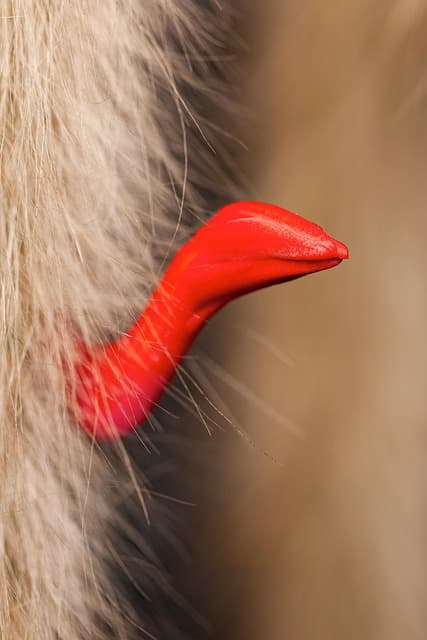
In India, Monkey Tail Cactus is almost never lost due to neglect. It is lost due to kindness in the form of overwatering. The plant stores enough moisture in its stems to survive dry spells—but it has very little tolerance for constantly damp roots.
🪴 The Only Watering Rule That Matters
👉 Water only when the soil is completely dry—top to bottom.
Not just dry on the surface. Not “almost dry.” The entire pot must dry out before the next watering.
🔍 How to Know the Soil Is Truly Dry
- Insert a wooden stick or finger deep into the pot
- If it comes out cool or damp, wait
- Lift the pot—if it still feels heavy, don’t water
Monkey Tail prefers a cycle of thorough watering followed by full drying.
🌦️ Seasonal Watering Reality (Indian Conditions)
- Summer: Once every 7–12 days, depending on heat and airflow
- Monsoon: Once every 15–25 days—or pause completely if humidity stays high
- Winter: Once every 20–30 days
These are not schedules—just ranges. Soil dryness always has the final say.
🚫 Common Watering Mistakes
- Light, frequent watering
- Watering during rainy, humid days
- Misting the stems (fur traps moisture and invites rot)
If you ever feel unsure whether to water—wait one more day. Monkey Tail Cactus forgives dryness. It does not forgive wet roots.
| Season | Frequency |
|---|---|
| Summer | Every 7–10 days |
| Monsoon | Every 15–20 days |
| Winter | Every 20–30 days |
🚫 Never mist the stems
🚫 Never leave water in trays
The furry coating traps moisture, so excess water leads to silent rot.
🪴 Pot Choice & Why Hanging Growth Keeps It Healthy
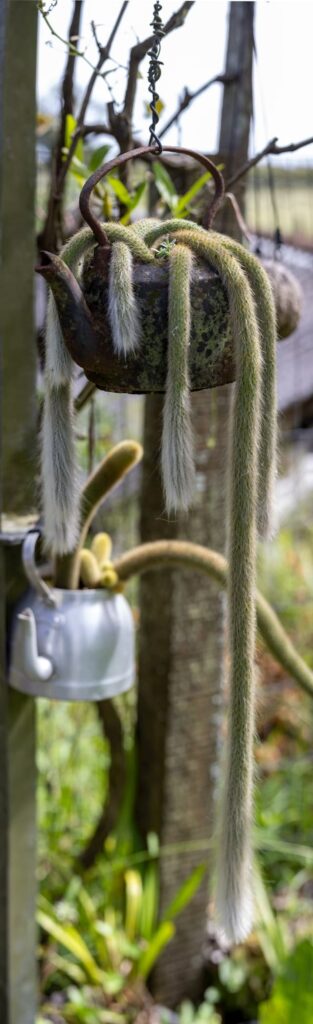
Monkey Tail Cactus is not designed to sit flat in garden beds or deep, water-holding pots. In nature, it grows by spilling downward from rocky edges, never allowing moisture to collect around its base. Replicating this growth habit is essential for long-term success in India.
🏺 Pots That Actually Work
Choose containers that breathe and drain fast:
- Clay or terracotta pots – allow excess moisture to evaporate
- Hanging baskets with large drainage holes – prevent water stagnation
- Shallow but wide containers – encourage lateral root spread instead of depth
Avoid deep plastic pots unless drainage and airflow are exceptional.
🌿 Why Hanging Growth Is More Than Just Aesthetic
Allowing the plant to trail freely:
- Supports its natural cascading form
- Keeps stems away from wet surfaces
- Improves air circulation around fur-covered stems
- Dramatically reduces fungal and rot risk, especially during monsoon
Plants kept upright in cramped pots often develop soft bases, uneven growth, and poor fur density.
⚠️ Placement Tip for Indian Homes
Hang the pot where:
- Water can drain freely without splashing back
- Air moves naturally (balcony edges, near windows)
- Stems don’t touch walls or floors after watering
When Monkey Tail Cactus is allowed to hang and breathe, it grows calmer, stronger, and far more forgiving of small care mistakes.
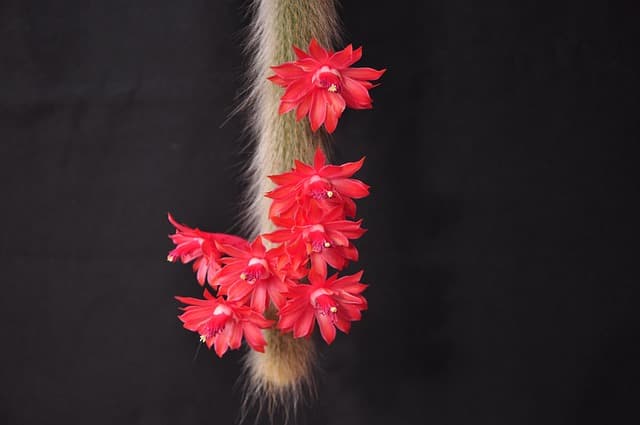
🌸 Flowering in Indian Conditions: Rare, But Absolutely Possible
Yes—Monkey Tail Cactus does flower in India. And when it finally does, the blooms feel almost unreal against the soft, silvery stems. However, flowering is not guaranteed every year, and it never happens by force. It happens when the plant feels seasonally understood, not pampered.
🌺 What the Flowers Are Like
When mature and comfortable, the plant produces:
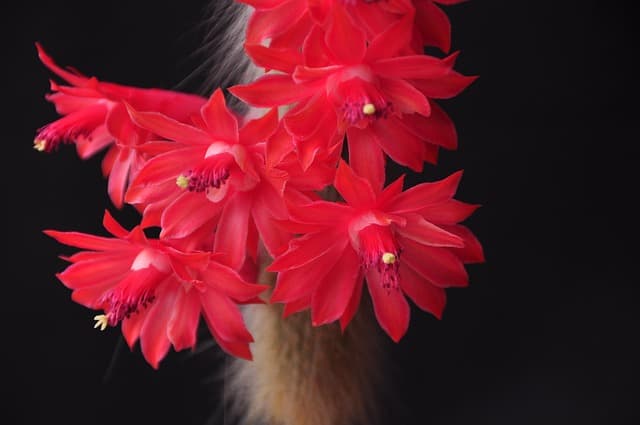
- Color: Bright red to deep crimson
- Shape: Long, tubular blooms that emerge from the sides of older stems
- Season: Late winter to early spring (January–March in most regions)
- Plant maturity: Usually 2–3 years old or more
Young plants focus on survival and growth. Flowers come later—never early.
🌿 What Actually Triggers Blooming in India
Flowering depends less on feeding and more on seasonal rhythm:
- Bright winter sunlight
Short winter days with gentle sun signal the plant that it’s safe to bloom. - A dry rest period in winter
Reduced watering tells the cactus that growth season is over—this stress cue is essential. - Low nitrogen, if any fertilizer is used
Excess nitrogen encourages soft growth, not flowers. In many cases, no fertilizer is better than the wrong one.
⚠️ Common Reasons It Refuses to Bloom
- Kept too warm and wet during winter
- Overfed with general-purpose fertilizers
- Too young or frequently disturbed
- Inconsistent light conditions
A Monkey Tail Cactus that doesn’t flower is not failing—it’s simply not ready yet.
When it finally blooms, it’s not a reward for effort—it’s a sign that the plant trusts its environment. And that trust takes time.
🌵 Cleistocactus vs Hildewintera: Why Monkey Tail Cactus Has Two Names
If you’ve ever searched for Monkey Tail Cactus online or visited different nurseries, you’ve probably noticed something confusing:
some labels say Cleistocactus colademononis, while others say Hildewintera colademononis.
This often makes growers wonder—are these two different plants?
The simple, honest answer is: no.
They are the same cactus.
🌱 Why Two Scientific Names Exist
When Monkey Tail Cactus was first discovered and described, botanists placed it under the genus Hildewintera. This was mainly because of its dramatic trailing growth habit, which looked different from upright cleistocacti known at the time.
Later, as scientists studied the plant more closely—especially its:
- flower structure
- growth behavior
- and genetic characteristics
—it became clear that this species fits more accurately within the Cleistocactus genus.
As a result, Cleistocactus colademononis became the currently accepted scientific name.
🏷️ What This Means for Plant Lovers
- The plant itself never changed
- Its care requirements are exactly the same
- Only the classification was updated
Many nurseries still use Hildewintera colademononis because it’s familiar, older, or easier to pronounce. This doesn’t mean the plant is different or inferior—it just means the label hasn’t caught up with modern botanical classification.
👉 Bottom line:
There is only one true Monkey Tail Cactus.
Two names, one species, zero difference in how you grow it.
If you focus on the plant’s needs instead of the label on the pot, you’re already doing things right.
🌿 Monkey Tail Cactus Varieties: One Species, Many Faces
From a strict botanical point of view, Monkey Tail Cactus has no officially recognized varieties or cultivars. It exists as a single, distinct species, and that rarity is part of what makes it so special.
However, in real homes and nurseries, many gardeners notice differences between plants—and naturally assume they are different varieties. What they’re actually seeing are natural variations, not separate types.
🌱 Natural Variations You May Notice
These differences are normal and depend on age, light, and growing conditions:
- Stem length:
Younger plants stay compact, while mature plants develop longer, thicker, heavier tails. - Hair (fur) density:
Brighter, filtered light often results in a fluffier, more silvery appearance. Low light produces thinner hair. - Flower shade:
Blooms range from bright red to deep crimson, influenced slightly by climate and temperature. - Growth style:
Plants grown in hanging baskets trail more dramatically than those kept upright or crowded.
None of these differences indicate separate varieties—they’re simply expressions of the same species responding to its environment.
🌵 Plants Commonly Mistaken for “Monkey Tail Varieties”
Several trailing cacti look similar at first glance but are entirely different species:
- Cleistocactus winteri – thinner stems with golden-yellow spines
- Disocactus flagelliformis – smooth stems, little to no fur
- Cleistocactus samaipatanus – upright growth, different hair texture
These plants have different care needs and growth habits, even though they may trail or hang.
👉 A simple identification rule that never fails:
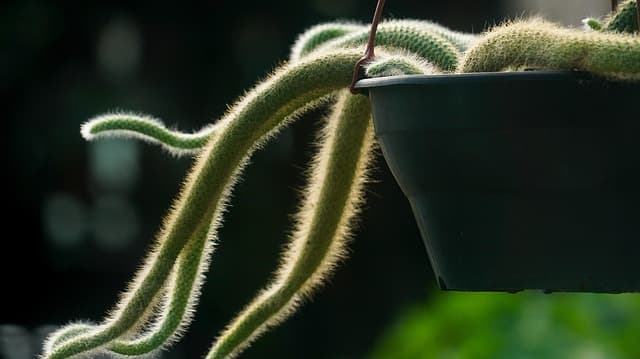
If the plant has thick, rope-like trailing stems covered in soft white or silvery fur, and feels plush rather than spiny—it is the true Monkey Tail Cactus.
One species. Many expressions. And every healthy plant looks slightly different—just like living beings should.
🧪 Is Monkey Tail Cactus Toxic or Edible? (Important Safety Clarity)
This topic is often overlooked—and sometimes confused with other trailing succulents like Burro’s Tail. Monkey Tail Cactus is not the same plant, and its safety profile should be understood on its own.
✅ Safety Facts About Monkey Tail Cactus
- ❌ Not edible — this cactus is strictly ornamental
- ⚠️ Non-toxic to humans if touched
- 🌿 Safe to handle — soft hair does not irritate skin
- 🐕 Generally considered pet-safe, but ingestion should still be avoided
While Monkey Tail Cactus does not contain known toxic compounds, it is not meant for consumption by humans or animals. Chewing on stems can still cause digestive discomfort, especially in pets.
⚠️ Practical Advice for Homes
- Safe to grow in homes with children and pets
- Avoid placing it where pets may chew hanging stems
- Do not experiment with ingestion—even if the plant seems harmless
👉 Bottom line:
Monkey Tail Cactus is a touch-safe, display-only plant.
Beautiful to admire, safe to handle—but never food.
🌱 Propagation: Simple, Reliable, and Beginner-Friendly
Monkey Tail Cactus is one of the easiest trailing cacti to propagate—but only when patience is respected. Rushing the process, especially in humid Indian weather, is the main reason cuttings fail.
✂️ Stem Cutting Method (Most Reliable)
Follow this method exactly for consistent success:
- Select a healthy trailing stem
Choose a firm, plump segment with no soft spots or discoloration. - Make a clean cut
Use a sterilized blade and cut cleanly—avoid tearing the stem. - Allow proper callusing
Place the cutting in a dry, shaded, airy spot for 3–5 days.
In humid regions, extend this to 5–7 days until the cut end feels dry and sealed. - Plant in dry, fast-draining cactus mix
Do not moisten the soil at planting time. Dry soil prevents rot. - Withhold water initially
Do not water for at least 7 days. This step is critical. - Begin light watering
After a week, water lightly around the edges—never soak.
⏳ What to Expect Next
- Roots usually begin forming in 2–3 weeks
- New growth may take 4–6 weeks to appear
- The cutting may wrinkle slightly at first—this is normal
⚠️ Common Propagation Mistakes
- Planting before the cut end dries
- Watering immediately after planting
- Keeping cuttings in humid, enclosed spaces
- Using rich or heavy soil
👉 If propagation feels slow, that’s a good sign.
Fast results usually mean future rot.
Once rooted, Monkey Tail cuttings settle quickly and grow steadily—often faster than nursery plants because they’re already adapted to your local conditions.
🛑 Common Problems in India & Practical Solutions
| Problem | Cause | Solution |
|---|---|---|
| Stem rot | Excess water, monsoon | Improve drainage, reduce watering |
| Sunburn | Harsh summer sun | Move to bright shade |
| Shriveling | Extreme heat | Increase shade, light watering |
| No flowers | Overfeeding | Reduce fertilizer, add winter sun |
| Fungus | Poor airflow | Improve ventilation, neem spray |
🌿 Fertilizer: Minimal, Timed, and Often Optional
Monkey Tail Cactus does not grow faster or healthier with frequent feeding. In fact, over-fertilizing causes more harm than underfeeding, especially in Indian climates where growth already slows during humidity and heat stress.
🌱 When Fertilizer Is Actually Needed
Fertilizer should be used only during active growth, which usually means:
- Spring to early summer
- When new stem tips are visibly extending
Outside of this window, feeding is unnecessary.
🧪 How to Feed Safely
If you choose to fertilize:
- Use a balanced cactus or succulent fertilizer
- Dilute it to ¼ or ½ the recommended strength
- Apply once every 6–8 weeks only
- Water the soil lightly before feeding—never fertilize dry roots
This supports steady growth without forcing soft, weak tissue.
🚫 When to Avoid Fertilizer Completely
- Winter months (plant enters rest mode)
- Heavy monsoon periods, when roots stay damp
- When the plant looks stressed, wrinkled, or sun-damaged
👉 A healthy Monkey Tail Cactus grows slowly by design.
Fertilizer is a supplement—not a requirement.
In many Indian homes, correct light and soil matter far more than feeding. If those are right, fertilizer becomes optional rather than essential.
🏡 Indoor vs Outdoor: What Works Best in India?
| Location | Suitability |
|---|---|
| Bright indoor window | ✅ Excellent |
| Covered balcony | ✅ Ideal |
| Open terrace | ⚠️ Risky in summer |
| Ground planting | ❌ Not recommended |
🌵 Why Monkey Tail Cactus Is Truly Worth Growing in India
Monkey Tail Cactus isn’t popular because it’s trendy—it’s remembered because it’s different. In a country where most cacti look sharp, rigid, and defensive, this one arrives soft, flowing, and unexpectedly calm.
🌿 What Makes It Special for Indian Homes
- Visually unforgettable – guests notice it before they notice the pot
- Low water demand – ideal for busy lives and water-conscious homes
- Perfect for small spaces – balconies, windows, and vertical corners
- Soft, non-aggressive texture – safe to touch, no painful spines
- Naturally thrives in hanging pots – no need for large planters or ground space
Unlike many ornamentals that demand attention, Monkey Tail Cactus settles quietly into its space and grows at its own pace.
🪴 A Plant That Fits Modern Indian Living
It works just as well in apartments as it does in independent homes. It tolerates missed watering, adapts to indoor light, and doesn’t collapse if you step away for a few weeks. Once placed correctly, it asks very little—and gives a lot back in presence.
👉 This is not just a cactus.
It’s a living, trailing sculpture—one that rewards understanding rather than effort.
And in a climate as complex as India’s, that kind of balance is rare.
💬 A Message Written on Tails, Not Thorns
Some plants don’t compete for attention.
They ask for understanding.
Monkey Tail Cactus doesn’t survive by toughness or neglect. It survives by balance—between light and shade, dryness and care, stillness and airflow. In a climate that often feels extreme, it reminds us that gentleness can endure when it is placed wisely.
Not every plant teaches growth through speed.
Some teach it through patience, softness, and restraint.
And those lessons, like its trailing stems, stay with you longer than expected.

