
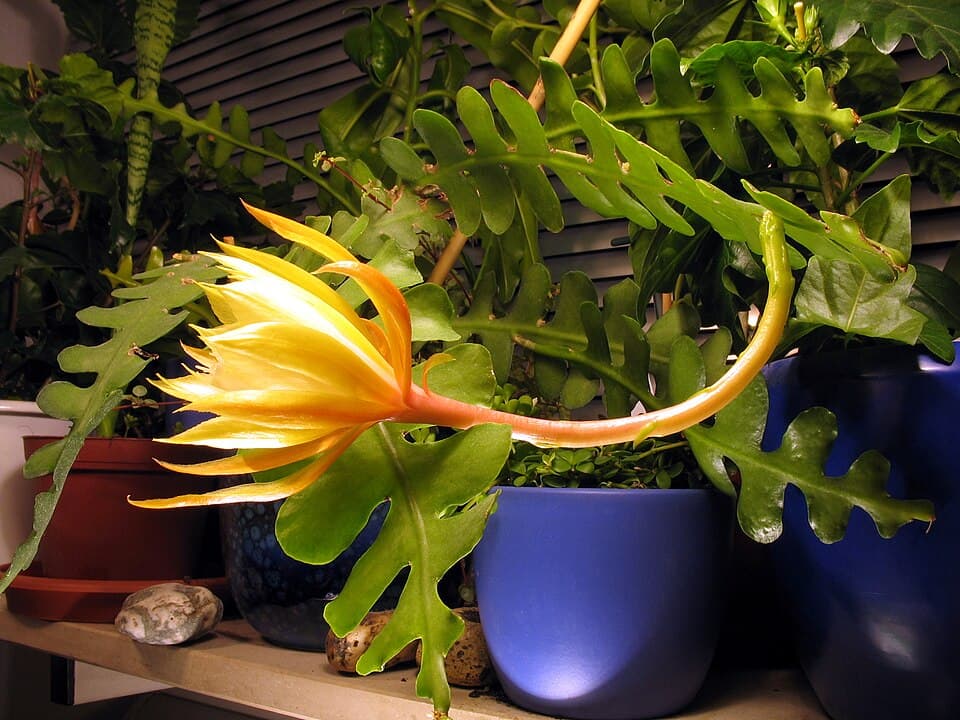
The Fishbone Cactus, also called the Zigzag Cactus, is one of the most visually striking houseplants you can grow. With its deeply lobed, zigzag-shaped stems that resemble a fish skeleton, Disocactus anguliger breaks every stereotype of what a cactus should look like. Unlike desert cacti, this plant thrives in filtered light, enjoys humidity, and rewards patience with large, fragrant night-blooming flowers.
Native to the tropical forests of Mexico, this cactus is an epiphytic species, meaning it naturally grows on trees rather than in soil. Understanding this single fact changes the way you water, pot, and care for it—especially in Indian conditions where heat, monsoon humidity, and winters vary widely.
This detailed guide will help you grow a healthy, long-living Fishbone / Zigzag Cactus at home—whether on a balcony, indoors near a window, or in a shaded garden corner.
The Fishbone Cactus Is Not a Cactus That Wants to Be Left Alone
Most people buy a Fishbone Cactus believing one thing:
“It’s a cactus, so it must survive neglect.”
This single assumption is why many plants slowly decline — not dramatically, but quietly. The stems lose firmness, the zigzag edges soften, and growth pauses for months. What’s happening isn’t disease or bad luck — it’s misunderstanding the plant’s personality.
Disocactus anguliger is not built for survival through drought and harsh sun. It evolved to live under trees, protected from extremes, absorbing moisture from air and organic debris rather than sand and stones. Once you stop treating it like a desert cactus, everything changes.
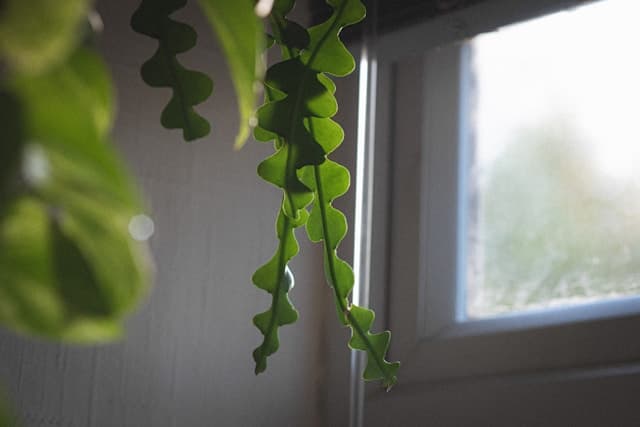
Why the Zigzag Shape Exists (And What It Tells You)
The dramatic fishbone pattern isn’t just ornamental. It’s a functional design.
Each deep indentation increases surface area, allowing the plant to:
- Capture more filtered light in shaded forests
- Absorb ambient humidity efficiently
- Cool itself faster in warm, still air
When your plant’s zigzag edges look sharp and defined, it’s comfortable.
When they soften, flatten, or stretch — the plant is communicating stress, not misbehaving.
This makes the Fishbone Cactus one of the rare plants that visibly tells you how it feels if you learn to read it.
🌵 Understanding Fishbone / Zigzag Cactus Growth Habit
Unlike spiny desert cacti, Disocactus anguliger has:
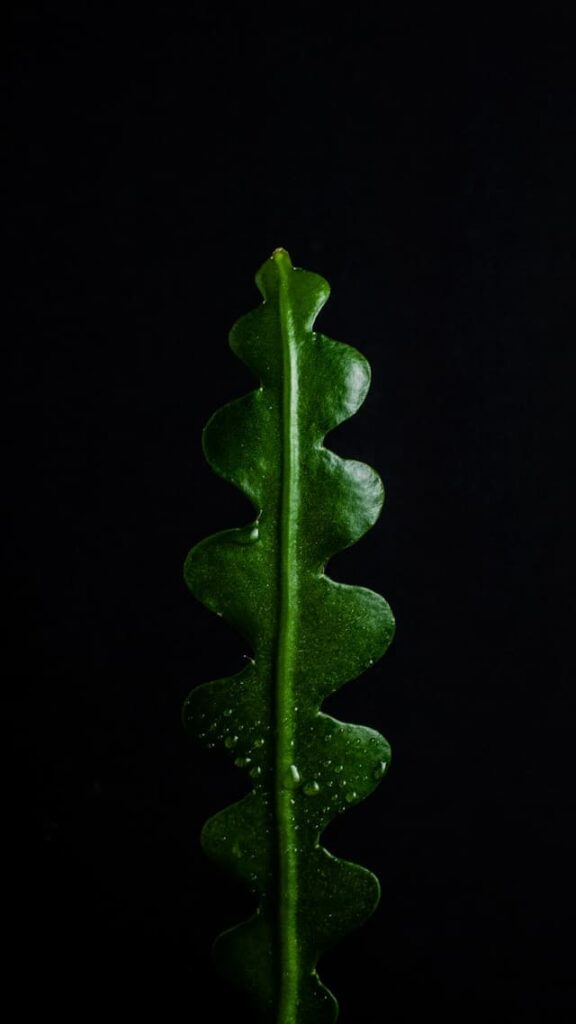
- Flat, leaf-like segmented stems
- No sharp spines (safe for indoor spaces)
- A trailing or cascading growth habit
In nature, it grows:
- Attached to tree branches
- In dappled forest light
- With frequent airflow and quick-draining organic debris
👉 This is why heavy garden soil and harsh sunlight are the biggest mistakes made while growing this plant.
🌤️ Best Time & Conditions to Grow Fishbone Cactus (Indian Climate)
| Factor | Ideal Requirement |
|---|---|
| 🌡️ Temperature | 18°C – 30°C |
| ☀️ Sunlight | Bright indirect light |
| 🌬️ Airflow | Good ventilation |
| 🌧️ Humidity | Medium to high |
| 🪴 Location | Indoor near window / shaded balcony |
Best planting time in India:
✔️ February to September
❌ Avoid repotting in extreme summer heat or cold winters

☀️ Light: Think “Under a Window”, Not “On a Window”
Many guides say “bright indirect light,” but that phrase is vague.
In real homes, this translates to distance, not direction.
The ideal placement is:
- 1–2 meters away from a bright window
- Where sunlight touches the room, not the plant directly
Morning sun is tolerated. Afternoon sun is not.
Direct rays don’t burn immediately — they bleach slowly, which is why damage is often noticed too late.
A healthy Fishbone Cactus stays deep green, not pale lime.
💧 Watering Isn’t About Schedule — It’s About Stem Texture
Forget calendars. This plant tells you when it’s thirsty.
- Firm, slightly glossy stems → No water needed
- Soft, dull, lightly wrinkled stems → Water thoroughly
- Mushy base or darkened joints → You watered too soon
In Indian summers, people often overwater trying to “help.”
Ironically, high humidity already reduces the plant’s need for soil moisture.
The safest habit:
👉 Water deeply, then wait longer than you think.
🌱 Soil Is Where Most People Lose This Plant
Using regular cactus soil is the fastest way to shorten its life.
This plant’s roots expect:
- Air pockets
- Decaying organic matter
- Quick drainage with gentle moisture retention
If water stays around the roots longer than a few hours, they suffocate.
A Fishbone Cactus doesn’t die from dryness — it dies from stagnation.
Ideal DIY Potting Mix
- 40% cocopeat or leaf compost
- 30% orchid bark or coarse coco husk
- 20% perlite or sand
- 10% vermicompost
🪴 Pot must have large drainage holes.
🌼 Fertilizing for Healthy Growth & Flowers
Fishbone Cactus is not a heavy feeder, but balanced nutrition boosts stem thickness and flowering.
Fertilizer Schedule
- Use liquid organic fertilizer once every 30 days
- During active growth (spring–monsoon)
- Stop feeding in winter
✔️ Best options:
- Seaweed extract
- Diluted vermicompost tea
- Balanced NPK (10-10-10) at half strength
🌸 Flowering: When & How It Blooms
When this plant blooms, it feels personal.
The flowers open at night, release a soft fragrance, and fade quickly — like a quiet thank-you. But flowering only happens when three subtle conditions align:
- Maturity (young plants won’t bloom, no matter how well cared for)
- Slight root restriction (too much pot space delays flowers)
- Cooler winter nights with reduced watering
If your plant hasn’t flowered yet, it doesn’t mean failure.
It means the plant is still settling into trust.
Flowering Facts
- Mature plant (2–3 years old) required
- Blooms usually in late winter to early summer
- Flowers last only one night
How to Encourage Blooming
- Stable light conditions
- Slight root binding
- Cool nights during winter
- No frequent pot shifting
🌙 The scent intensifies after sunset.
🌸 Fishbone / Zigzag Cactus Flower Details (Size, Color & Varieties)
One of the most magical features of the Fishbone Cactus (Disocactus anguliger) is its large, short-lived but unforgettable flowers. Many growers wait years just to witness a single bloom—and once seen, it’s never forgotten.
🌼 Flower Size
- Fully open flowers measure 15–20 cm (6–8 inches) in diameter
- Much larger than the plant’s stem width
- Appear oversized compared to the zigzag segments, creating a dramatic contrast
These blooms often surprise first-time growers because the plant looks modest—until flowering night arrives.
🎨 Flower Color & Appearance
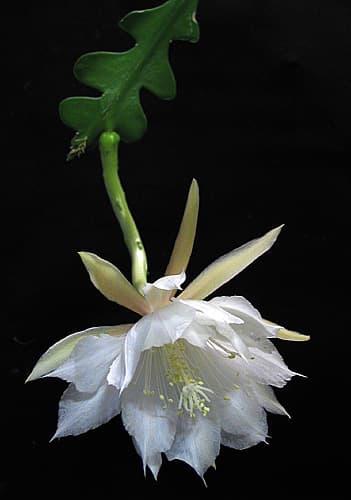
- Primary color: Creamy white to soft ivory
- Inner petals: Bright white, silky texture
- Outer petals: Slightly yellowish or pale green tint
- Center: Dense cluster of golden-yellow stamens
The flower has a starburst shape with long, narrow petals radiating outward, giving it an elegant and almost tropical appearance.
🌙 Blooming Time & Fragrance
- Flowers usually open at night (nocturnal bloomers)
- Begin opening after sunset
- Fully open by late evening
🌸 Fragrance:
- Strong, sweet, and floral
- Most intense during late night hours
- Often compared to jasmine or vanilla-like notes
⏳ Flower lifespan:
- Typically lasts one night only
- Occasionally remains open until early morning
This fleeting nature makes every bloom feel special.
🌿 Are There Different Flower Varieties?
While true Disocactus anguliger naturally produces white flowers, selective breeding and hybridization have introduced related varieties and cultivars within the same cactus group.
🌱 Natural Species Flower
- Color: White to cream
- Shape: Narrow-petaled, star-like
- Scented: Yes
🌸 Hybrid & Related Varieties (Rare in India)
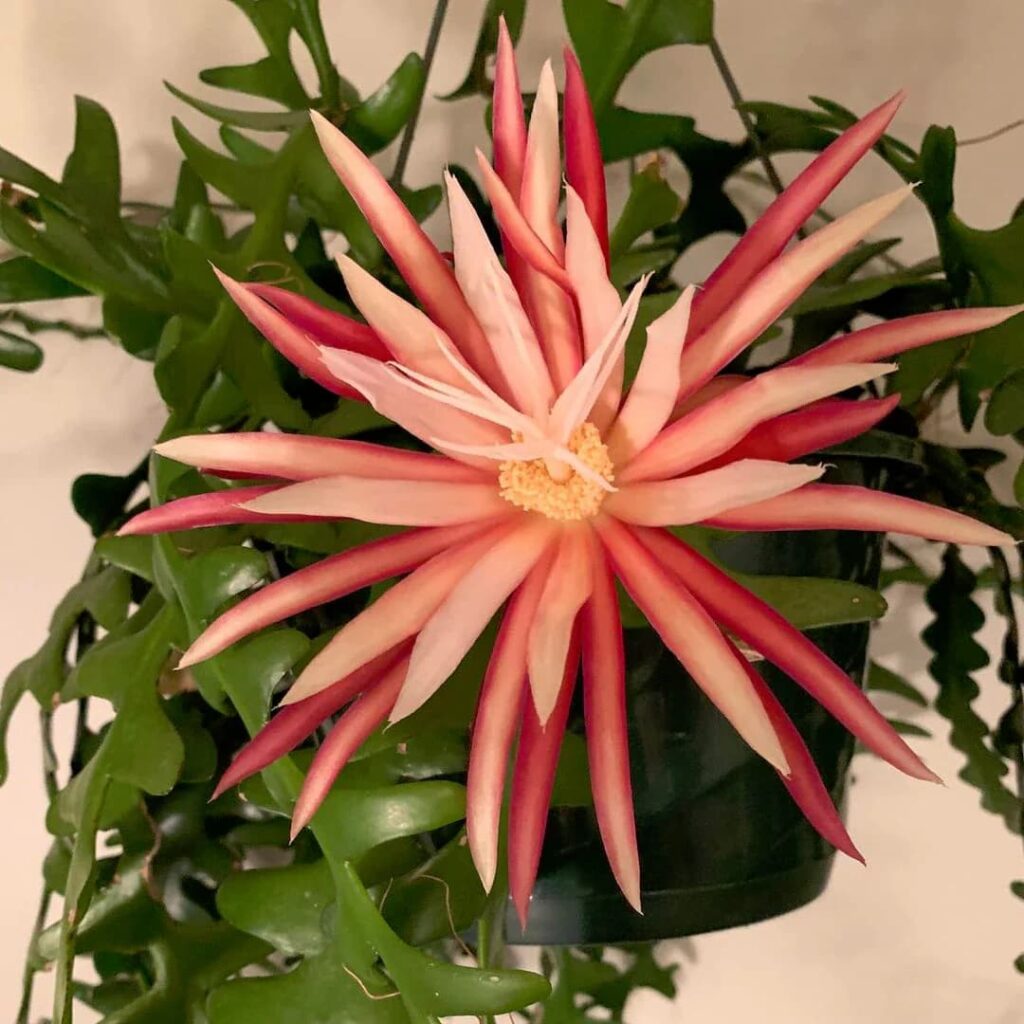
Some hybrids related to Fishbone Cactus may show:
- Pale yellow flowers
- Slight pink blush near petal tips
- Larger or thicker petals
⚠️ Important Note:
If a plant produces bright pink, red, or orange flowers, it is usually a related Epiphyllum hybrid, not a pure Disocactus anguliger.
🌼 Flower Bud Formation: What to Expect
- Buds appear as small, oval, green swellings along stem edges
- Bud development takes 3–5 weeks
- Sudden changes in light or temperature may cause bud drop
✔️ Avoid moving the plant once buds appear.
🌸 Why Flowering May Not Happen
Even healthy plants may skip flowering if:
- The plant is younger than 2 years
- Excess nitrogen fertilizer is used
- Light conditions change frequently
- The plant is overwatered in winter
Patience is key—this cactus blooms when it feels settled and mature.
✂️ Pruning & Shaping
Pruning is optional but helps maintain shape.
- Trim damaged or very long stems
- Always use clean, sharp scissors
- Best time: Early spring
Pruned segments can be used for propagation.
🌿 Propagation of Fishbone / Zigzag Cactus (Very Easy)
This cactus propagates effortlessly because it’s adapted to fall, break, and regrow in forests.
But rushing cuttings is the most common mistake.
Letting the cut end dry isn’t optional — it’s biological preparation. A properly callused cutting roots faster, stronger, and resists rot.
Good propagation feels boring.
Bad propagation feels urgent.
Propagation by Stem Cuttings
- Cut a healthy zigzag segment
- Let it dry for 24–48 hours
- Plant in slightly moist, airy soil
- Keep in bright indirect light
⏳ Roots appear in 2–3 weeks.
✔️ Best time: Spring and monsoon
🍈 Fruit and Seed Details of Fishbone / Zigzag Cactus (Disocactus anguliger)
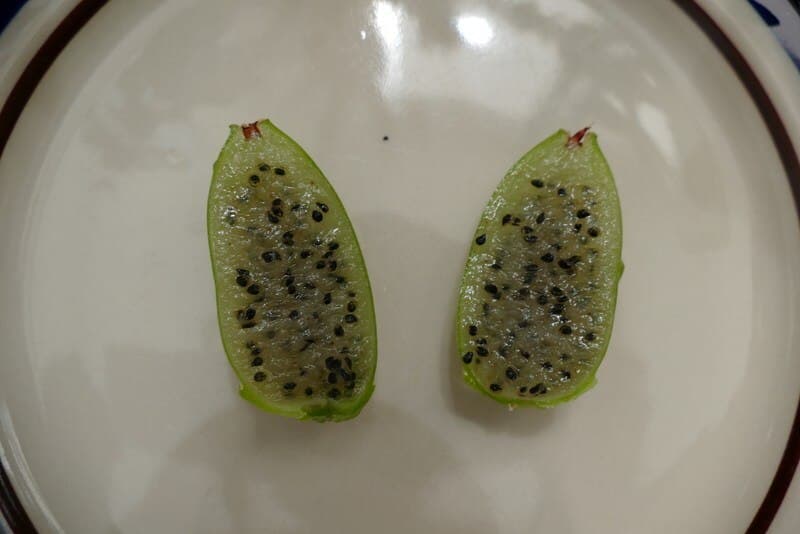
Fishbone Cactus (Disocactus anguliger) can occasionally produce fruit and seeds, though this is rare in home-grown plants, especially indoors. After successful pollination, the night-blooming flower may develop into a small oval to slightly elongated fruit about 4–6 cm long, turning from green to yellowish or pale red when ripe. The fruit contains many tiny black seeds embedded in soft pulp; these seeds are viable when fresh but lose germination power quickly if dried. Natural pollination by nocturnal insects and bats is usually absent in Indian home conditions, which is why fruiting is uncommon unless hand pollination is attempted. Although seed propagation is possible, it is slow and plants may take 3–5 years to flower, making stem cuttings the preferred method. The fruits are not edible and should be considered a rare bonus rather than a regular feature of cultivation.
⚠️ Is Fishbone Cactus Toxic or Edible?
- Toxic: ❌ No
- Edible: ❌ No
This plant is non-toxic to humans and pets, but it is not edible.
Its value is visual, emotional, and atmospheric — not culinary.
🐛 Common Problems & Practical Solutions
| Problem | Likely Cause | Easy Solution |
|---|---|---|
| Yellow stems | Too much direct sun | Shift to indirect light |
| Mushy base | Overwatering | Reduce watering immediately |
| No flowers | Immature plant or excess nitrogen | Reduce fertilizer |
| Wrinkled stems | Underwatering | Water deeply once |
| Black spots | Poor airflow | Improve ventilation |
🪴 Repotting: When & How Often
- Repot every 2–3 years
- Choose a pot only 1 size larger
- Best time: Spring
Avoid disturbing roots frequently.
🌬️ Indoor vs Outdoor Growing
Some plants tolerate indoor life.
The Fishbone Cactus prefers it.
Indoors, it gets:
- Stable temperatures
- Gentle light
- Protection from monsoon overwatering
Outdoors, it survives only when carefully sheltered. Indoors, it actually thrives, stretches confidently, and develops thicker, more dramatic zigzags.
Indoor Growing
✔️ Better control
✔️ Less pest issues
✔️ Ideal for apartments
Outdoor Growing
✔️ Faster growth
❌ Needs shade & rain protection
Choose based on your local climate.
🌿 Why Fishbone Cactus Is Perfect for Indian Homes
- Thrives in warm temperatures
- Handles humidity well
- Low maintenance
- Unique architectural beauty
It fits perfectly in modern homes, balconies, and indoor plant collections.
💬 A Quiet Truth About This Plant
Most plants demand attention.
This one asks for understanding.
Once you adjust your expectations — not your effort — the Fishbone Cactus becomes one of the most forgiving, expressive, and long-lived indoor plants you can grow.
“Some plants don’t grow faster when you try harder — they grow better when you listen.”

