
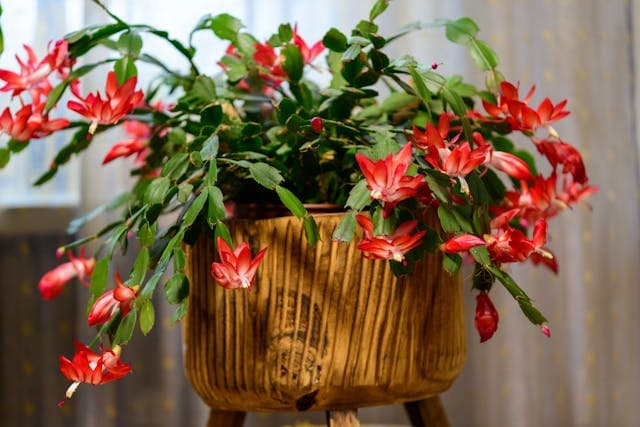
Christmas cactus (holiday cactus) is one of the most rewarding indoor plants — it rewards patient care with a spectacular winter bloom. In this long-form guide you’ll find everything: why it’s called “Christmas” cactus, where it comes from, how varieties differ, and precise, India-friendly care (light, water, soil, propagation, pests, bloom-forcing and seasonal schedules).
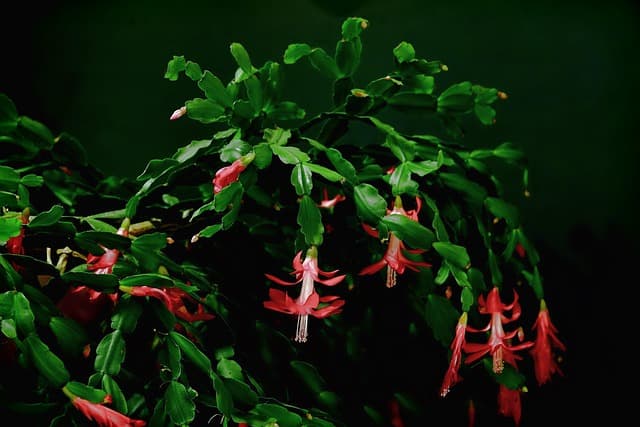
Quick overview (what makes the Christmas cactus special)
- Botanical family: Cactaceae (but not a dry-desert cactus).
- Typical genus & name used: Schlumbergera (many garden plants are hybrids, commonly called Christmas cactus).
- Why it blooms in winter: bud formation is triggered by cooler nights and shorter daylight hours (photoperiod + temperature) — a survival strategy that times blooms for late autumn/winter.
- Suitability for India: excellent as an indoor/terrace plant across most Indian climates if you manage light, humidity and water during monsoon and summer.
Why people call it “Christmas cactus”
The common name “Christmas cactus” comes from its tendency in many climates to flower around the Christmas season — usually November to January in the Northern Hemisphere. The timing isn’t mystical: it’s biological. Schlumbergera and its hybrids respond to short days (long nights) and cool but not freezing night temperatures to set buds. In many temperate homes and gardens, that combination happens naturally in late autumn and early winter, producing the showy, tubular flowers often used as holiday gifts and decorations — hence the name.
Note: depending on the species and cultivar, closely related plants bloom at different times and are called Thanksgiving cactus (earlier) or Easter cactus (spring). Don’t confuse them — care is similar but flowering cues and leaf-edge shapes differ.
Origin & the major varieties
Origins
Christmas cactus originates from coastal rainforests of southeast Brazil. Unlike desert cacti, these are epiphytic (they grow on trees or in leaf litter), adapted to shady, humid, sheltered environments. That origin explains their need for humidity, organic-rich medium, and protection from direct noon sun.
Key species & groups you’ll see in gardens
- Schlumbergera truncata – often sold as Thanksgiving cactus (has toothed, clawlike stem segments).
- Schlumbergera × buckleyi – a hybrid group that includes many of the classic “Christmas cactus” cultivars; flowers often appear in mid-late winter.
- Hatiora gaertneri (Easter cactus) – spring bloomer, different flower shape and segmented stems.
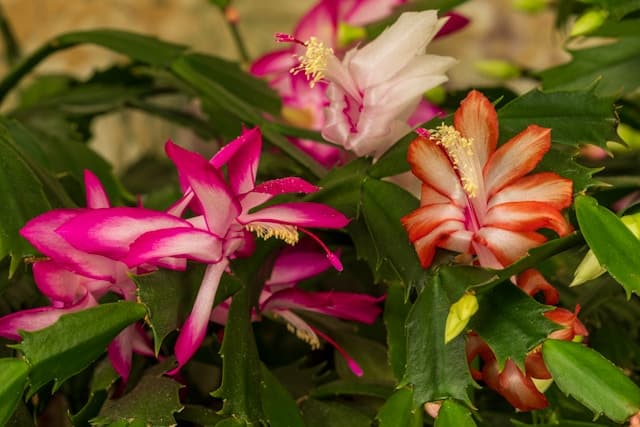
- Modern hybrids & cultivars – huge range of flower colors (white, pink, fuchsia, red, orange, salmon) and flower forms (single, double). Most houseplants are complex hybrids derived from S. truncata and related species.
How to recognize your plant
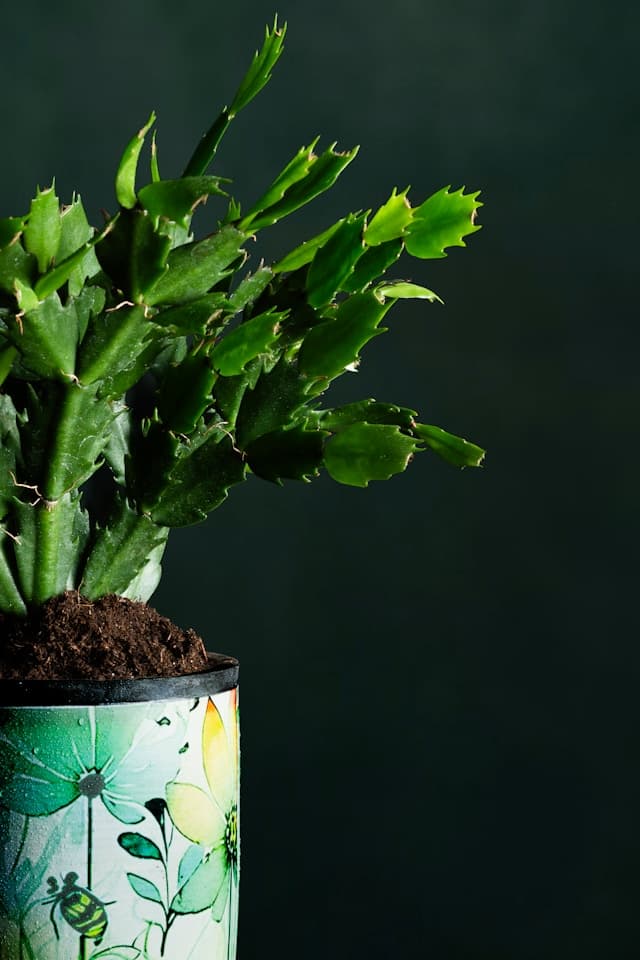
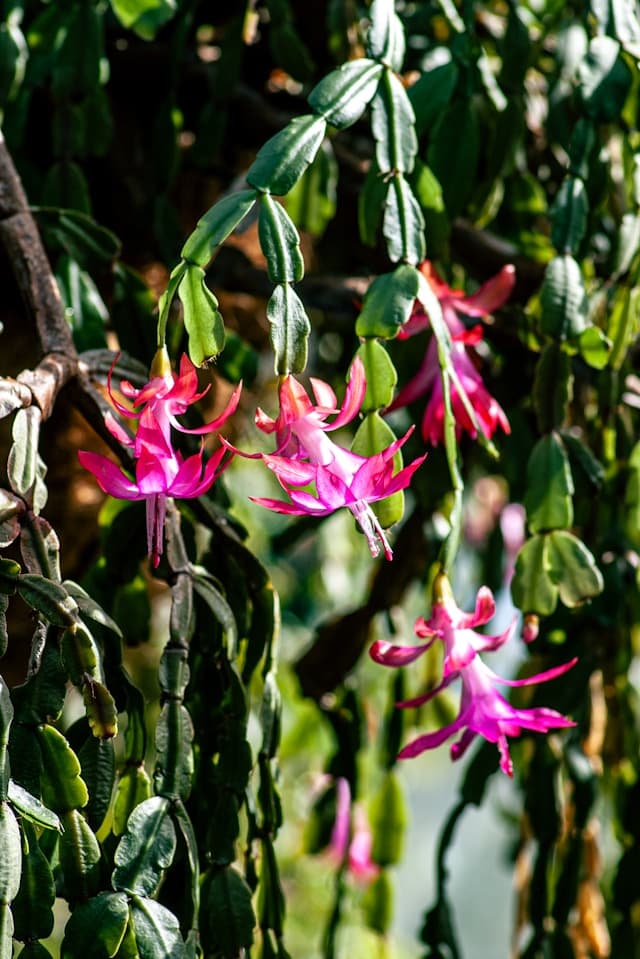
- Stem segments (cladodes): flattened, leaf-like segments joined end to end. Edges can be smooth, scalloped or toothed.
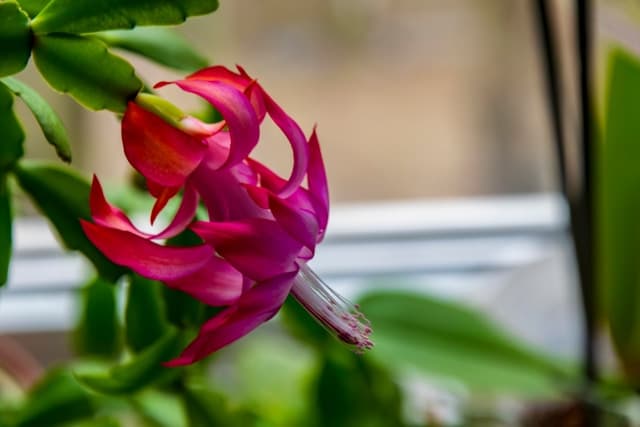
- Flowers: tubular, layered petals, often hanging and showy. Bloom clusters form at the segment tips.
- Roots & habit: shallow root system adapted to epiphytic life; plant naturally trails and makes a hanging or cascading habit.
Growing-Conditions Chart
| Factor | Ideal range / notes (Indian climates) |
|---|---|
| Temperature (day) | 18–24°C comfortable; tolerate 15–28°C. Avoid >32°C for long. |
| Temperature (night) | 12–16°C ideal for bud initiation; brief dips to 10°C okay. |
| Light | Bright, indirect light. Morning sun ok; avoid harsh noon sun (shade cloth in summer). |
| Soil / medium | Freely draining, organic-rich: cocopeat/compost + perlite + coarse sand or commercial epiphyte/cactus mix with added compost. |
| Water | Keep evenly moist when growing; let top 1–2 cm dry between waterings. Reduce frequency in monsoon & winter (during bud set just keep slightly moist). |
| Humidity | Prefers moderate to high humidity (50–70%). In dry winters, raise humidity with pebble trays or frequent misting. |
| Feeding | Balanced liquid fertilizer (diluted) every 3–4 weeks during active growth; switch to bloom booster (low N, higher P/K) in autumn if desired. |
| Pot size | Slightly root-bound is fine; repot every 2–3 years after flowering into a pot 2–3 cm larger. |
| Bloom trigger | 6–8 weeks of ~12–14 hours darkness + cool nights (12–16°C) for bud initiation. |
| Best placement in India | Indoors near east/west window, balcony with filtered light, or shaded verandah. Avoid wet, stagnant monsoon positions without drainage. |
Soil & potting mix
Because many Indian regions have heavy monsoon rainfall and high humidity, drainage and aeration are crucial.
Simple potting mix (home recipe):
- 40% cocopeat or well-aged compost
- 30% perlite or coarse crushed brick (for drainage)
- 20% coarse sand or grit
- 10% well-rotted coconut coir fiber or leaf mould
Or use a commercial orchid/cactus mix and mix in 20–30% compost or cocopeat to supply organic nutrition.
Pot choice: terracotta or plastic with several drainage holes. Terracotta dries faster (good in humid India). Use hanging baskets or pots that allow the plant to trail — that’s its natural habit.
Watering schedule for Indian seasons
- Spring–Summer (active growth): water when the top 1–2 cm is dry — usually once a week in moderate indoor conditions; increase slightly in hot, dry rooms. Avoid waterlogging.
- Monsoon: humidity high — reduce watering. Water only when the soil surface is noticeably dry (often every 10–14 days). Ensure excellent drainage to avoid root rot. Consider moving plants to a covered, well-ventilated spot.
- Autumn (pre-bloom): keep soil slightly drier than in summer but don’t let the plant wilt. Begin shorter-day regime to induce buds.
- Winter / Blooming (December–January): keep evenly moist but never soggy; avoid frequent heavy watering during bud set; watering once every 10–12 days indoors is common but adjust to pot size and indoor heat.
Rule of thumb: water less often in high-humidity and cool periods; increase slightly during hot, dry spells, but always avoid standing water.
Light & placement
- Bright, indirect light is best. Morning sun is gentle and helpful; protect from hot afternoon sun behind glass or with sheer curtains.
- In southern India or very bright metros, place the plant where it receives dappled sun or filtered light through a shade.
- Avoid full sun during summer — leaf segments scorch easily. In winter, more bright light helps bud development but still avoid direct harsh sun.
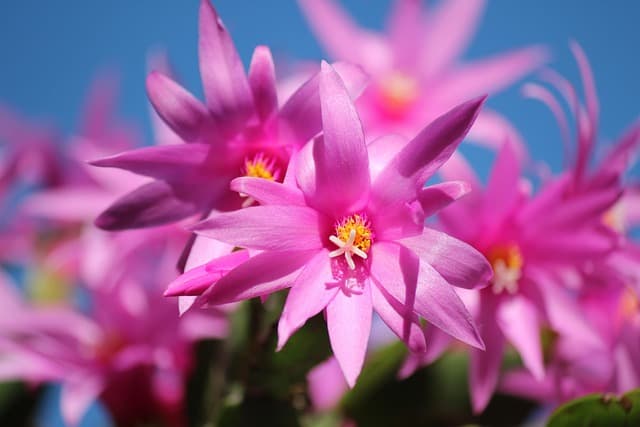
Temperature & how to force blooms
To encourage bud set and flowering in time for Christmas:
- Starting ~6–8 weeks before the target bloom window, give 12–14 hours of uninterrupted darkness nightly. Move plant to a dark room or cover it with a cardboard box — no interruption from porch lights or indoor lamps.
- Keep night temperatures around 12–16°C if possible. In many Indian homes this requires moving near a cool window at night or placing outside in cool winter evenings (only where nights drop safely and not below 8–10°C). Air conditioning set cooler at night also works but avoid drafts.
- Reduce fertiliser during bud initiation; don’t overwater.
- Once buds appear, return the plant to normal light (bright indirect) and slightly warmer daytime temps; flowers will open.
Tip for warm Indian winters: if household temperatures stay high, you can still induce buds by ensuring darkness and slightly cooler nights — even a 3–5°C drop at night helps.
Feeding & fertiliser schedule
- Use a balanced (NPK) water-soluble fertilizer at half strength every 3–4 weeks during active growth (spring–summer).
- Stop or reduce nitrogen feeding 6–8 weeks before the bloom period; switch to a bloom booster or phosphorus-rich formula during the month of bud formation if you want stronger flowering.
- After flowering, resume balanced feed to support new growth.
Propagation (step-by-step)
Propagation by stem cuttings is the easiest and most reliable.
Propagation by cuttings (6–8 steps):
- Choose a healthy stem of 2–3 segments (ideally after flowering).
- Twist or cut the segment cleanly at the joint; let the cuttings callus for 24–48 hours in a dry shade.
- Prepare a small pot with well-draining mix (perlite + cocopeat or cactus mix).
- Insert the callused end about 1–1.5 cm into the moist mix; don’t bury too deep.
- Keep in bright, indirect light and maintain moderate humidity — a plastic cover or a clear bag can help for the first 2–3 weeks.
- Roots form in 2–6 weeks. Mist occasionally; avoid direct watering on the cutting base until roots set.
- After root establishment, gradually acclimatize to normal care and repot into a slightly larger pot when established.
Other methods: layering (bending a stem to touch moist soil until it roots) and grafting (used commercially) and seeds (rare, slow and not common for home gardeners).
Common problems & solutions
| Problem | Likely cause | Solution (step-by-step) |
|---|---|---|
| No buds / no bloom | Too much light at night, warm nights, overfertilized (too much N), irregular watering | Provide 6–8 weeks of 12–14 h darkness + nights 12–16°C; reduce N fertilizer in autumn; keep slightly drier during bud set. |
| Bud drop | Sudden temperature change, overwatering, stress (repotting/relocation) | Avoid moving plant during bud set; keep stable temps; water sparingly until buds set; restore to stable bright indirect light. |
| Yellowing, limp segments | Overwatering / poor drainage → root rot | Check roots, repot in fresh mix, remove rotten roots, reduce watering frequency, improve drainage. |
| Brown/black spots on segments | Sunburn (hot sun) or fungal disease (water on leaves) | Move to filtered light; remove affected tissue; improve air circulation; use fungicide for severe cases. |
| Mealybugs / scale | Pests attracted to indoor plants | Wipe with isopropyl alcohol swab, use insecticidal soap or neem oil; isolate infected plant. |
| Slow growth | Pot-bound, low light, lack of nutrients | Repot after flowering, provide brighter light and monthly feeding during growth season. |
| Root rot after monsoon | Wet stagnant soil, no drainage | Move to protected spot, repot in aerated mix, elevate pot, ensure holes and quick drainage. |
Pests & diseases — detection and treatment
- Mealybugs, scale insects: small cottony or brown bumps on stem joints. Treat by dabbing with cotton + rubbing alcohol, then use neem oil or insecticidal soap. Repeat weekly until gone.
- Spider mites: dusty webbing, tiny speckled damage — increase humidity, wash plant, treat with horticultural oil.
- Fungal root rot: soft brown roots, mushy crown — caused by overwatering. Remove plant, cut dead roots, repot in fresh dry mix and reduce watering. Use a fungicide if severe.
- Botrytis & bud blight: keep humidity balanced, avoid wetting buds and flowers.
Repotting & pruning
- When to repot: every 2–3 years, ideally after flowering in spring. Use a pot 2–3 cm larger.
- Pruning: pinching back segments after flowering encourages branching and fuller plants. Prune to shape and to remove dead/damaged segments.
Is Christmas cactus toxic or edible?
Christmas cactus is generally considered non-toxic to humans and pets. However, eating any houseplant can cause mild gastrointestinal upset (vomiting/diarrhea) in pets or children. It’s best to keep plants out of reach of curious pets and toddlers. If ingestion occurs, monitor for symptoms and contact a veterinarian or physician if needed.
Designing displays & seasonal tips for India
- Use hanging baskets or high pots so the plant trails and shows off flowers.
- For balconies, place under shade netting to reduce direct sun and heavy rain impact during monsoon.
- Indoors, group with other humidity-loving plants (ferns, ferns, peace lilies) to create a micro-climate.
- To keep blooms longer: remove spent flowers and keep consistent indoor temps and humidity.
Troubleshooting quick FAQ
- My plant bloomed in spring instead of winter — why? Likely the cultivar is an Easter cactus relative, or your home light/temperature cycles misaligned bud cues.
- Can I keep it outdoors in summer? Yes in shaded verandahs or under trees where it gets bright filtered light and protection from heavy rain. Bring indoors before nights cool.
- Why are my segments plump then suddenly soft? That’s usually a watering issue: either prolonged dryness (segments wrinkle) or rot from overwatering (soft). Check roots.
A Message Written on Wings
Christmas cactus teaches us that not all survivors belong to deserts — some flourish in shade, sheltered by others, waiting for the cool hush of winter to show their brightest faces. Care for one and you learn patience: the quieter you make the nights, the louder the flowers will sing.
“Some plants store sunshine in green ribs and release it as a winter bloom — care for them like you keep a promise, patient and kind.”

