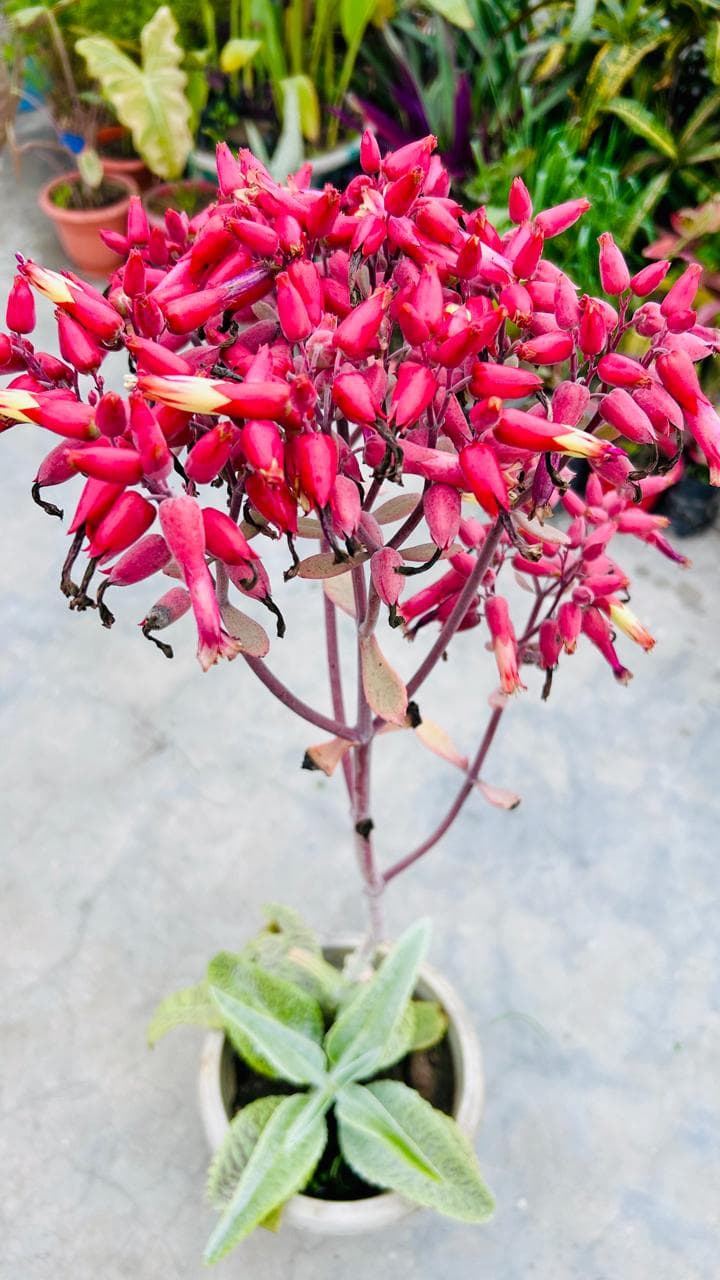
Among succulents, few plants are as misjudged yet quietly remarkable as Kalanchoe gastonis-bonnieri, widely known as the Donkey Ear plant. One look is usually enough to stop people in their tracks—those oversized, floppy, ear-shaped leaves sprawl across the soil like soft green cushions, bold and unapologetic. For many gardeners, the story ends there. They assume it’s just a foliage plant—interesting to look at, but nothing more.
That assumption couldn’t be more wrong.
Gardeners who slow down, notice seasonal shifts, and allow the plant to grow on its own terms are rewarded with something truly special. In winter, when most succulents rest quietly, Donkey Ear rises with a tall flowering stalk, producing long-lasting tubular blooms in shades of pink or deep red, often brushed with hints of yellow. The flowers aren’t loud or flashy—they’re refined, balanced, and deeply satisfying precisely because they arrive only after patience.
This article goes beyond surface beauty. It explains the true botanical behaviour of the Donkey Ear plant, clears up the most common misconceptions surrounding its flowering and growth habits, and—most importantly—removes the long-standing confusion between Donkey Ear and Kalanchoe pinnata (Ajooba). A clear, side-by-side comparison table is included so readers can finally identify these closely related plants with confidence, not guesswork.
🌿 Understanding the Donkey Ear Plant Beyond Its Leaves
To truly understand the Donkey Ear plant, you have to look past its dramatic foliage and trace its story back to Madagascar, where survival depends on restraint, not speed. This plant evolved under very specific conditions—bright sunlight, long dry spells, nutrient-poor but fast-draining soil, and cool winter cues that quietly signal when it’s time to change pace.
These environmental pressures shaped a plant that doesn’t compete, rush, or show off.
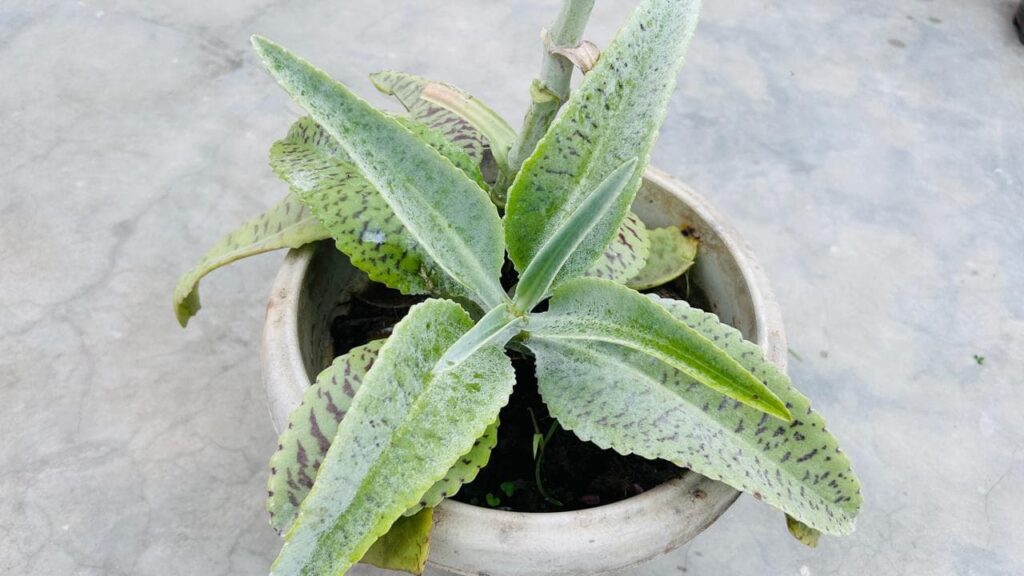
Instead, Donkey Ear grows with intention. Every leaf is thick and leathery, designed to store water for weeks rather than demand constant care. Along the leaf edges, tiny plantlets emerge—not out of abundance, but efficiency—ensuring survival even when conditions are unforgiving. And when it comes to flowering, this plant follows a strict rule: no maturity, no season, no bloom.
Unlike many fast-growing kalanchoes that flower easily and frequently, Donkey Ear chooses patience. It waits.
It waits for age.
It waits for the right temperature shift.
It waits for winter’s quiet signal.
And only then—when everything aligns—does it rise above its leaves and bloom.
This slow rhythm is not a flaw. It’s the very reason the Donkey Ear plant feels so rewarding to grow. It teaches gardeners something rare in today’s world: not all beauty responds to urgency—some answers only arrive when we stop rushing..
🍃 Leaf Structure & Natural Propagation
One of the most persistent misunderstandings about the Donkey Ear plant needs to be addressed clearly:
Yes—Donkey Ear does produce plantlets along its leaf margins.
As Kalanchoe gastonis-bonnieri matures, tiny baby plantlets begin to appear along the edges of its large, leathery leaves. This usually happens during warm, slightly humid periods or after gentle watering cycles—never aggressively, never all at once. When ready, these miniature plants detach naturally, fall to the soil, root with ease, and begin life on their own.
This behaviour isn’t random. It’s a quiet sign that the plant is comfortable, stable, and healthy.
However, Donkey Ear’s propagation style is very different from fast-multiplying medicinal kalanchoes:
- It produces fewer plantlets
- It does so more slowly
- It responds only when conditions feel right
Because of this, plantlet formation in Donkey Ear acts as a health indicator, not a guarantee. A stressed or poorly grown plant may never reproduce this way—and that’s completely normal.
This natural behaviour places Donkey Ear closer to Kalanchoe pinnata in method of reproduction, but not in mindset. Where pinnata spreads quickly and generously, Donkey Ear remains selective—almost intentional—choosing quality over speed.
It doesn’t multiply to conquer space.
It multiplies only when it’s ready.
And that quiet restraint is exactly what makes this plant so fascinating to grow.
🌸 The True Flowering Behavior of Donkey Ear
🌼 When Does Donkey Ear Bloom?
The flowering cycle of the Donkey Ear plant is often misunderstood—and underestimated. Kalanchoe gastonis-bonnieri is not a random bloomer. It follows a quiet seasonal script, flowering from November through March, which places it among the longest winter-blooming succulents when grown under stable conditions.
In Indian climates, the rhythm is especially clear. Blooming usually begins in late autumn, strengthens through the heart of winter, and in regions with mild temperatures and dry air, may continue well into early spring. This slow, extended bloom is exactly why its flowers feel so meaningful—they arrive when most plants are resting.
What triggers this transformation isn’t force or fertilizer, but timing.
Flowering typically follows a natural sequence:
- Recovery after the monsoon’s heavy moisture
- Gradual cooling of night temperatures
- A natural reduction in watering
- Roots left undisturbed and settled
When these conditions align, the plant responds in its own time. A tall, arching flower stalk begins to rise—not hurried, not dramatic—lifting itself well above the broad leaves below. Only then do the tubular flowers appear, soft in colour yet confident in presence, turning patience into a visible reward.
Donkey Ear doesn’t bloom because it’s pushed.
It blooms because it feels ready.
And that difference changes how you see not just the flowers—but the plant itself.
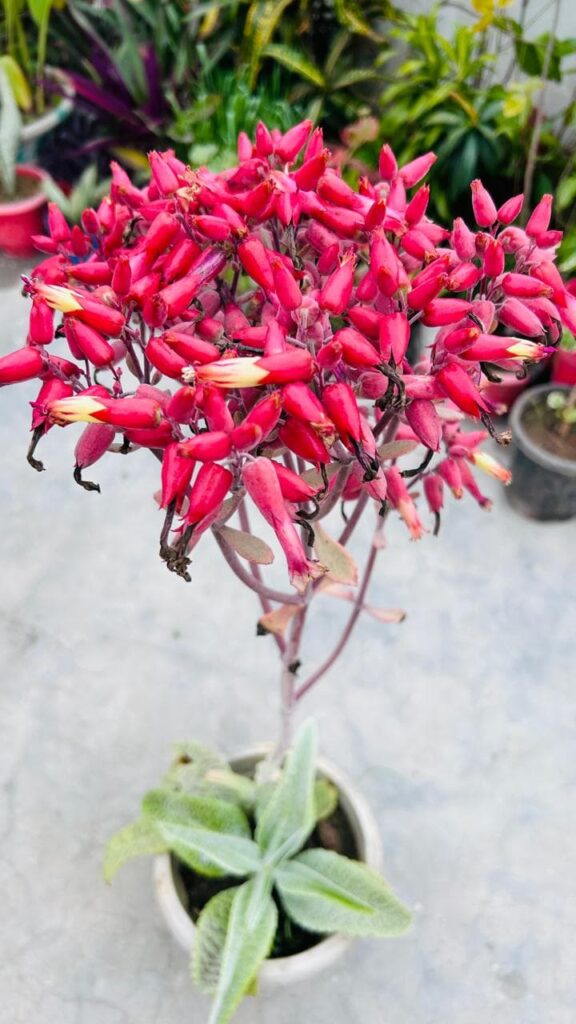
🌺 Flower Appearance
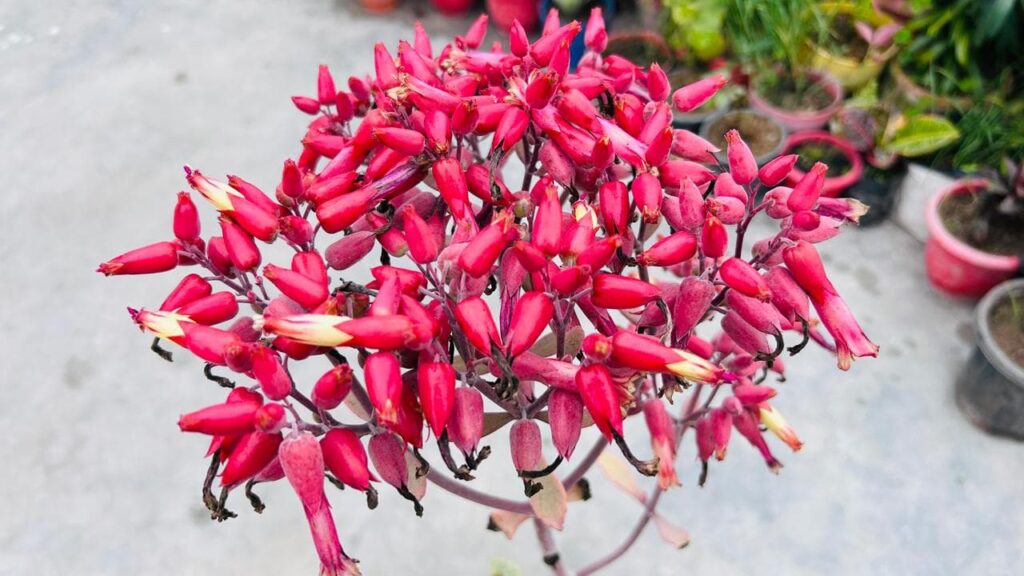
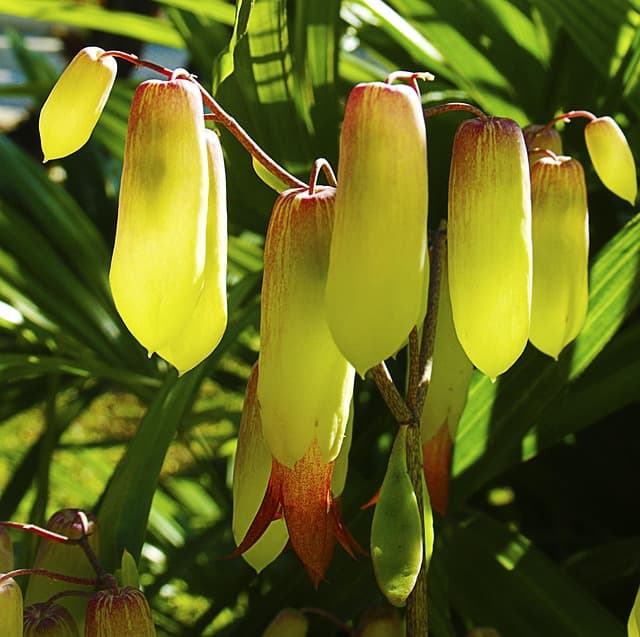
When the Donkey Ear plant finally blooms, it does so with restraint—not drama. The flowers of Kalanchoe gastonis-bonnieri are long, tubular, and gently hanging, never standing stiff or upright. They drape downward from the stalk, giving the entire bloom a calm, almost meditative presence.
Each flower carries a soft pink body brushed with a clear yellow tinge, most noticeable near the tip and throat. The petals are thick, waxy, and succulent-like, echoing the texture of the leaves below and reinforcing that this is a plant built for endurance, not excess.
Rather than forming dense flower balls, the blooms appear in loose, elegant clusters, spaced just enough to let light and air move between them. This open arrangement gives the flowering stalk a graceful silhouette—delicate, but never fragile.
These flowers aren’t meant to shout for attention.
They reward the observant eye.
And once noticed, they’re difficult to forget.
🌸 Flower Longevity
One of the quiet surprises of the Donkey Ear plant lies not just in when it blooms, but how long those blooms stay. Unlike many other kalanchoes that flower briefly and fade fast, the blossoms of Kalanchoe gastonis-bonnieri linger—often remaining attractive for several weeks under stable conditions.
These flowers don’t collapse or drop suddenly. Instead, they age slowly and gracefully, holding their form as colours soften and deepen with time. Even as they mature, they remain visually pleasing, blending gently into the winter landscape rather than demanding attention.
This is not a plant that blooms to impress at first glance.
Its flowers are refined, calm, and perfectly suited to winter—a season where subtle beauty feels more meaningful than spectacle. And that lingering presence is exactly what makes the Donkey Ear’s flowering so memorable: it stays long enough for you to truly notice it.
🌺 What Makes the Flowers Unique?
The flowers of the Donkey Ear plant stand apart precisely because they don’t try to compete. Where many blooms chase attention with colour and volume, Kalanchoe gastonis-bonnieri does the opposite—it invites quiet observation.
Their long, tubular form, softened by pink tones brushed with yellow, and a naturally drooping habit give the flowers a composed, almost thoughtful presence. Nothing feels rushed or excessive. Each bloom hangs as if aware of its place, allowing space, air, and light to move freely around it.
What truly sets these flowers apart, however, is when they appear. Blooming between November and March, at a time when most plants are resting or dormant, Donkey Ear feels deliberate—almost intentional. It doesn’t follow the crowd of summer bloomers. It chooses the stillness of winter.
Its beauty doesn’t rely on brightness.
It rests in timing, form, and restraint.
And for those who notice such things, that kind of beauty stays longer than color ever could.
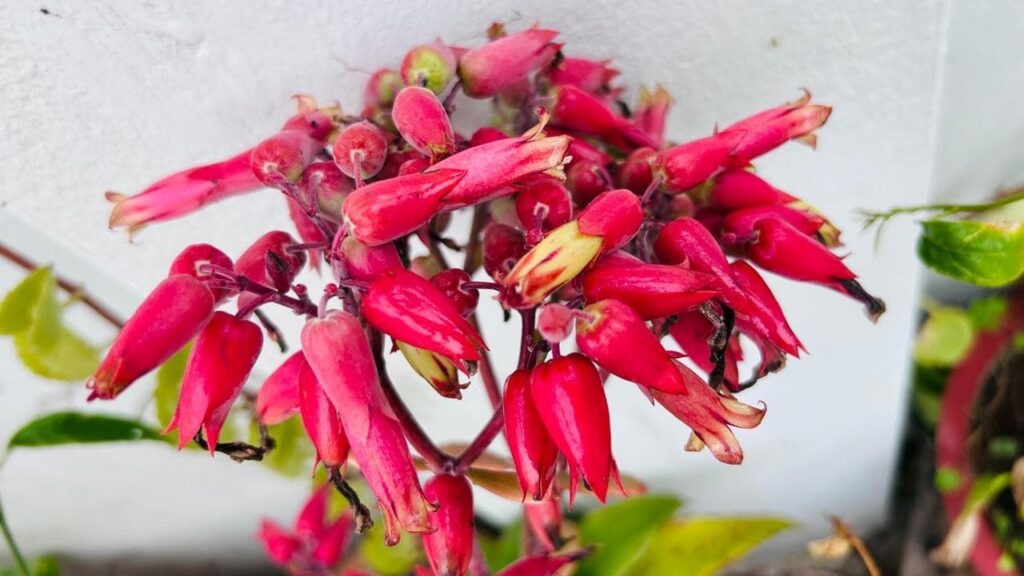
Why Many Donkey Ear Plants Never Bloom
Many Donkey Ear plants never bloom—not because something is wrong, but because this is a plant that does not flower casually. In Kalanchoe gastonis-bonnieri, flowering is the result of maturity, seasonal rhythm, and long-term stability, not quick care tricks or heavy feeding.
Plants that are repotted too often, watered aggressively, overfed, or constantly shifted from place to place rarely receive the quiet consistency this species depends on. Each disturbance resets the plant’s internal balance, encouraging it to focus on survival rather than reproduction.
Young Donkey Ear plants, in particular, are in no hurry. For several years, their energy is devoted almost entirely to leaf expansion and root establishment. During this phase, flowering simply isn’t a priority—and that’s exactly how it should be.
With Donkey Ear, the absence of flowers is not a sign of failure.
It’s a sign that the story isn’t finished yet.
This plant doesn’t reward urgency.
It rewards time.
The Role of Seasonal Stress (The Good Kind)
The Donkey Ear plant responds not to comfort, but to honest seasons. In Kalanchoe gastonis-bonnieri, mild, natural stress isn’t harmful—it’s essential.
As monsoon moisture fades, nights begin to cool, and watering naturally slows, the plant senses a shift. Days shorten. Soil dries faster. Roots remain undisturbed. Together, these subtle changes send a clear message: it’s time to reproduce.
This is what can be called “good stress.”
Not shock. Not neglect.
But a gentle reminder that seasons are turning.
Reduced watering, cooler night temperatures, shorter daylight hours, and stable roots work in quiet harmony to trigger flowering. Because this signal is gradual—not sudden—the Donkey Ear doesn’t bloom all at once. Instead, it flowers slowly and steadily from November through March, responding continuously to stable seasonal cues rather than a single forced event.
In nature, Donkey Ear does not bloom when conditions are perfect.
It blooms when conditions are truthful.
And that is why its flowers feel so earned—because they are a response to balance, not excess.
🌿 Flowering vs Leaf Growth: A Delicate Balance
The Donkey Ear plant follows a simple but often misunderstood rule: it can either build spectacular leaves or prepare to flower—but rarely both at full strength at the same time. In Kalanchoe gastonis-bonnieri, energy is always carefully allocated.
When excess nitrogen, frequent feeding, or generous watering is provided, the plant responds exactly as designed—by enlarging its leaves. They become thicker, broader, and more dramatic, spreading confidently across the soil. This growth isn’t a problem; it’s a sign the plant feels well supplied.
But flowering asks for something different.
To bloom, Donkey Ear needs restraint. Fewer nutrients. Less water. Stable roots. When resources are limited—but not harsh—the plant shifts focus from storage to reproduction.
Too much encouragement builds foliage.
Gentle limits invite flowers.
This balance explains why some Donkey Ear plants look magnificent yet never bloom, while others—less pampered, more settled—rise quietly into winter flowers. It’s not neglect that brings blooms. It’s knowing when to step back.
And in that pause, the plant finally speaks in flow
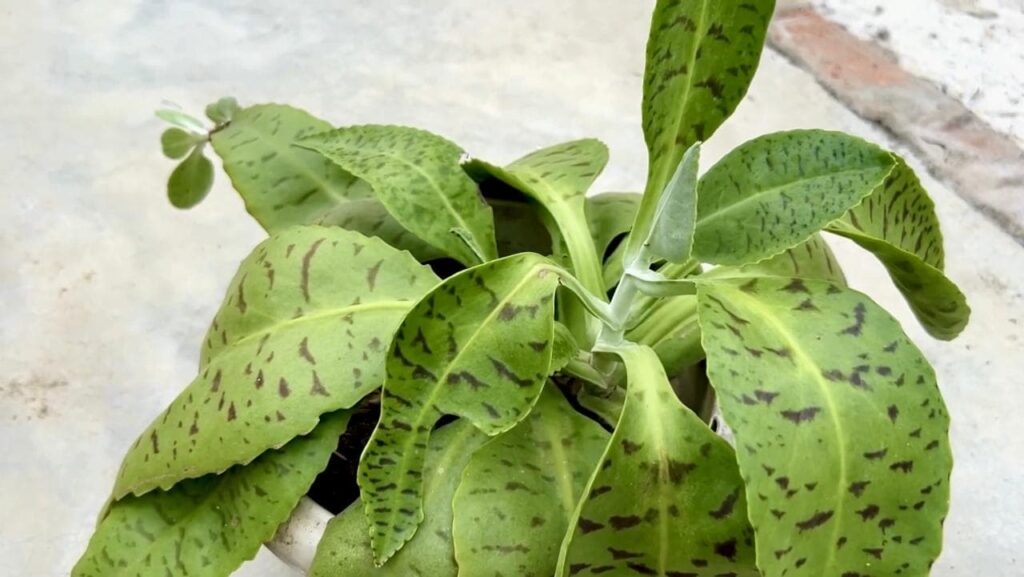
🪴 Indoor vs Outdoor Blooming
Indoor Blooming
Donkey Ear can flower indoors—but only when the environment feels seasonal rather than static. A plant kept near a bright window, with good airflow and at least some exposure to cooler night temperatures, has a genuine chance of blooming. The challenge is that many indoor spaces are too controlled: constant temperatures, artificial lighting, and sealed rooms often remove the subtle signals this plant depends on.
When everything feels the same day after day, Kalanchoe gastonis-bonnieri has little reason to shift from leaf growth to flowering.
Indoor success isn’t impossible—it just requires awareness. The plant needs to feel the season changing, not just survive inside it.
Outdoor Blooming
Outdoor or semi-outdoor settings tilt the odds strongly in favour of flowers. Balconies, terraces, verandas, or open corridors naturally provide the day–night temperature variation that Donkey Ear responds to so well. As evenings cool and days shorten, the plant receives a clear, uninterrupted message: winter is arriving.
That said, outdoor growing still asks for restraint. Protection from heavy rain, waterlogging, and harsh afternoon sun remains essential. When sheltered correctly, these spaces combine stability with natural rhythm—the exact balance Donkey Ear needs to bloom.
In short:
Indoors can work with effort.
Outdoors works because nature does the signaling for you.
And for a plant that listens so closely to seasons, that difference matters.
🌱 Growing Conditions That Support Flowering
Flowering in Donkey Ear doesn’t come from extra effort—it comes from alignment. In the Indian climate, the goal is not to push growth, but to recreate the gentle seasonal cues this plant recognizes. When these conditions stay steady, Kalanchoe gastonis-bonnieri naturally shifts from leaf-building to flowering.
Ideal Conditions for Blooming
| Factor | Ideal Condition | Why It Matters |
|---|---|---|
| Sunlight | Bright light with gentle direct sun | Supports energy storage without stressing leaves |
| Temperature | 12–30°C | Cooler nights encourage flowering signals |
| Soil | Very fast-draining, sandy mix | Prevents root stress after monsoon |
| Water | Only after soil dries fully | Mimics natural dry season rhythm |
| Pot | Slightly snug, wide container | Encourages stability over rapid root spread |
| Fertilizer | Minimal, low-nitrogen only | Avoids leaf-only growth |
| Disturbance | No repotting before winter | Keeps flowering cycle uninterrupted |
The key takeaway is restraint.
Donkey Ear doesn’t bloom because it’s given more—it blooms because nothing interrupts its rhythm.
When light is steady, roots are settled, and watering slows naturally after monsoon, the plant senses that it’s time. And once that signal is clear, flowering becomes a response—not a struggle.
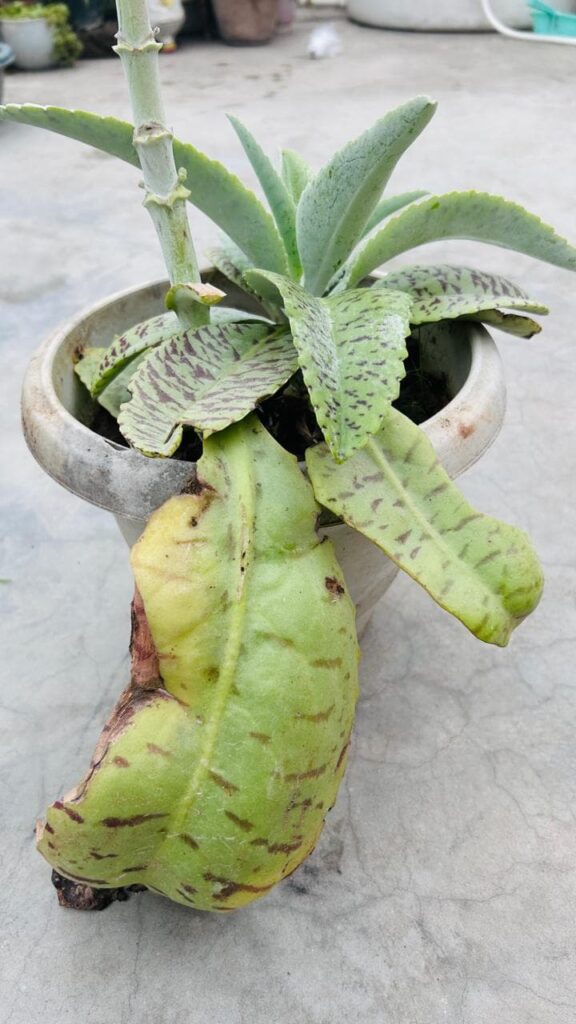
🌸 After the Flowers Fade: What Comes Next?
When the flowering season ends, the Donkey Ear plant doesn’t decline—it completes a chapter. In Kalanchoe gastonis-bonnieri, the tall flowering stalk slowly dries once its role is finished. This isn’t a sign of stress or exhaustion; it’s a natural, healthy conclusion to the blooming cycle.
During this phase, the plant may appear quieter. Leaf growth can pause briefly as energy shifts inward—back to the roots and the maintenance of its large, water-storing leaves. Nothing is lost. Everything is redistributed.
Once the stalk is completely dry, it can be cut cleanly near the base without causing harm. In fact, many mature plants respond to flowering not by blooming again immediately, but by increasing plantlet production, using their established strength to multiply rather than repeat the same display.
This is an important distinction.
Donkey Ear doesn’t rush to flower again.
It reflects. It consolidates. It prepares.
Flowering is not an ending—it’s a milestone. Proof that the plant has reached maturity, understood its seasons, and responded in its own time. What follows isn’t absence, but quiet continuation.
And in a plant that values patience, that pause is part of the reward. 🌿
Propagation of Donkey Ear Kalanchoe
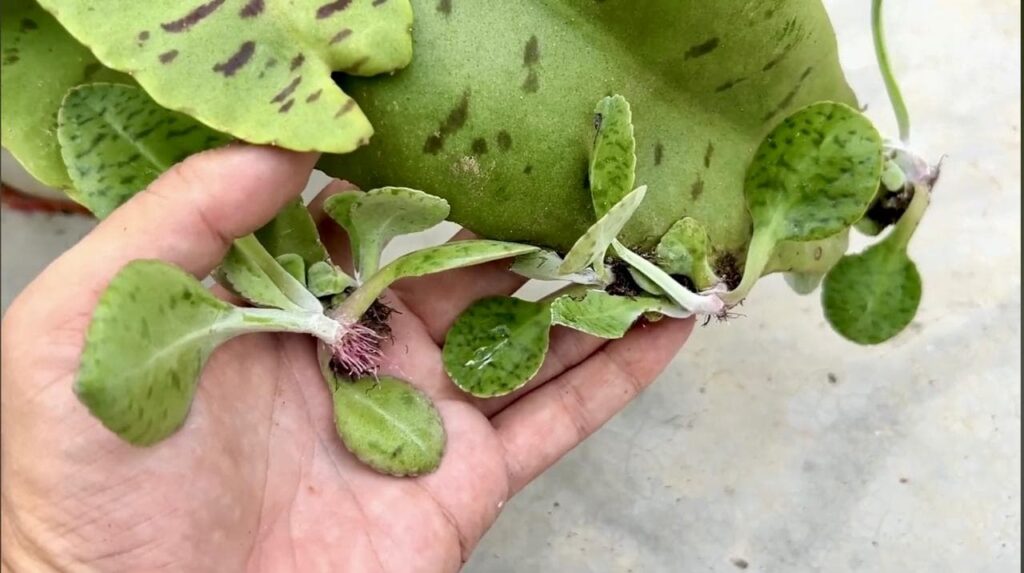
Donkey Ear Kalanchoe doesn’t rely on human hands to continue its lineage—it propagates quietly and on its own terms. Its most natural method is through plantlets that form along the leaf margins, a behaviour that appears only when the plant is mature and healthy. As older leaves age, tiny baby plants develop along their edges. When ready, they detach naturally, fall onto the soil, and root with ease—no cutting, hormones, or special care required.
After flowering, another form of propagation often appears. The parent plant may produce side shoots or offsets, especially as it shifts energy away from blooming. Rather than declining abruptly, the plant transitions—allowing the next generation to take over. These young plantlets and offsets continue growing steadily, often becoming the long-term presence in the pot while the older plant slowly fades.
This slow, reliable process reflects the Donkey Ear’s natural life cycle. It doesn’t multiply aggressively or all at once. Instead, it ensures continuity through patience and timing—replacing itself gradually rather than repeating flowers immediately.
For best results, the simplest approach is the best one:
allow plantlets to root where they fall, use well-drained soil, and resist the urge to disturb them too early. Intervention isn’t required—only observation.
With Donkey Ear, propagation isn’t something you do.
It’s something you witness.
🌿 Difference Between Kalanchoe pinnata (Ajooba/Patharchatta) & Donkey Ear Plant
Many gardeners in India confuse these plants due to similar leaves and propagation. However, their purpose and flowering behaviour differ greatly.
Comparison Table
| Feature | Kalanchoe pinnata (Ajooba/Patharchatta) | Donkey Ear Plant |
|---|---|---|
| Primary use | Medicinal | Ornamental |
| Growth habit | Upright, branching | Basal rosette |
| Growth speed | Fast | Slow |
| Leaf size | Medium–large | Very large |
| Leaf shape | Oval, toothed | Long, floppy |
| Leaf texture | Soft-succulent | Thick, leathery |
| Plantlets | Very common | Very common (mature leaves) |
| Flowering season | Winter | November to March |
| Flower frequency | Regular | Occasional |
| Flower color | Greenish, pink/red | Pink to red with yellow tinge |
| Flower longevity | Short–moderate | Long-lasting |
| What flowering means | Normal cycle | Balance & maturity |
⚠️ Important note:
“Ajooba” is commonly used for Kalanchoe pinnata, but the name is often misapplied to Donkey Ear, creating confusion.
Before looking at problems during flowering, it helps to understand why Donkey Ear should never be judged by the same standards as Kalanchoe pinnata. Pinnata is energetic, fast, and forgiving—it flowers as part of its routine. Donkey Ear, however, behaves more like a long-term companion plant. Its slow growth, selective flowering, and seasonal sensitivity mean that many normal gardening habits—extra care, frequent feeding, constant repositioning—can unintentionally delay blooms. Once this difference is understood, most “problems” stop feeling like mistakes and start revealing themselves as signals. Donkey Ear does not punish errors; it quietly responds to imbalance. Learning to read these responses is the key to successful flowering.
🌱 Common Problems During Flowering & Gentle Solutions
| Problem | Likely Cause | Gentle Solution |
|---|---|---|
| Buds drop early | Sudden watering change | Maintain consistency |
| Flower stalk bends | Low light | Increase morning sun |
| Flowers fade fast | Excess heat | Move to cooler area |
| Leaves wrinkle | Underwatering | Slightly increase water |
| No flowers | Excess fertilizer | Stop feeding before winter |
Donkey Ear prefers adjustments, not interventions.
🌼 Why Donkey Ear Flowers Feel Special
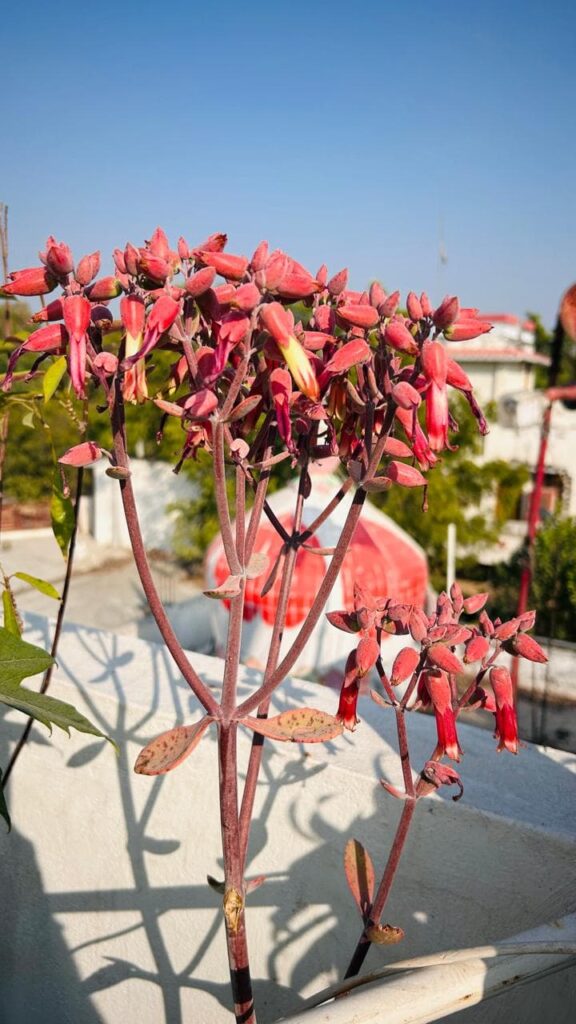
BDonkey Ear flowers feel special not because they are rare—but because they are earned. In Kalanchoe gastonis-bonnieri, blooming is never automatic. It happens only when the plant feels understood.
These flowers arrive during the long, quiet stretch from late autumn to early spring, a season when most gardens slow down. They stay longer than expected, fading gradually rather than disappearing overnight. And they appear only on plants that have been allowed to grow at their own pace—without pressure, excess feeding, or constant interference.
This is why the blooms feel personal.
They don’t reward effort.
They reward patience.
They don’t respond to force.
They respond to listening.
Donkey Ear is not a plant for rushing schedules or quick results.
It is a plant for those who notice seasons changing—and choose not to interrupt.
And when it finally flowers, it isn’t performing.
It’s simply responding.
💬 A Message Written in Winter Bloom
Some plants heal the body.
Some spread without asking.And some—
wait for stillness,
listen to shortening days,
then bloom slowly…
and remain. 🌿🌺Not to impress,
but to remind us
that patience has its own season.

