
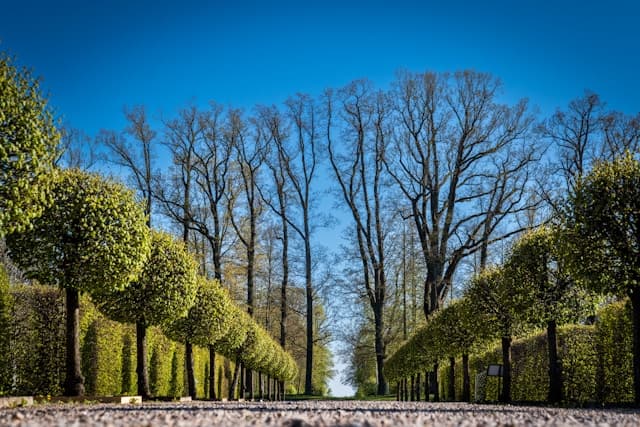
Strong garden trees are rarely born out of shortcuts. They don’t owe their strength to costly fertilizers, deep pits, or gardening luck. They grow resilient because someone paid attention to what couldn’t be seen—the roots. Many trees look healthy in their early years, standing tall and leafy, only to weaken later. They begin to tilt during strong winds, scorch under summer heat, or collapse quietly after heavy monsoon rains. When this happens, the problem is almost never above the soil. It begins underground, where the foundation was rushed or misunderstood.
This guide brings together a root-first planting approach that has stood the test of time, along with a thoughtful selection of ornamental trees suited for small Indian gardens. It’s not just about planting a tree—it’s about setting it up for decades of balance, stability, and calm growth. By understanding both how to plant and what to plant, you give your garden trees a future that doesn’t depend on constant rescue.
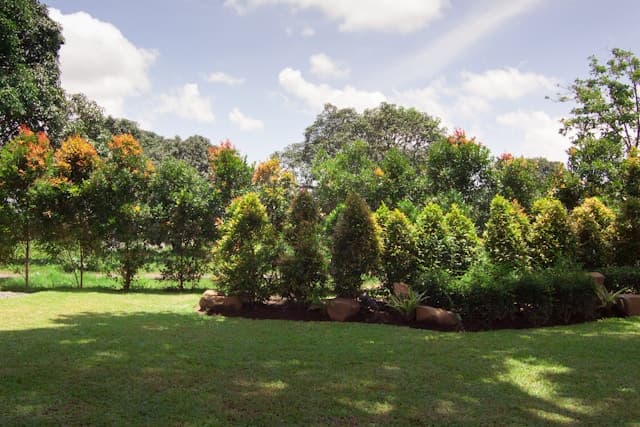
Why Most Garden Trees Fail Despite Good Care
Most gardeners do care deeply about their trees. They water regularly, add nutrients, and watch for pests—yet after a few seasons, something starts to go wrong. The reason is simple but uncomfortable: the most damaging mistakes happen early, and trees don’t show distress right away. They stay quiet. They adapt. And by the time symptoms appear, the damage is already rooted.
Several common problems work silently below the surface:
- Planting trees deeper than their natural root flare
- Watering often but only at the top layer of soil
- Pushing growth with fertilizers during the first year
- Soil that lacks air movement and drainage
- Selecting large or aggressive species for limited garden space
Each of these choices slowly weakens the root system. Roots become shallow, stressed, or overcrowded, unable to anchor or nourish the tree properly. Once that foundation is compromised, no amount of pruning, feeding, or surface-level care can truly restore balance.
Healthy trees are built from the ground up—and when roots suffer, the rest of the tree simply follows.
The Proven Method: Grow Roots First, Growth Will Follow
A tree’s true strength is decided long before its canopy casts shade. What we see above ground is only the final chapter of a story that begins quietly in the soil.
A healthy tree always grows in this natural sequence:
- Deep, wide-spreading roots
- A stable, well-balanced trunk
- A canopy that matches its foundation
Problems begin when this order is disturbed. When leaf growth is pushed before roots are ready—through excess watering or early fertilizing—the tree learns the wrong survival habits. It becomes water-dependent, weak against wind, and easily stressed by heat or heavy rain. The canopy may look impressive for a while, but it’s standing on an unstable base.
Root-first growth creates independence. It teaches the tree to search deeper for moisture, anchor itself firmly, and grow at a pace it can actually sustain. Once roots are strong, everything above them follows naturally—and lasts far longer.

Choosing the Right Tree for the Right Space
Tree selection alone decides more than half of your long-term success. No planting method can compensate for a tree that simply doesn’t belong in the space it’s given.
Before bringing a tree home, it’s worth looking beyond how it appears at the nursery and asking the right questions:
- Its true mature height and width, not its current pot size
- Ability to tolerate heat, humidity, and local weather shifts
- Root behaviour, with non-invasive systems being far safer for home gardens
- Compatibility with small or medium garden spaces
Many failures begin at the nursery gate. Fast-growing trees and oversized potted specimens may look impressive, but they often struggle the most once planted. Their roots are usually confined, stressed, or trained to depend on constant care. In contrast, medium-sized, well-balanced plants adapt faster, establish stronger roots, and settle into the soil with far less shock.
A tree that fits its space grows calmly. One that doesn’t will spend its life fighting limits.
Preparing the Soil Without Creating Root Traps
One of the most well-intentioned mistakes gardeners make is digging an overly deep pit and filling it with rich, loose soil. It feels like kindness—but underground, it creates a comfort zone. Roots settle in, grow in circles, and see no reason to explore beyond it. Over time, this “soft pocket” becomes a trap rather than support.
A tree needs encouragement to move outward, not an invitation to stay put.
The Correct Digging Method
- Dig wide instead of deep
- Keep the hole two to three times wider than the root ball
- Match the hole’s depth exactly to the nursery soil level
- Loosen the surrounding native soil so roots can push outward easily
When roots are guided into the surrounding soil from the beginning, they anchor better, access moisture naturally, and adapt to real ground conditions. Trees that stay confined to a rich pit remain dependent and unstable, especially during strong winds or heavy rains.
Strong trees don’t grow in luxury pockets—they grow by learning to claim the soil around them.
Planting at the Correct Depth
Planting depth is one of those small decisions that quietly shapes a tree’s entire future. Get it right, and the tree settles in comfortably. Get it wrong, and decline begins so slowly that it often goes unnoticed for years.

A healthy planting depth follows a few simple principles:
- The root flare should remain visible just above the soil line
- The trunk should never be buried, even partially
- Soil should be backfilled gently, not pressed down hard
- The tree should stand upright on its own, without force or tension
When trees are planted too deep, roots struggle to access oxygen, and moisture lingers around the trunk. Over time, this leads to rot, weak anchoring, and slow but steady stress. The tree may survive—but it never truly thrives.
A tree should sit in the soil the way it would in nature: supported, breathing, and balanced from the base up.
Watering the Smart Way: Less Often, More Effectively
Watering is one of the most misunderstood parts of tree care. Many gardeners water daily out of concern, not realizing that frequent light watering trains roots to stay near the surface. These shallow roots become lazy, fragile, and heavily dependent on constant moisture.
Strong trees are built by teaching roots to search, not wait.
A Proven Watering Strategy
- Water slowly and deeply, allowing moisture to reach lower soil layers
- Let the soil dry slightly between watering sessions
- Gradually increase the time gap so roots are encouraged to grow deeper
Under Indian climate conditions, this approach works far better than fixed routines:
- Summer: Deep watering once every 5–7 days
- Monsoon: Water only if the soil actually dries out
- Winter: Minimal watering, just enough to prevent complete dryness
Roots always grow toward moisture. When water reaches deeper layers, roots follow—creating a tree that can handle heat, wind, and irregular rainfall without panic. Shallow watering creates surface comfort; deep watering creates independence.
Mulching for Protection, Not Suffocation
Mulch can be one of the most helpful tools in a garden—or one of the quietest sources of damage. Its effect depends entirely on how it’s used. When applied thoughtfully, mulch protects roots. When piled carelessly, it slowly suffocates them.
The key is moderation and space.
The Correct Way to Mulch
- Spread mulch 5–8 cm thick, never deeper
- Always leave a 5–10 cm gap around the trunk
- Choose organic materials such as dry leaves, straw, or natural bark
Proper mulching acts like insulation for the soil. It softens temperature swings, reduces moisture loss, and supports beneficial soil life. At the same time, keeping the trunk exposed allows airflow and prevents rot.
Mulch should protect the ground—not smother the tree standing on it.
Staking: When Support Weakens Growth
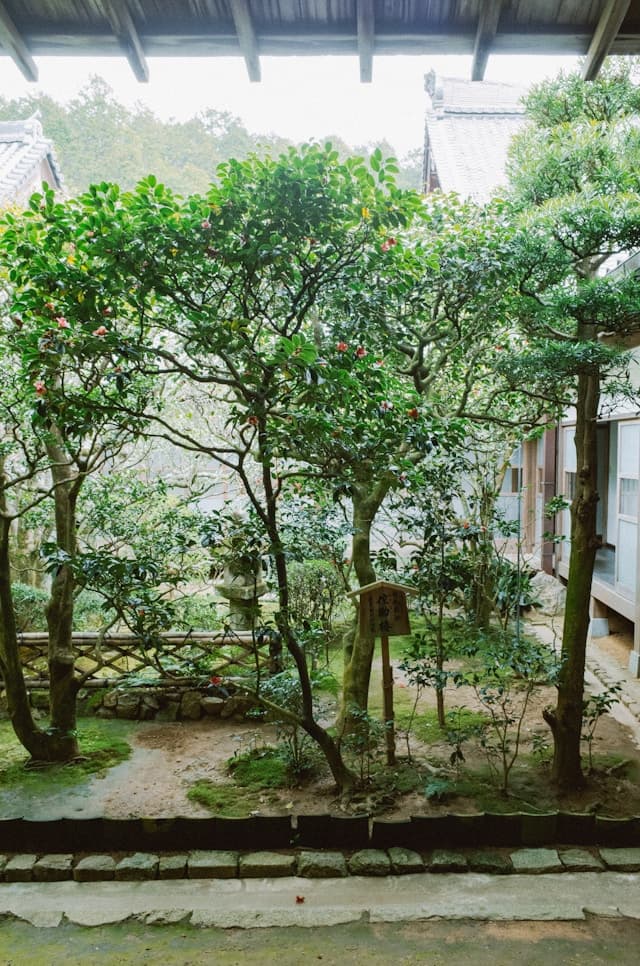
It feels natural to stake a young tree tightly, especially when winds are strong. But constant support can quietly do more harm than good. Trees need gentle movement to learn balance. That slight sway is how trunks thicken and roots grip the soil.
Support should be temporary—never permanent.
Smart Staking Rules
- Stake only in very windy or exposed locations
- Tie supports loosely, allowing natural movement
- Remove stakes within 2–3 months once the tree stabilizes
Trees that remain staked for too long never develop true strength. Their trunks stay thin, and roots fail to anchor deeply. When the support is finally removed, the tree struggles to stand on its own.
A little movement builds resilience. Too much protection creates dependence.
FFertilizer Timing: Why Waiting Works Better
Feeding a young tree too early often feels like good care, but it sends the wrong message. Early fertilizer use pushes quick leaf growth before the roots are ready to support it. The tree looks healthy on the surface, yet below the soil, the foundation remains weak and underdeveloped.
In the first year, restraint matters more than richness.
The First-Year Nutrition Rule
- Avoid chemical fertilizers completely
- Use only small amounts of mild, well-decomposed compost
- Let the tree focus on root establishment, not fast height
Once the roots have settled and spread, the tree becomes far more capable of using nutrients effectively. After the first year, organic feeding and balanced nutrition support steady, natural growth—without forcing it.
Strong trees aren’t rushed. They’re allowed to prepare before they perform.
est Time and Conditions to Plant Trees in India
Timing matters just as much as technique. When trees are planted under supportive natural conditions, they settle faster, face less stress, and focus their energy on building roots—without being pushed or forced.
| Factor | Ideal Condition |
|---|---|
| Planting Season | Late monsoon to early winter, when soil remains moist but not waterlogged |
| Temperature | 20–35°C, avoiding peak summer extremes |
| Sunlight | 6–8 hours daily, adjusted to the tree’s natural growth habit |
| Soil | Well-drained, loose, and breathable—not dense or compacted |
| Watering | Deep, spaced watering that guides roots downward |
| Wind Exposure | Gentle airflow that strengthens trunks without causing stress |
Planting within this window gives trees time to establish strong roots before facing harsh summer conditions. Nature quietly supports the process—cooler nights, softer sunlight, and consistent moisture reduce shock and encourage steady adaptation.
When timing aligns with soil and climate, trees don’t fight to survive.
They simply settle in—and begin growing with confidence.
🌼 Best Ornamental Trees for Small Indian Gardens (A Thoughtful Master List)
Choosing ornamental trees for small gardens is an exercise in balance. You want beauty, fragrance, seasonal interest—and still enough breathing space for light, roots, and movement. The trees below are not just attractive; they are manageable, adaptable, and realistic for Indian home gardens when planted and maintained correctly.
These selections focus on controlled size, root behaviour, and long-term harmony—not just first-year looks.
| 🌳 Tree Name | 🌸 Ornamental Feature | 📏 Mature Size | ☀️ Sun | 💧 Water | ⭐ Why It’s Ideal |
|---|---|---|---|---|---|
| Plumeria (Frangipani) | Highly fragrant flowers | 4–6 m | Full sun | Low | Sculptural form, drought tolerant |
| Lagerstroemia (Crepe Myrtle) | Long flowering season | 5–7 m | Full sun | Moderate | Compact habit, clean trunk |
| Cassia fistula (Amaltas) | Golden flower chains | 6–8 m | Full sun | Moderate | Iconic summer bloom |
| Magnolia champaca (Champa) | Intensely fragrant flowers | 6–8 m | Sun–partial | Moderate | Sacred, slow, graceful |
| Callistemon (Bottlebrush) | Red brush-like flowers | 4–6 m | Full sun | Low | Hardy, bird-attracting |
| Tabebuia rosea | Pink trumpet blooms | 6–8 m | Full sun | Moderate | Dramatic spring display |
| Bauhinia variegata (Kachnar) | Orchid-like flowers | 6–8 m | Full sun | Moderate | Edible buds + beauty |
| Peltophorum pterocarpum (Copperpod) (pruned) | Yellow flowers | 6–8 m | Full sun | Moderate | Light canopy when trained |
| Putranjiva roxburghii | Dense green foliage | 5–7 m | Sun–partial | Low | Excellent privacy without bulk |
| Murraya paniculata (Orange Jasmine) | White fragrant blooms | 3–5 m | Sun–partial | Low | Can be shaped as tree or shrub |
| Polyalthia longifolia (False Ashoka) | Tall, narrow silhouette | 6–8 m | Full sun | Low | Perfect for tight boundaries |
| Jacaranda (light-pruned) | Purple spring blooms | 6–8 m | Full sun | Moderate | Elegant for courtyards |
| Punica granatum (Pomegranate) | Flowers + fruit | 3–5 m | Full sun | Low | Dual-purpose and compact |
| Moringa oleifera (Drumstick) | Airy foliage | 5–7 m | Full sun | Low | Fast-growing, edible |
| Terminalia mantaly (compact form) | Layered canopy | 6–8 m | Full sun | Moderate | Architectural, well-mannered |
🌱 A Quiet but Important Reminder
Even the right tree can fail if planted poorly—and even a slightly larger tree can thrive if its roots are respected. Size control comes not from constant cutting, but from root-first planting, smart watering, and early restraint.
🌳 Trees Best Avoided in Small Gardens
Not every beautiful or fast-growing tree belongs in a residential garden. Some species are designed by nature to dominate landscapes—and when placed in small plots, they eventually create more problems than shade.
It’s best to avoid planting trees that are known for aggressive roots, overwhelming canopies, or rapid, uncontrolled spread:
- Banyan – Develops massive aerial roots and spreads far beyond its planting spot
- Peepal – Strong, invasive roots that can damage walls, drains, and foundations
- Rain Tree – Wide, heavy canopy with surface roots that lift paving
- Eucalyptus – Fast-growing, water-hungry, and difficult to manage in tight spaces
- Bamboo clumps – Spreading roots that escape boundaries and invade nearby areas
These trees thrive in open land, parks, and large estates—not in compact residential gardens. In small plots, they compete aggressively for space, water, and structure, often causing damage that only appears years later.
Choosing what not to plant is just as important as choosing what to grow.
Grow Strong Garden Trees the Right Way – 1-Page Checklist
👉 Download the PDF – Strong, Healthy Garden Trees (1-Page Checklist)
🌱 Common Tree Problems and Their Root-Cause Solutions
Most tree problems don’t appear suddenly—and they’re rarely random. What shows up above ground is usually a delayed response to something happening below the soil. When you fix the cause instead of the symptom, recovery becomes possible.
| Visible Problem | Likely Root Cause | Practical, Long-Term Fix |
|---|---|---|
| Tree leaning or tilting | Shallow or weak root system | Reduce frequent watering, remove permanent stakes, encourage deeper roots |
| Yellowing leaves | Overwatering or poor drainage | Improve soil drainage and allow soil to dry slightly between watering |
| Soil cracking around base | Heat stress and moisture loss | Apply proper mulch to regulate soil temperature |
| Slow or stunted growth | Incorrect planting depth | Replant at correct depth with visible root flare |
| Sudden decline after rains | Waterlogging and lack of oxygen | Loosen soil and improve aeration around the root zone |
Trees rarely need more care—they need better conditions. When roots receive air, space, and balanced moisture, most surface problems resolve naturally over time.
Fix the soil story, and the tree rewrites its future.
🌿 What This Proven Method Gives You Over Time
Trees raised with patience and root-first care change the way they behave—and the way you experience your garden. They stop asking for constant attention and begin responding confidently to their environment.
Over time, these trees become:
- More resistant to wind, standing firm without support
- Less dependent on frequent watering
- Naturally adapted to heat and seasonal stress
- Balanced in shape, without forced pruning
- Longer-living, with steady and predictable growth
Instead of becoming fragile plants that need constant correction, they grow into calm, self-reliant companions. Trees like these don’t just survive in a garden—they settle into it, season after season, quietly holding their place.
🌱 A Thought Rooted in Patience
Strong trees are not raised by speed,
but by care given quietly beneath the soil.
What we admire above ground—shade, flowers, strength—
is only possible because someone respected the unseen work below.
Grow roots with patience, and the rest of the tree will follow. 🌳

