
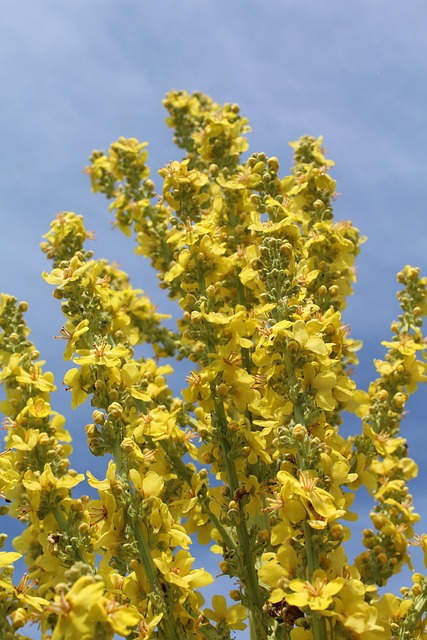
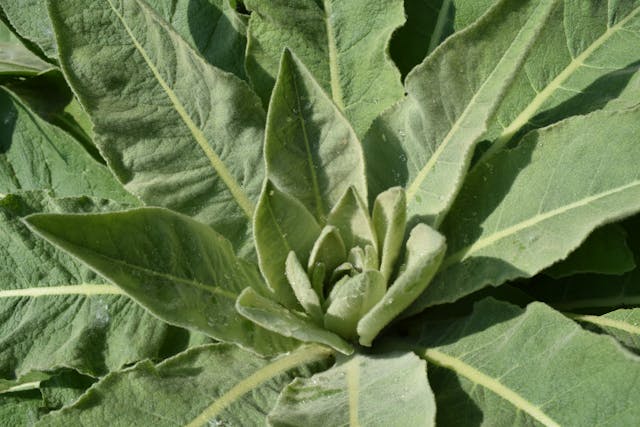
Verbascum—better known as mullein—has a quiet confidence about it. It doesn’t rush to impress. For weeks, it sits low and unassuming, forming a soft rosette of velvety leaves that barely hint at what’s coming. Then, almost unexpectedly, it rises. A strong, upright flower spike shoots skyward, lifting dozens of delicate blooms high above the garden like a living column of light. When Verbascum flowers, it doesn’t just bloom—it commands attention 🌿.
For gardeners drawn to height, structure, and effortless beauty, Verbascum feels like a reward rather than a responsibility. It asks for very little yet gives back generously, flowering for weeks without demanding constant care. Its presence adds rhythm to a garden—grounded at the base, dramatic at the top—making even simple garden spaces feel thoughtfully designed.
What makes Verbascum especially valuable for Indian gardens is its natural resilience. It thrives in bright sun, tolerates dry conditions with ease, and remains unfazed where more delicate plants fade or fail. In regions with intense heat and limited rainfall, this plant doesn’t just survive—it flourishes. If you’re looking for a plant that blends toughness with elegance and returns year after year with towering blooms, Verbascum earns its place without question.
🌱 What Truly Sets Verbascum Apart?
Verbascum isn’t admired only for its flowers—it’s loved for the shape it gives to a garden. This is a plant that understands timing and transformation. In its early phase, it stays close to the ground, forming a broad rosette of soft, woolly leaves that feel almost hidden, as if the plant is gathering strength rather than seeking attention.
Then comes its defining moment.
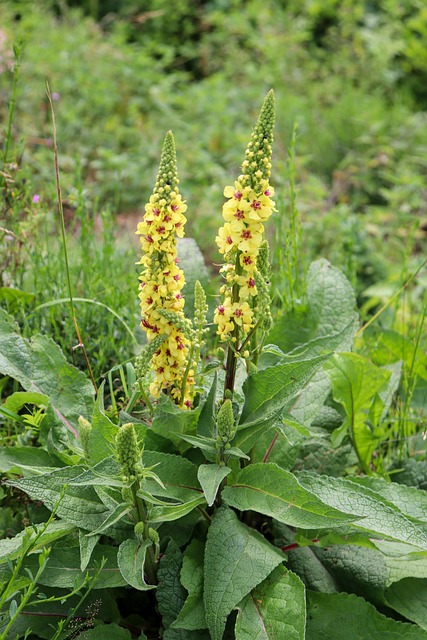
In the following season, Verbascum shifts gears entirely. From that quiet base, it sends up one—or sometimes several—strong vertical spikes, each packed with blooms that open gradually from bottom to top. This natural progression means the plant stays attractive for weeks, not days.
Depending on the variety and growing conditions, these flowering towers can rise anywhere between 3 and 8 feet, instantly changing the garden’s visual balance. Planted along boundaries, they create depth. In borders, they add rhythm. As a standalone specimen, they become a living exclamation point—drawing the eye upward and giving smaller plants a dramatic backdrop to lean against.
Verbascum doesn’t fill space randomly; it sculpts it. That architectural strength is what makes it unforgettable once you’ve grown it.
🌼 Towers of Flowers: Where Verbascum Truly Shines
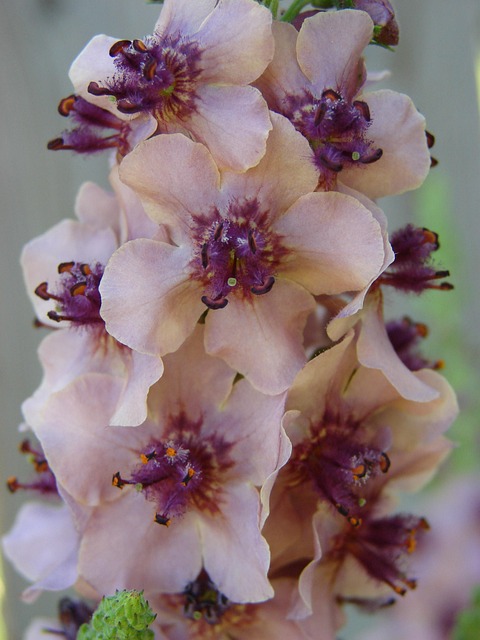
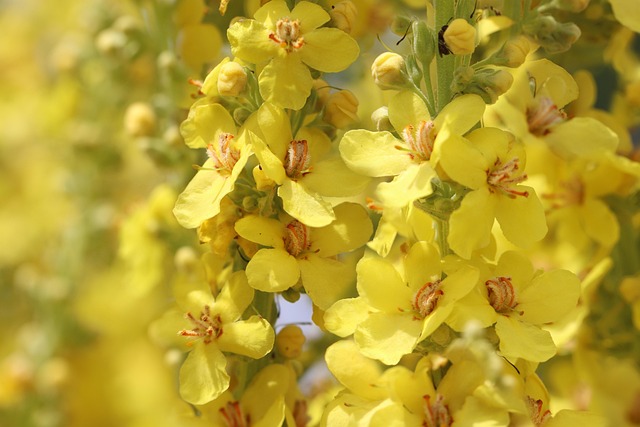
The real drama of Verbascum unfolds along its tall, upright flower stalks. These aren’t hurried blooms—they’re patient performers. Tiny flowers line the spike in tight formation, opening one after another from the base upward, almost like a slow-burning celebration. This steady rhythm is what gives Verbascum its unusually long flowering season.
The color palette is gentle yet luminous. Depending on the variety, blooms may glow in sunny yellow 💛, melt into soft cream, blush with peach tones, or whisper shades of lavender and pale pink. None of the colors shout—but together, they create a calm, glowing presence that feels effortless and refined.
Each individual flower lives briefly, often just a single day. But Verbascum plays the long game. As older blooms fade, fresh ones open above them, keeping the spike lively and attractive for weeks on end. From a distance, the plant always looks in bloom—never sparse, never tired.
This continuous renewal is what makes Verbascum feel alive rather than ornamental. It doesn’t peak all at once and disappear. Instead, it stays with you, changing subtly each day, rewarding those who pause long enough to notice 🌿.
🌞 Why Verbascum Feels at Home in Indian Gardens
Gardening in India often means working with extremes—harsh sunlight, fast-drying soil, and watering schedules that don’t always follow a routine. This is where Verbascum quietly proves its worth. Instead of fighting these conditions, it adapts to them, growing steadily even when the garden feels unforgiving.
Verbascum actually prefers open, sun-drenched spaces. Long hours of direct sunlight don’t stress it; they strengthen it. Heat waves that wilt softer plants barely slow it down, and once its roots are established, short dry spells are something it handles with calm resilience.
Another reason it thrives so well here is its comfort with imperfect soil. Sandy ground, rocky patches, or soil that hasn’t been heavily enriched won’t hold it back. In fact, Verbascum often performs better in lean conditions, where excess moisture and rich compost aren’t constantly surrounding its roots.
Because it asks for so little day-to-day attention, Verbascum fits beautifully into low-water gardens, terrace setups, and wide open landscapes where constant maintenance isn’t practical. It’s the kind of plant that rewards Indian gardeners not for pampering—but for letting nature do what it does best 🌿.
🌿 Growing Verbascum Without the Fuss
Verbascum isn’t complicated to grow—but it does appreciate a few non-negotiables. Get these basics right, and the plant largely takes care of the rest.
☀️ Sunlight: The More, the Better
Verbascum is a true sun-lover. Give it at least 6–8 hours of direct sunlight each day, and it responds with sturdier stems and taller, more confident flower spikes. In brighter locations, the plant grows upright and strong, without leaning or flopping—something shade-grown plants often struggle with.
🌱 Soil: Drainage Matters More Than Richness
This plant values breathing roots over nutrient-heavy soil. What matters most is drainage.
- Loose, free-draining soil keeps roots healthy
- Heavy clay or waterlogged ground can quickly cause problems
- Neutral to slightly alkaline soil suits it best
If your garden soil feels dense or sticky after rain, lightening it with sand or coarse compost can make all the difference. Verbascum doesn’t need luxury—just space to drain and dry naturally.
💧 Watering: Less Is More
In the early weeks, regular watering helps young plants settle and root deeply. Once established, however, Verbascum prefers restraint. Let the soil dry out completely between waterings—this mimics the dry conditions it evolved to handle.
Too much water is one of the few ways to truly upset this plant. Constant moisture around the roots can lead to rot, weak growth, and disappointing flowering. When in doubt, wait an extra day—Verbascum is far more forgiving of dryness than excess care.
🌸 When Verbascum Blooms—and How Long the Magic Lasts
In most Indian regions, Verbascum begins its show as winter loosens its grip and daylight starts to stretch. The first flower spikes usually appear in late winter, gradually building momentum as temperatures rise. By early summer, the plant is fully in its element—tall, confident, and impossible to miss.
What makes Verbascum especially satisfying is its patience. Instead of flowering all at once and fading quickly, it stretches its bloom period across six to ten weeks, sometimes longer in mild conditions. Each spike opens slowly from the base upward, so there’s always something fresh happening, even when earlier blooms begin to fade.
A little gentle intervention can keep the display going. Removing spent flowers before they set seed often encourages the plant to push out side spikes or continue blooming a bit longer. It’s not a guarantee—but when it works, it feels like a quiet reward for paying attention.
Verbascum doesn’t rush its season. It blooms steadily, confidently, and on its own terms—making the garden feel alive over time, not just for a fleeting moment 🌿.
🐝 A Living Invitation for Pollinators
When Verbascum comes into bloom, the garden doesn’t stay quiet for long. Its tall flower spikes quickly turn into gathering points for life. The blooms are rich in nectar and pollen, and pollinators seem to know it instinctively.
Bees arrive first, moving methodically from flower to flower, dusted in yellow as they work. Butterflies follow, lingering just long enough to drink before floating off to the next plant. Even smaller, often unnoticed beneficial insects find their place among the blooms, quietly doing the work that keeps a garden balanced.
By planting Verbascum, you’re not just adding height or color—you’re creating a functioning ecosystem. The plant supports pollinators at a time when reliable food sources can be scarce, especially in open, sun-exposed gardens.
The result is a space that feels alive rather than decorative—where beauty rises vertically, and biodiversity settles in naturally 🌿.
✂️ Maintenance That Barely Feels Like Maintenance
One of Verbascum’s quiet strengths is how little it asks of you. Once established, it settles into the garden as if it belongs there—no constant trimming, no anxious checking, no daily fuss.
It doesn’t demand regular pruning, and pests rarely show much interest. In healthy, sunlit conditions, the plant stays largely trouble-free, growing steadily without needing intervention. This makes it especially appealing for gardeners who want beauty without turning gardening into a chore.
When the flowering season winds down, you’re given a choice rather than a task. You can allow the seed heads to mature and scatter naturally, letting new plants appear in their own time and places. Or, if you prefer a more controlled look, simply cut back the spent spikes to keep the garden neat and intentional.
Either way, Verbascum respects your pace. It fits into the garden without taking over—offering presence, not pressure 🌿.
📊 When Verbascum Doesn’t Bloom as Expected (And What Actually Helps)
Verbascum is usually reliable, but like any plant, it communicates through subtle signals. A leaning spike, delayed blooms, or flowers that fade too fast aren’t failures—they’re clues. Once you read them correctly, solutions are simple and effective.
| What You Notice in the Plant | What’s Likely Happening | Smart, Low-Stress Fix |
|---|---|---|
| Tall spike but very few flowers | Not enough direct sunlight | Move the plant to a brighter, full-sun spot where it gets at least 6–8 hours of light |
| Flower spike bends or collapses | Too much nitrogen or growing in partial shade | Cut back on fertilizers and increase sun exposure for stronger stems |
| Healthy leaves but no flower spike | Plant is still in its first year | Give it time—Verbascum usually flowers in its second season |
| Flowers dry and fade too quickly | Intense heat stress | Add light mulch and water deeply (but infrequently) during extreme heat |
| Base of plant feels soft or rotting | Poor drainage or excess watering | Improve soil drainage and allow soil to dry fully between waterings |
Most flowering issues with Verbascum come down to sun, patience, or drainage—not disease or poor plant quality. Once those are corrected, the plant almost always responds on its own.
Verbascum doesn’t need rescuing; it just needs the right conditions to express what it already knows how to do 🌿.
🌼🌿 Where Verbascum Truly Belongs in the Garden
Verbascum is at its best when it’s allowed to rise freely, without competing for attention. Its height and strong vertical form make it a natural anchor—something other plants can quietly arrange themselves around.
Placed at the back of flower beds, Verbascum creates depth and structure, lifting the eye upward and giving shorter plants a sense of scale. In cottage-style gardens, its soft leaves and tall flower spires blend effortlessly with looser, romantic plantings, adding height without breaking the relaxed mood.
It’s equally at home in dry landscapes and rock gardens, where its upright form contrasts beautifully with stones and low, spreading groundcovers. Along compound walls or fences, Verbascum softens hard lines, turning blank boundaries into living backdrops that feel intentional rather than decorative.
To highlight its vertical drama, pair Verbascum with low-growing plants—compact grasses, creeping flowers, or mounded foliage plants that stay close to the ground. This contrast lets its flower towers stand out clearly, making the plant feel designed, not crowded.
Verbascum doesn’t need center stage—it just needs space to rise, and it rewards that space with quiet grandeur 🌼.
🌱 Seed Saving & the Beauty of Natural Reseeding
Verbascum is generous when it comes to seeds. As its flower spikes mature, they quietly produce thousands of fine, dust-like seeds—so small they’re easy to miss, yet powerful enough to carry the plant into the next season.
When a few spikes are left untouched, the process takes care of itself. Seeds drop naturally into the surrounding soil, and when conditions are right, new seedlings begin to appear the following season—often in nearby sunny patches where the soil is light and open. There’s something deeply satisfying about spotting these self-sown plants, knowing the garden is renewing itself without intervention.
This gentle reseeding habit makes Verbascum feel self-sustaining rather than invasive. It spreads slowly, chooses its own places, and rarely overwhelms other plants. For gardeners who enjoy a slightly natural, evolving landscape, this quality turns Verbascum into a long-term companion rather than a one-season feature.
Left to follow its own rhythm, Verbascum doesn’t just return—it finds its way back 🌿.
🌟 Why Verbascum Truly Earns Its Towers of Flowers
Verbascum isn’t just another plant that fills space—it defines it. In a garden often shaped by heat, limited water, and demanding conditions, this plant stands tall without complaint. Its towering blooms feel intentional, almost architectural, rising above the ordinary and turning open sunlight into something sculptural and alive.
What makes Verbascum especially meaningful for modern Indian gardens is how naturally it fits into real life. It doesn’t demand constant attention or perfect soil. It grows with patience, blooms with confidence, and returns year after year with the same quiet strength. In a world of high-maintenance choices, Verbascum feels refreshingly honest.
“When most plants stay low and quiet, Verbascum rises tall and confident—turning sunlight into floral towers.” 🌞🌼
If you’re drawn to plants that combine resilience with grace, and drama with simplicity, Verbascum is more than a good choice—it’s a lasting one. Once it blooms in your garden, it doesn’t just decorate the space… it redefines how tall beauty can grow 🌿.

